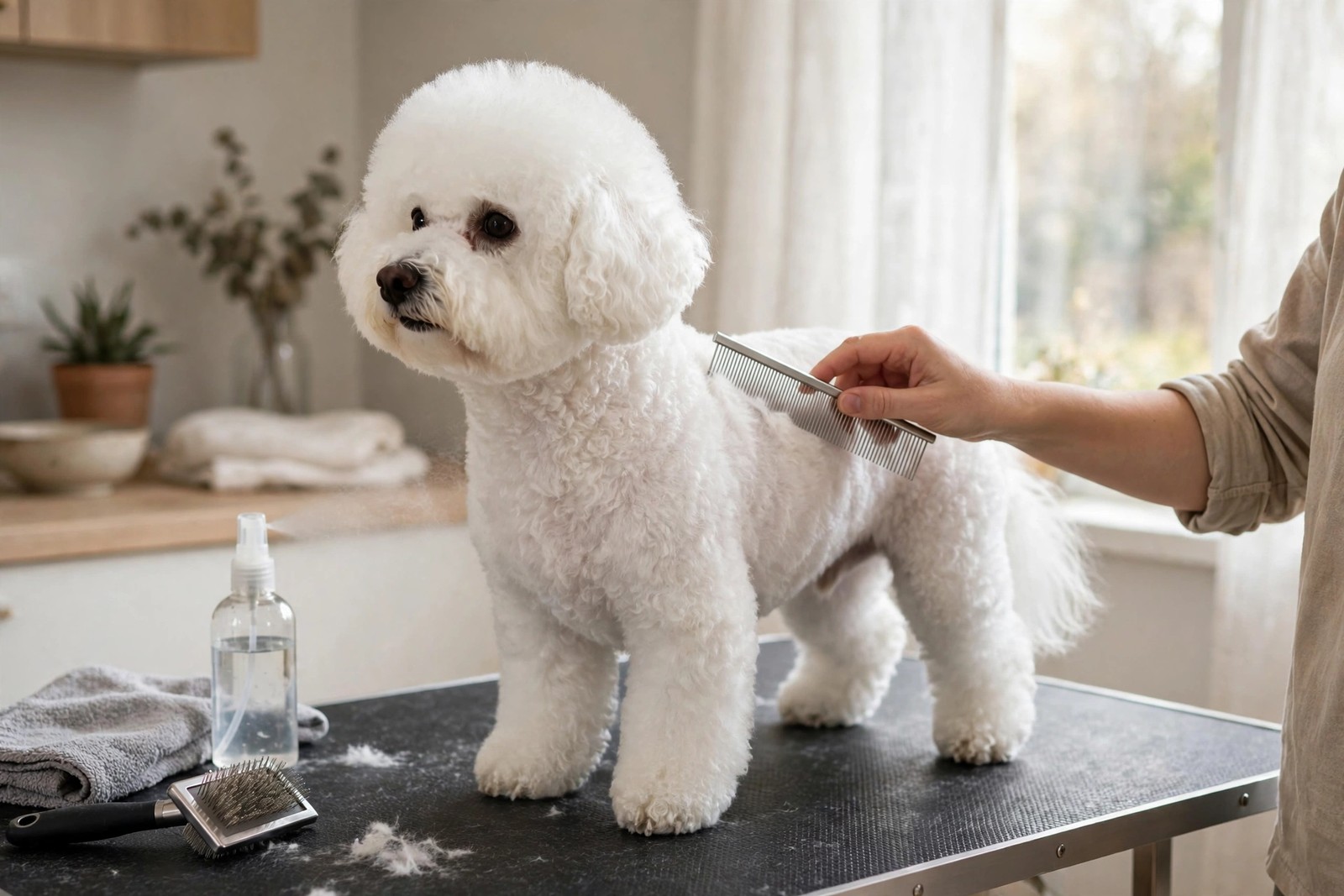
A Bichon coat is a double layer of soft curl that does not shed out on its own; loose hair stays trapped in the coat and felts into mats close to the skin. That single fact dictates the whole home routine. Brushing over the top polishes a fluffy surface while mats tighten underneath it, which is why the comb, not the brush, is the tool that tells the truth. A realistic routine accepts this and spreads the work across the week in short sessions, a few sections at a time, rather than attempting the whole dog in one sitting.
Set him on a table or raised surface with a non-slip mat, under good light, and keep sessions cheerful and brief. Many Bichons tolerate thorough grooming well when it arrives in predictable pieces and ends before fidgeting starts.
Slicker in Sections, Then a Metal Comb Through to the Skin
Work in small sections, lifting the coat and brushing downward in layers with a slicker brush so you reach the base of the hair rather than skating across the top. Then pass a metal comb through that same section, through to the skin. Where the comb glides out cleanly, the section is genuinely done. Where it catches, you have found a forming tangle; hold the base of it between your fingers so the skin is not pulled, and tease it apart gently with the comb end and your fingertips before brushing again.
Give extra time to the friction zones where mats start first: behind the ears, under the collar, in the armpits, around the harness lines, at the backs of the legs, and where the tail meets the body. A brushed top over a matted base is the failure this method prevents, and it is the reason dogs arrive at groomers needing a short clip the owner never expected. If a mat has already felted tight and skin underneath looks pink or sore, do not saw at it at home; have a groomer remove it safely and restart your section routine from there.
Bathing Every Few Weeks, Brushing While Drying
Bathe him every few weeks, or sooner when the white coat greys with city dust and park mud, using a gentle dog shampoo worked through a coat you have already combed out. Bathing a tangled Bichon first sets the tangles harder, so the comb-through always comes before the water. Rinse until the water runs completely clear, since residue dulls white hair and itches under a dense coat.
Dry thoroughly and brush while drying, section by section, rather than letting the curls dry in damp clumps. Damp Bichon hair felts as it dries, so a dog left to air-dry in a warm room can need more comb work afterwards than he did before the bath. Keep the dryer on a comfortable warm setting and keep it moving, checking the air against your own wrist.
Daily Eye and Beard Wipes
Wipe his eyes and beard daily with a soft cloth dampened with plain warm water. Tears and saliva dampen the hair below the eyes and around the muzzle, and daily wiping keeps that hair clean and dry enough to limit discolouration, as well as letting you spot gunky eyes or a sore mouth early. Be gentle around the eye itself, wiping outward on the hair below it rather than rubbing the surface of the eye.
This routine is about cleanliness, not cosmetic promises: no home method removes established staining instantly, and products sold for that purpose are not part of a sound routine. Consistent wiping, a clean dry face after meals and drinks, and keeping the hair around the eyes trimmed short enough to stay out of them do the honest work over time. A professional trim every so often keeps the coat at a length your section routine can genuinely manage, and booking that rhythm into KinsLe as recurring Care Teams tasks stops the coat quietly outgrowing the plan.