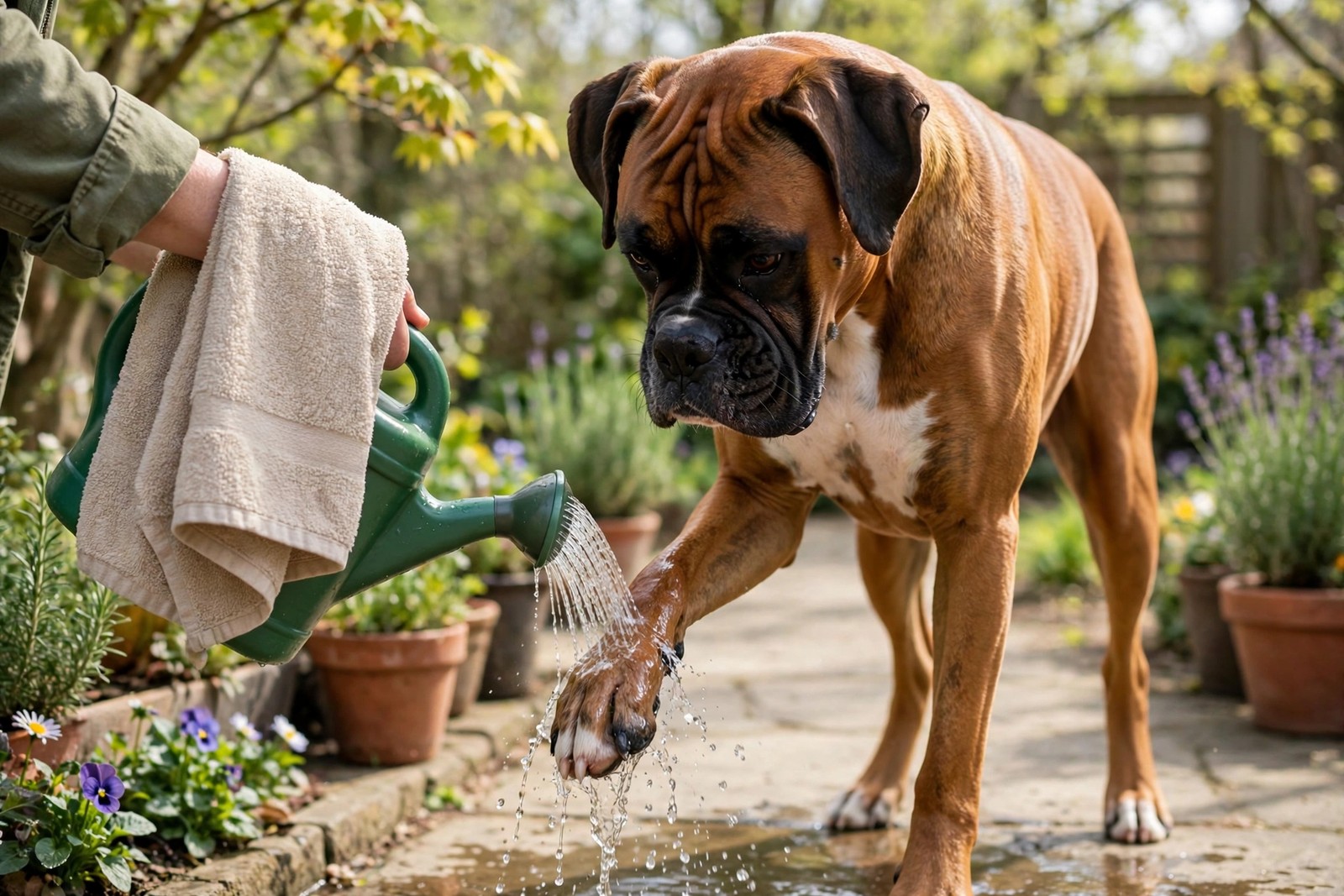
A Boxer's coat is short, smooth, and honest: it needs little brushing, yet it also hides nothing, and the skin beneath it is where allergy season does its work. Boxers commonly react through their skin, showing irritation on the sparsely haired belly, in the armpits, between the toes, and inside those expressive facial folds. The routine for the season is therefore mostly husbandry and observation: remove pollen before it sits, keep folds dry, and learn what his normal skin looks like so change gets noticed early.
None of this treats an allergy. It keeps a reactive dog more comfortable, reduces the pollen load he carries into his bed, and gives you a clear record to discuss with your veterinarian if signs persist.
The Weekly Rubber-Mitt Brush and Skin Check
Once a week, go over him with a rubber mitt or a soft bristle brush, which lifts the loose short hair, spreads skin oils, and leaves the coat glossy with a few minutes of work. Run your hands deliberately over the whole dog as you go: Boxers develop lumps that are easy to find early on a short coat, and any new lump, wart-like growth, or patch of hair loss is worth noting and mentioning to your veterinarian.
Pair the brush with a proper skin check during allergy season. Look at the belly and groin where the hair thins, into both armpits, between the toes and around the paw pads, and inside the facial folds. Healthy skin there is pale and calm; early trouble shows as pinkness, small raised bumps, darker staining from licking, or a musty smell in a fold. Checking weekly at home means a flare gets described accurately, with when it started and where it spread, rather than discovered at crisis point.
Plain-Water Pollen Rinses and Thorough Drying
After walks on high-pollen days, rinse his coat and paws with plain water, paying attention to the belly that brushes through grass and the feet that carry most of the load home. A jug of water by the door and a paw dip handle most days without a full bath. Plain water matters: it removes pollen mechanically, without stripping the coat or adding fragrance to already reactive skin.
Drying is the step owners skip and folds punish. Dry him thoroughly with a towel, then gently open each facial fold and pat inside it dry, and check between the toes as well. Moisture left sitting in a fold warms, softens the skin, and invites the soreness the rinse was meant to prevent. Wipe folds clean with a damp cloth on non-rinse days too, and always finish by drying them, never by leaving them damp.
When Comfort Care Is Not Enough
Bathe only as needed, with a mild unscented dog shampoo made for dogs, and rinse exhaustively. Frequent washing, however gentle the product, strips a short coat and can leave reactive skin drier and itchier than the pollen did, so resist bathing on a fixed schedule through the season. Between baths, the plain-water rinse and a wipe down cover everyday dirt.
Know the signs that move this from husbandry to a veterinary conversation: persistent itching that disturbs his sleep, ear trouble such as head shaking or sore red ears, or paw chewing that does not settle across days. Patchy hair loss, skin that breaks or weeps, and folds that stay sore despite careful drying belong in that conversation too. Describe what you have seen and tried, and let the veterinarian decide what his skin needs next. Recording rinses, flare locations, and good weeks in KinsLe builds a Care Teams history that turns a vague report of itchiness into dates and patterns a vet can actually use.