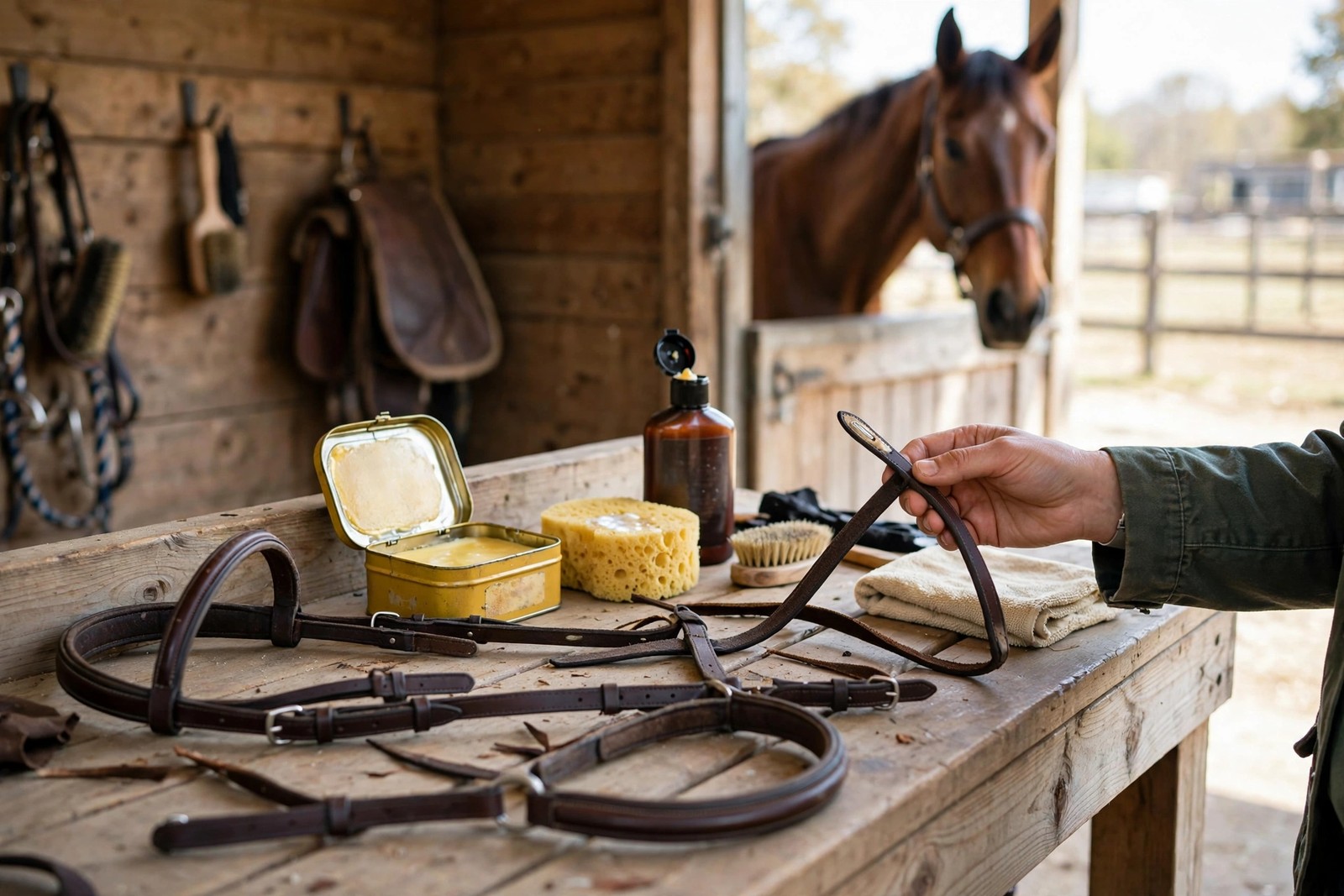
Leather tack fails in slow motion. Sweat dries into it ride by ride, grime works into the grain, stitching tires, and a strap that looked sound in spring lets go under load in autumn. A weekly rhythm — small care after every ride, one deeper session each week — keeps leather supple, metal clean, and every safety-critical part inspected by hand so failures get found on the tack room floor instead of at a gallop.
After Every Ride: The Two-Minute Wipe
Wipe sweat and grime off the leather as soon as the horse is untacked, before either dries in. Sweat is the main enemy: salty, acidic, and left sitting in the places leather flexes most. A damp sponge or cloth over the girth area, reins, stirrup leathers, and the underside of the saddle takes two minutes and does more for the leather's life than any weekly treatment. Hang tack to air in a dry tack room rather than sealing damp leather away.
Wash the bit after every ride, without exception. Dried saliva and feed cake onto the mouthpiece, a dirty bit tastes foul, and a horse asked to accept one learns to resent bridling for reasons that look like behavior. Warm water and a scrub leave the bit clean in under a minute; check the mouthpiece joints move freely while you hold it.
The Weekly Deeper Clean and Conditioning
Once a week, clean the leather properly: strip the bridle and saddle down, wash with saddle soap and a barely damp sponge, work the grime out of creases and around buckles, and let everything dry away from direct heat. Radiators and hot sun crack leather that patience would have saved. Include the saddle pads in that weekly session: check each pad for wear, thinning, and grit or debris trapped against the horse's side, and wash pads on a regular cadence so sweat and dirt never build up against the back.
Condition only once the leather is clean — conditioner over dirt seals the dirt in. Apply conditioner sparingly to dry, clean leather, let it absorb, and buff off the excess; leather should end supple, never greasy, because over-conditioned straps stretch and grip badly. Stirrup leathers and girth straps, which carry load and sweat in equal measure, deserve the closest attention here.
Inspect by Hand: Straps, Billets, and Stitching
The weekly session doubles as a safety inspection, and hands find what eyes miss. Run every strap slowly through your fingers, bending the leather gently: surface cracking, deep cracks at buckle holes, and stiff, dry patches all mark a strap near failure. Check the billets on the saddle individually, since a torn billet is among the most dangerous failures. Tug each line of stitching, especially where reins join the bit, stirrup leathers meet their buckles, and the girth attaches; rotten thread gives before leather does, and a restitch is cheap where an accident is not. Retire or repair anything doubtful before the next ride, never after one more ride.
Fit Changes With the Horse
Re-check fit as the horse's shape changes across a season. A horse coming into work muscles up over the back and shoulders; one resting through winter softens and narrows. A saddle that sat clear of the withers in spring can press by midsummer, and girth holes creeping in one direction are the diary of that change. Note the fit at the weekly clean — flocking settling unevenly, new sweat patterns, or dry patches under the saddle all earn a professional saddle-fitting conversation.
Whose Job the Weekly Check Is
On a shared yard, tack care drifts unless one name owns it each week. Care Teams on KinsLe lets the yard set that out plainly: Priya takes the weekly clean, condition, and strap inspection for the first horse's tack, Tomas covers the second set, and the after-ride wipes and bit wash belong to whoever rode. Each finished check is marked with a timestamp, so a skipped week is visible before it becomes a cracked strap.
Care Teams gives the yard's leather routine a written owner inside KinsLe, with each completed clean and check marked so nothing quietly slides a week.