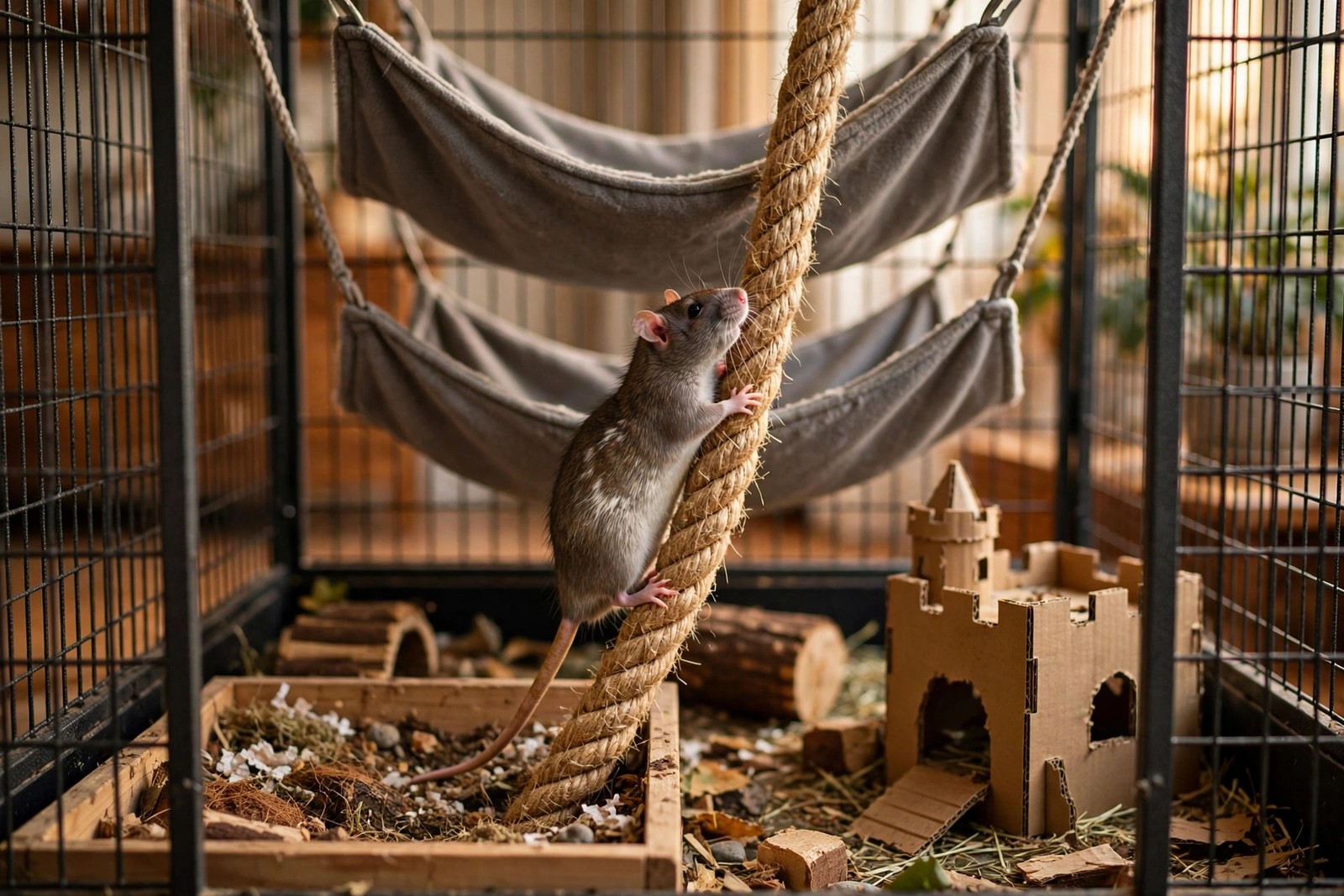
A bored rat sleeps too much, bar-chews, over-grooms cage mates, or redecorates by dragging bedding into the water bowl. Rats are built to work for a living — climbing, digging, carrying, shredding, and solving small problems for food — so good cage enrichment is not a toy or two but a whole environment arranged around those instincts, refreshed often enough that it stays interesting. A companion or two is the foundation: no arrangement of objects replaces another rat, and enrichment works best in a cage shared with friends.
Build Upwards: Hammocks, Ropes, and Perches
Use the cage's full height. Rats are confident climbers and love snoozing above the floor, so hang double-layer hammocks at two or three levels, stretch thick ropes and fabric bridges between shelves, and add untreated wooden branches for climbing routes. Stone perches and rough ledges fixed to the bars give rats a place to sit, groom, and wear their nails down as they scramble over them. Create more than one route between levels, and change which hammock hangs where when you rearrange, so a familiar cage still presents a new map. Check hammock clips, rope ends, and any chewed fabric daily; frayed loops that could trap a leg come out straight away.
Digging and Shredding: The Deep End of Fun
Give rats a dig box — a deep container filled with coco fibre soil, shredded paper, or cardboard pieces — and bury a few treats inside it. Digging is hard-wired behaviour, and a rat who can excavate daily does far less frustrated digging at cage corners. Add shredding material constantly: brown paper bags, plain cardboard boxes nested inside each other, paper strips, and clean tissues vanish fast and should be replaced at spot-clean time. A cardboard castle with doors cut at floor level becomes a project the rats will remodel themselves, which is precisely the point.
Make Food a Job, Not a Bowl
One of the most effective enrichment changes is scatter feeding. Instead of filling a bowl, spread the day's measured food through the bedding so the rats spend hours foraging, carrying, and stashing. Hide part of the ration more cleverly a few times a week: folded into cardboard tubes with the ends pinched shut, wrapped in paper parcels, tucked into a hanging kebab of vegetables on a string, or buried in the dig box. Puzzle feeders made from stacked cups or a clean plastic bottle with treat-sized holes work well for confident rats. Foraging replicates what a wild rat's day actually consists of, and it spreads eating across the day instead of two frantic minutes at a bowl.
Rotate and Rearrange on a Schedule
Novelty fades in about a week, so keep a storage box of spare hammocks, tunnels, chews, and boxes, and swap items twice a week. Rearranging the layout itself matters as much as new objects: move the shelves, shift the water bottle to the other side, and rehang the ropes into a different route, and the whole group will re-explore a cage they have lived in for months. Rotate wooden chews and willow or seagrass items in as the old ones are gnawed down, so there is always something legal to chew.
Cage Time Is Only Half the Day
Even the best cage cannot replace time out of it. Give the group at least an hour of free-roam daily in a rat-proofed room or playpen — cables covered or removed, gaps behind furniture blocked, other pets shut out — with boxes, tunnels, and your company as the main attractions. Many rats learn simple games and even their names during free-roam, and the exercise keeps weight and muscle in a way cage climbing alone cannot.
A rotation only works if it actually happens on tired weeks, so put the swaps, dig-box refreshes, and free-roam sessions on a shared rota, and KinsLe Care Teams lets you assign each enrichment task to a named person and see it marked complete with a timestamp.