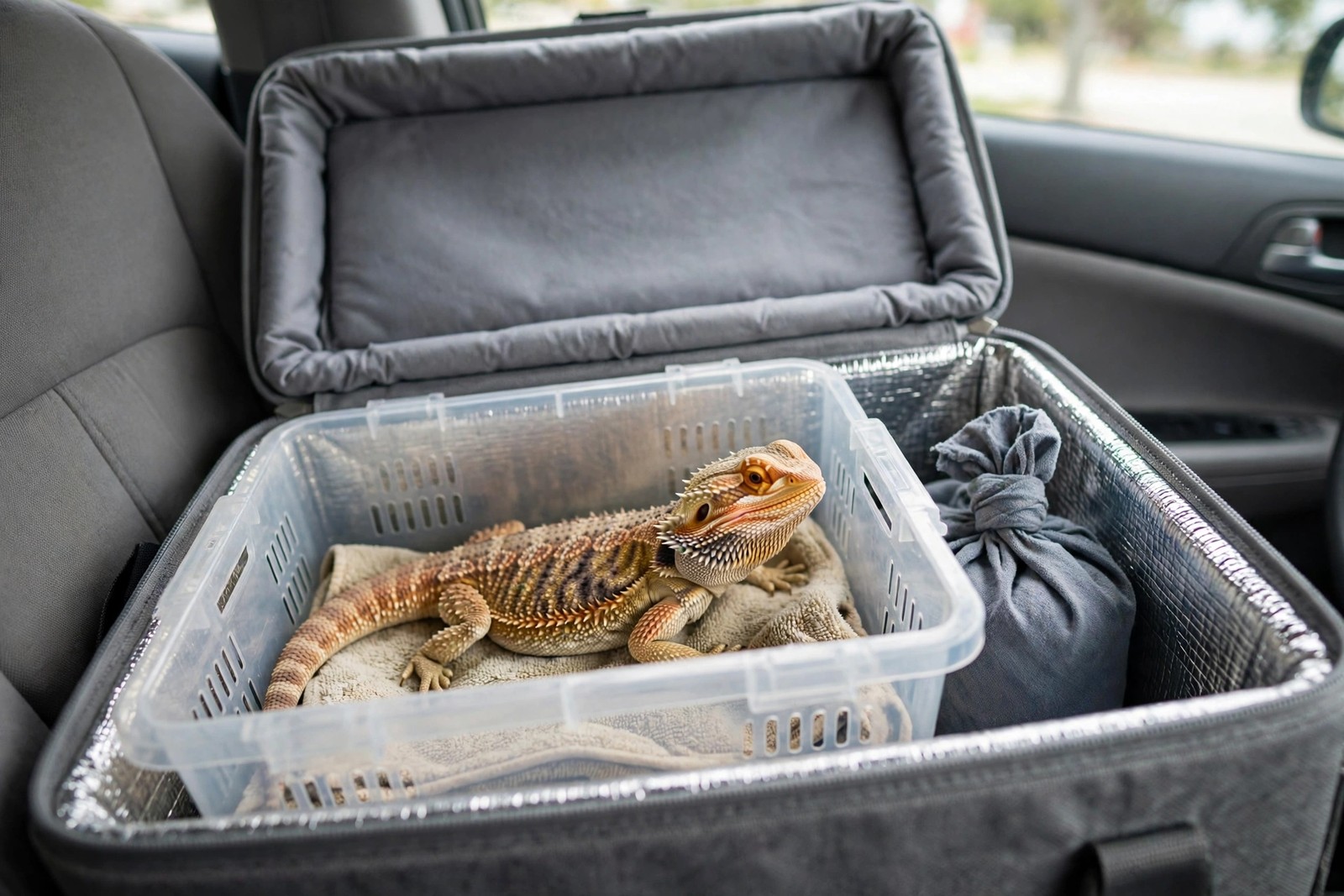
A reptile cannot generate its own body heat, so in a car it simply becomes the temperature of whatever surrounds it. A cold car in winter, or a long journey with the heating off at rest stops, can chill a lizard, snake, or tortoise to the point of real harm, while a heat source pressed against the animal can burn or overheat just as dangerously. The goal is a warm, stable, insulated microclimate, monitored rather than assumed.
The Setup: Container Inside a Box
Use a secure, ventilated travelling container sized so the reptile can rest naturally but is not thrown around, lined with paper towel or a cloth for grip. Place that container inside a larger insulated box, such as a polystyrene or cool-box style container, with scrunched paper or towels filling the gaps so the inner container cannot slide. The insulation slows temperature change in both directions, which matters as much for a car that heats up in a sunny car park as for one cooling on a winter motorway.
For heat, use a long-lasting heat pack designed to run for many hours, or a hot water bottle filled with warm, not boiling, water. Activate or fill it before departure, wrap it in a towel or cloth, and fix it outside the inner container or taped to one side of the box so the reptile can be near warmth without lying directly on the source. Never place a chemical hand warmer loose inside the container with the animal: some types get hot enough to burn, peak unpredictably, and use up oxygen in a sealed space. Heat that arrives through a barrier, warming one end more than the other, lets the animal shift position and choose.
The Car and the Journey
Pre-warm the car before you load the box, and position it on a flat surface where it cannot fall, out of direct sunlight and away from heater vents blasting one side. Put a simple thermometer, ideally one that records minimum and maximum, inside the box where you can check it at stops without unpacking the reptile. Aim to keep the box within the lower, comfortable part of your species' normal range; a slightly cool but stable journey usually beats a hot one, because overheating harms reptiles faster than mild cooling.
Check temperature at every stop, refresh a water bottle that has gone cold on long trips, and never leave a reptile in a parked car unattended, where temperatures swing fastest. Keep the journey quiet and dark inside the box, skip feeding for a day before travel so digestion is not interrupted mid-process, and offer water at the destination rather than sloshing a bowl around in transit. For very long journeys, plan the route around an overnight stop where the reptile can be set up properly with its normal heating, rather than spending a night in the travel box.
If Something Looks Wrong on Arrival
A chilled reptile is sluggish and cold to the touch. Warm them gradually back in their normal enclosure with its usual temperature gradient; never use hot water or a sudden blast of heat, which shocks rather than helps. A reptile who is gaping, limp, or unresponsive after travel, or who does not return to normal behaviour within a day at the destination, needs a reptile vet, and the journey temperatures you recorded will help that vet judge what happened.
Travel details get lost between drivers and destinations, and KinsLe Pet Passport keeps your reptile's species, normal temperature range, last feed, and vet contact in one packet you can show whoever receives the animal, so its warmth needs are understood the moment it arrives.