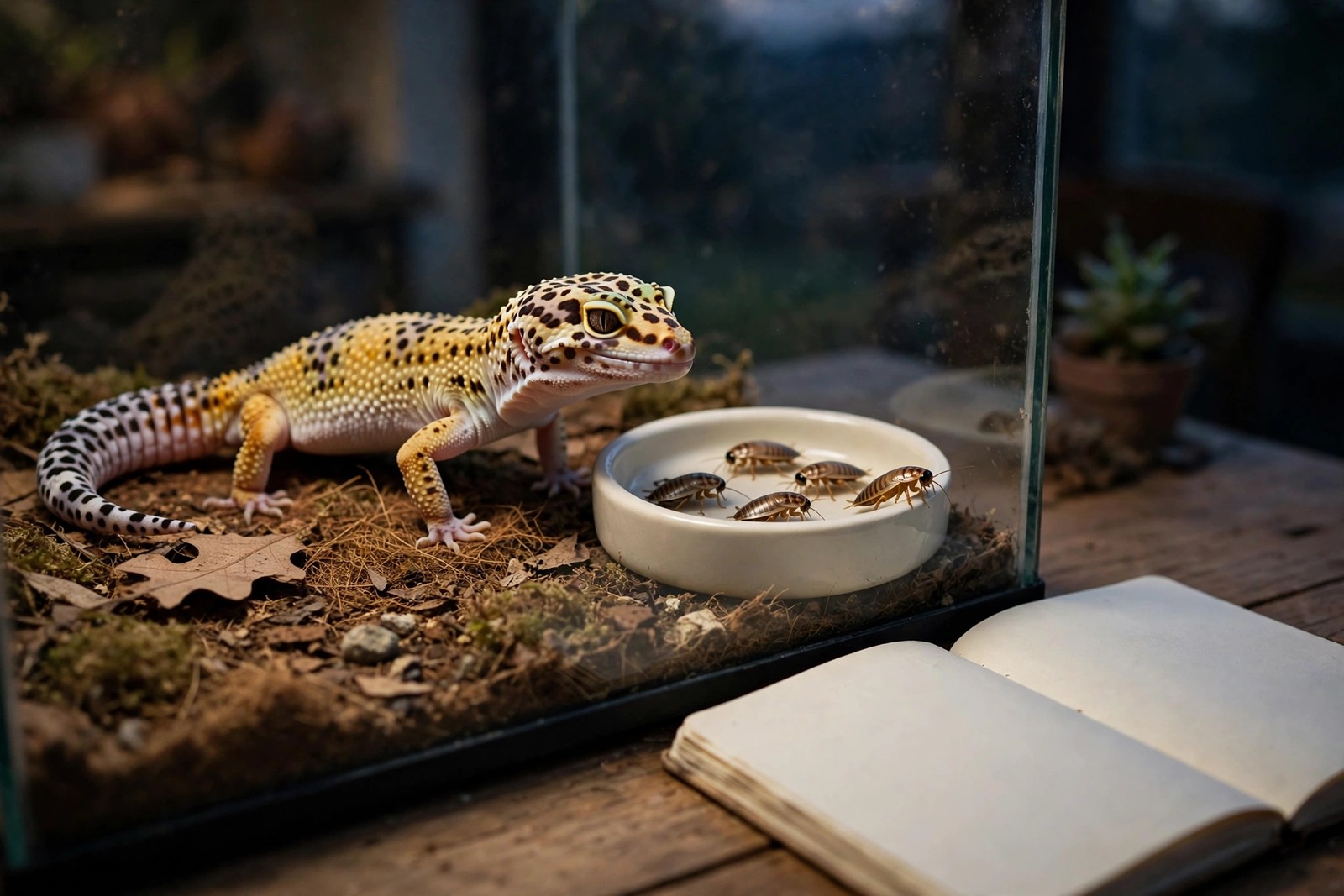
Leopard geckos hunt at dusk and through the night, so the feeding itself usually happens after you have gone to bed. That makes memory useless as a record: a gecko that looks as though it ate may have ignored every insect, and uneaten crickets left loose can hide, die in corners, or nibble at a sleeping gecko. The fix is arithmetic rather than observation. You count what goes in during the evening, count what remains in the morning, and the difference is a reliable record of what your gecko actually ate, night after night, without anyone needing to watch.
The Counted-Dish Method
Use a smooth-sided, escape-proof dish that feeders such as dubia roaches, mealworms, or black soldier fly larvae cannot climb out of, and place it in the same spot each evening, ideally near the warm hide where your gecko spends the early evening. Count the insects as you add them, for example eight roaches, and note the number immediately rather than trusting yourself to remember it at breakfast. In the morning, count what is left, remove the survivors, and write down the eaten figure beside the offered figure. Free-roaming crickets defeat this system, so if you offer crickets, tong-feed a counted number at dusk or count carefully and remove every uneaten cricket in the morning, because loose crickets stress geckos and foul the enclosure as they die.
What One Line of the Log Should Hold
Keep each entry to one line with five fields: the date, the feeder type, the number offered, the number remaining in the morning, and the supplement used, written as a short code your household agrees on. Add a sixth field for notes only when something changes, such as a shed starting, a new feeder type refused, or droppings looking unusual. Photographing the dish before you clear it takes two seconds and settles any argument about the morning count. Review the log weekly rather than nightly: a single low night means little, while eaten figures dropping across a full week, especially alongside a thinning tail, is a pattern worth acting on.
Weighing Turns Counts Into a Trend
Appetite numbers mean more beside a weight, so weigh your gecko every two weeks on a small kitchen scale, in the same container, at the same time of day, and record the figure in the same log. A growing juvenile should trend upward, a healthy adult should hold steady, and the fat tail should stay plump and wider than the body at its base. If the counts stay strong but the weight slides, or the weight holds while eating stops for more than a week outside a shed, that mismatch is exactly the evidence a reptile vet wants, and it is evidence you can only produce if the nightly counts were written down rather than remembered.
Keeping the Log Where It Travels
A feeding log earns its keep when it leaves the house: a sitter can match your counted-dish routine exactly, and a vet can read appetite history at a glance instead of reconstructing it from your recollections. Keep feeder types, dish placement, supplement codes, weights, and shed dates in one place, updated the morning you make the count rather than in a weekly catch-up. KinsLe's Pet Passport holds that whole record in one portable packet, ready for vet visits, boarding, and handoffs, so your gecko's night-eating history is available wherever it is needed.