
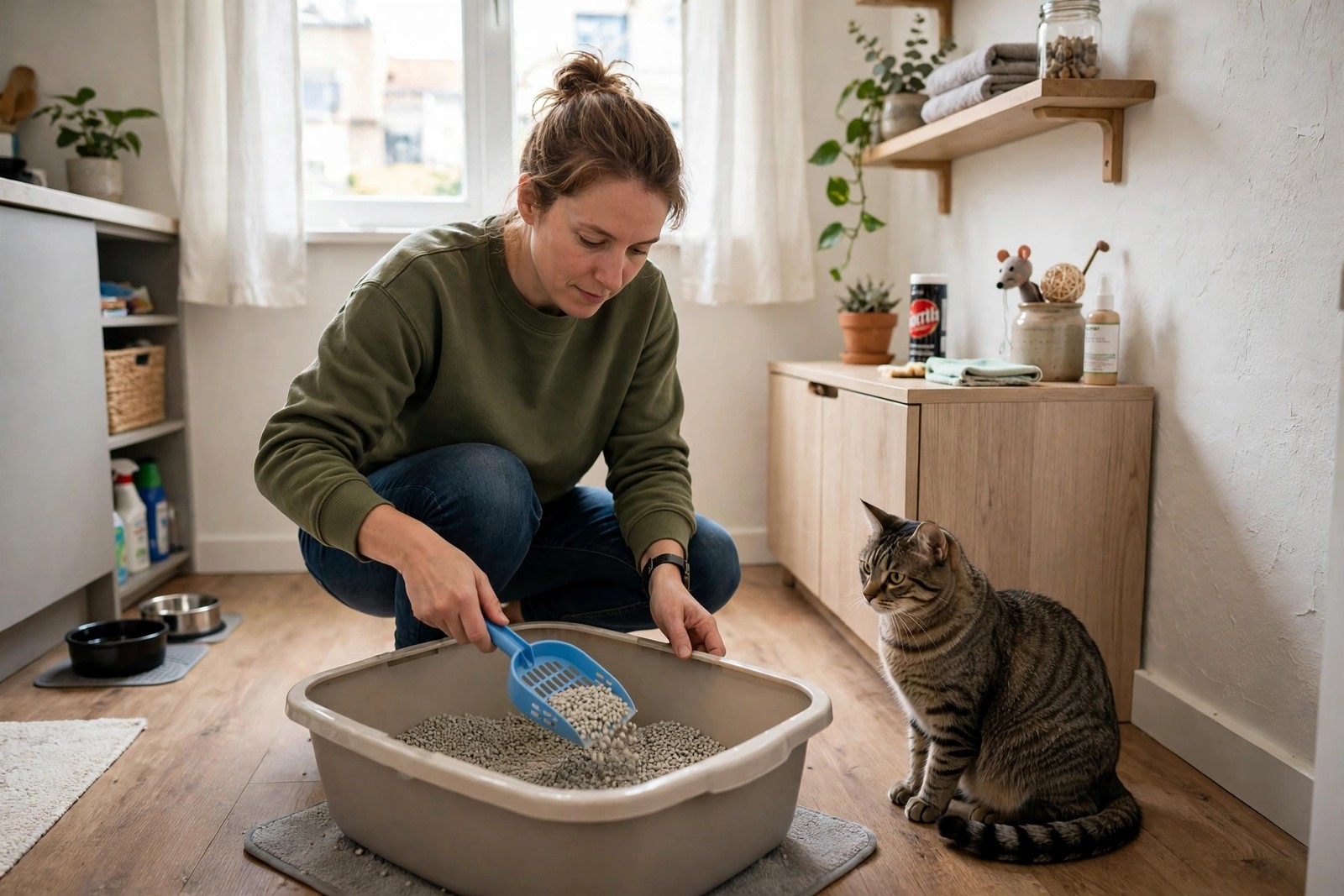
The fastest way to keep a small apartment from smelling like the litter box is unglamorous but reliable: scoop at least once a day, change and wash the box on a regular cycle, use an unscented litter your cat actually likes, and keep gentle airflow moving near — not directly on — the box area. In a small space, odour control is mostly about frequency, not fragrance.
Why Small Spaces Amplify Litter Smell
In a studio or one-bedroom, there is nowhere for odour to disperse, and warm, still air holds it close. Ammonia builds as waste sits, clumps break down if they are left, and a box tucked into a bathroom or closet with the door closed can concentrate smells every time it is opened. That is why the same routine that passes unnoticed in a large house can feel overwhelming in an apartment.
The other trap is masking. Heavily perfumed litters and plug-in scents may smell strong to you, but many cats dislike them and begin avoiding the box — creating accidents on rugs or laundry that are far harder to fix than the original odour. Your cat's nose, not yours, should pick the litter.
A Routine That Actually Keeps Air Fresh
Build a simple, repeatable system:
- Scoop daily, twice if you can. Morning and evening scooping in a small apartment makes the biggest difference for the least effort.
- Top up and fully refresh on schedule. Add fresh litter after scooping, and dump and replace it entirely on a regular cycle based on the litter type and your cat's habits.
- Wash the box properly. At full changes, wash with mild, unscented soap and water, rinse well, and dry completely before refilling. Replace scratched, worn boxes that trap odour in the plastic.
- Contain waste between trips out. A sealed pail or lidded bin near the box, emptied frequently, stops scooped waste from scenting the room.
- Ventilate gently. Crack a window nearby when you can or run a bathroom fan briefly; avoid a fan blowing directly across the box, which many cats dislike.
Keep the box in a consistent, accessible, low-traffic spot. Moving it around or hiding it behind obstacles in the name of odour control often backfires if your cat finds it awkward to reach.
When Smell Is a Health or Behaviour Clue
A sudden change in odour — unusually strong urine smell, very foul stools, or a cat who has stopped covering waste — can signal more than a cleaning issue. So can urinating outside the box, straining, frequent small trips, or blood in urine or stool. Those changes deserve a prompt call to your veterinarian rather than a new air freshener.
Also check diet and water habits with your vet if litter odour changes persist despite good cleaning. And if a normally tidy cat starts avoiding a perfumed or newly switched litter, go back to the previous unscented option and transition gradually by mixing.
Split the Scooping With Care Teams
Daily scooping fails most often when it belongs to one person who gets busy, travels, or simply forgets. KinsLe's Care Teams are built for exactly this kind of shared routine: you can assign care duties — feeding, walks, medications, grooming, and the household tasks around them — to family members or housemates, and each person marks completions with a timestamp so everyone can see what is already done. Rotating the litter routine through Care Teams means the box gets scooped on holiday weeks and late-work nights too, not just on good days.
Fresh air in a small apartment is not about hiding that a cat lives there — it is about a clean box she loves using. Give every housemate named scooping nights through the Care Teams on KinsLe and mark each visit done, because a box cleaned on tired evenings too is what keeps a tiny home smelling like a home.