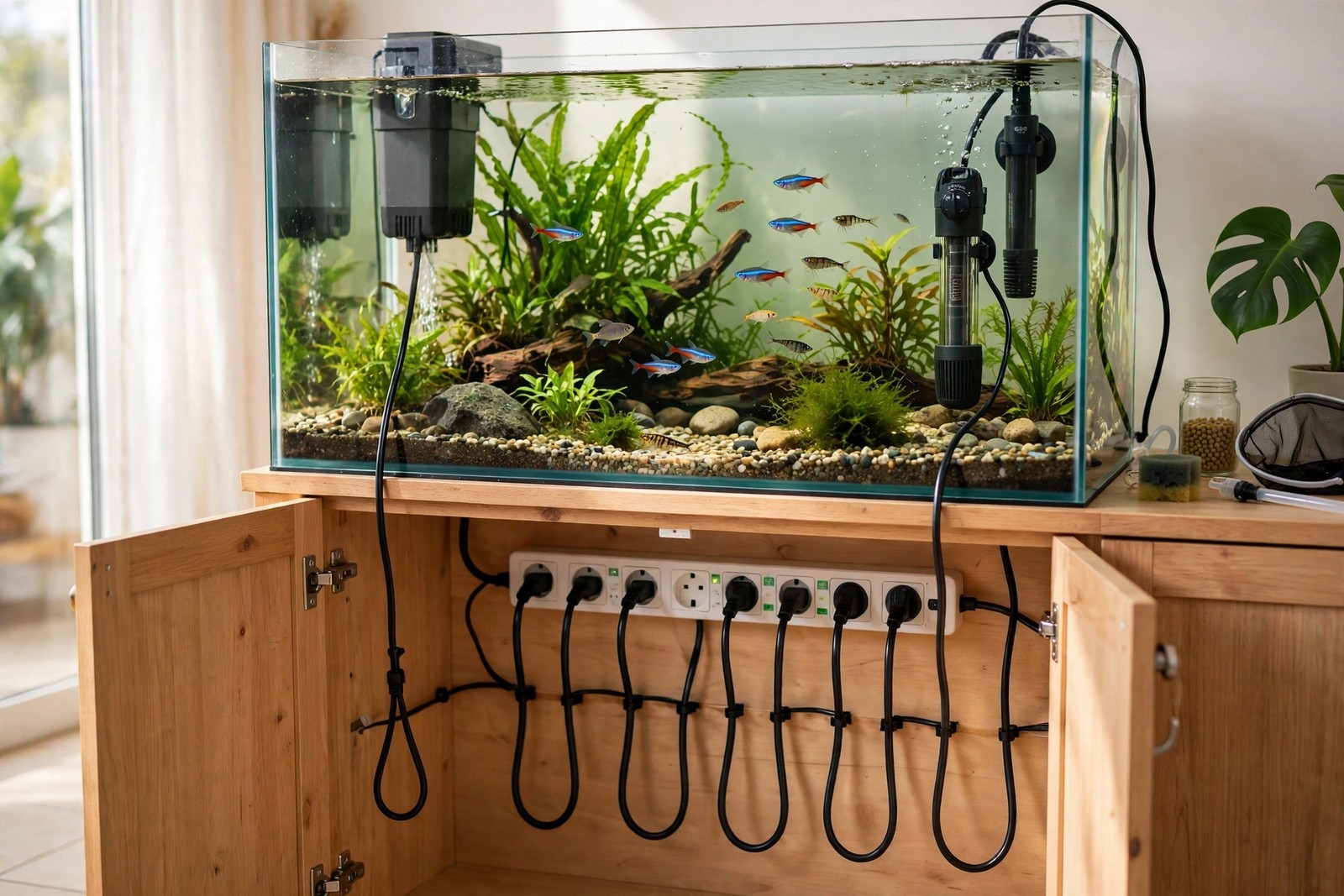
An aquarium runs a heater, filter, lights, and often an air pump within inches of water, so electrical safety rests on keeping water and current apart by design, not by luck. Three habits do most of the work: every cable hangs in a drip loop, the whole setup is fed through a GFCI or RCD protected outlet that cuts power fast if current leaks, and nobody puts wet hands into a live tank. Add regular inspection of cables and heaters, and you have covered the failures that actually hurt people and fish.
Drip Loops and Cable Routing
Water follows a cable downhill by surface tension, straight into a plug if the cord runs that way. A drip loop prevents it: let each cord dip below the level of both the appliance and the socket, so the lowest point of the loop sits under the outlet and any travelling water drips off there onto the floor. Route cords neatly behind the stand, keep them off damp surfaces, and avoid pinching them in cabinet doors or under the tank rim. Keep the power strip itself mounted inside the cabinet or on a wall, raised off the floor and away from the filter outflow, splashing, and the spot where you set down a wet bucket during water changes.
Protected Power and Sensible Loading
Plug aquarium equipment into a GFCI or RCD protected circuit and test the device using its own test button as its instructions direct. These devices trip when current leaks toward earth, which is exactly the fault a cracked heater or a soaked plug creates. Do not daisy-chain several strips together or overload one socket with adaptors; spread equipment across proper outlets and label each plug, so in an emergency you or a helper can cut the heater or filter power without guessing. Battery backup for an air pump is a useful extra for outages, because oxygen falls quickly in a warm, stocked tank when the filter stops.
Working in the Tank Safely
Switch equipment off before pruning plants, catching fish, or adjusting a heater, and dry your hands before touching plugs or switches afterwards. Salt creep, condensation under a hood, and a dripping arm across a light unit are everyday routes for water to reach electrics, so wipe condensation, keep light units on their proper brackets, and never rest a dripping net or hose on the cabinet electrics. Teach children that the tank is a look-and-gentle-touch place and that cables and sockets are adults-only, and site the tank so a knocked bucket or a jumping dog cannot soak the strip.
Inspecting Heaters and Cables
Once a month, switch off and look closely: heater glass or casing cracked, water inside the heater tube, cable sheathing split or stiff, plugs discoloured or warm, and any tingling sensation reported when a hand touched the water. A tingle is a stop signal; unplug items one by one only with dry hands and from the socket, remove the suspect item, and do not put your hand back in until the cause is found. Replace damaged equipment outright, because tape and sealant are not safe repairs on submerged electrics, and keep spare fuses and a torch where you can reach them during an outage.
Set up this way, an aquarium's electrics become routine background rather than a nagging worry. Write the rules down where a helper can find them before they feed your fish or top up the tank. Through KinsLe, Care Pass puts that switch-off order, drip-loop check, and emergency contact into a single temporary link for your sitter, so the safety routine holds even when you are away.