
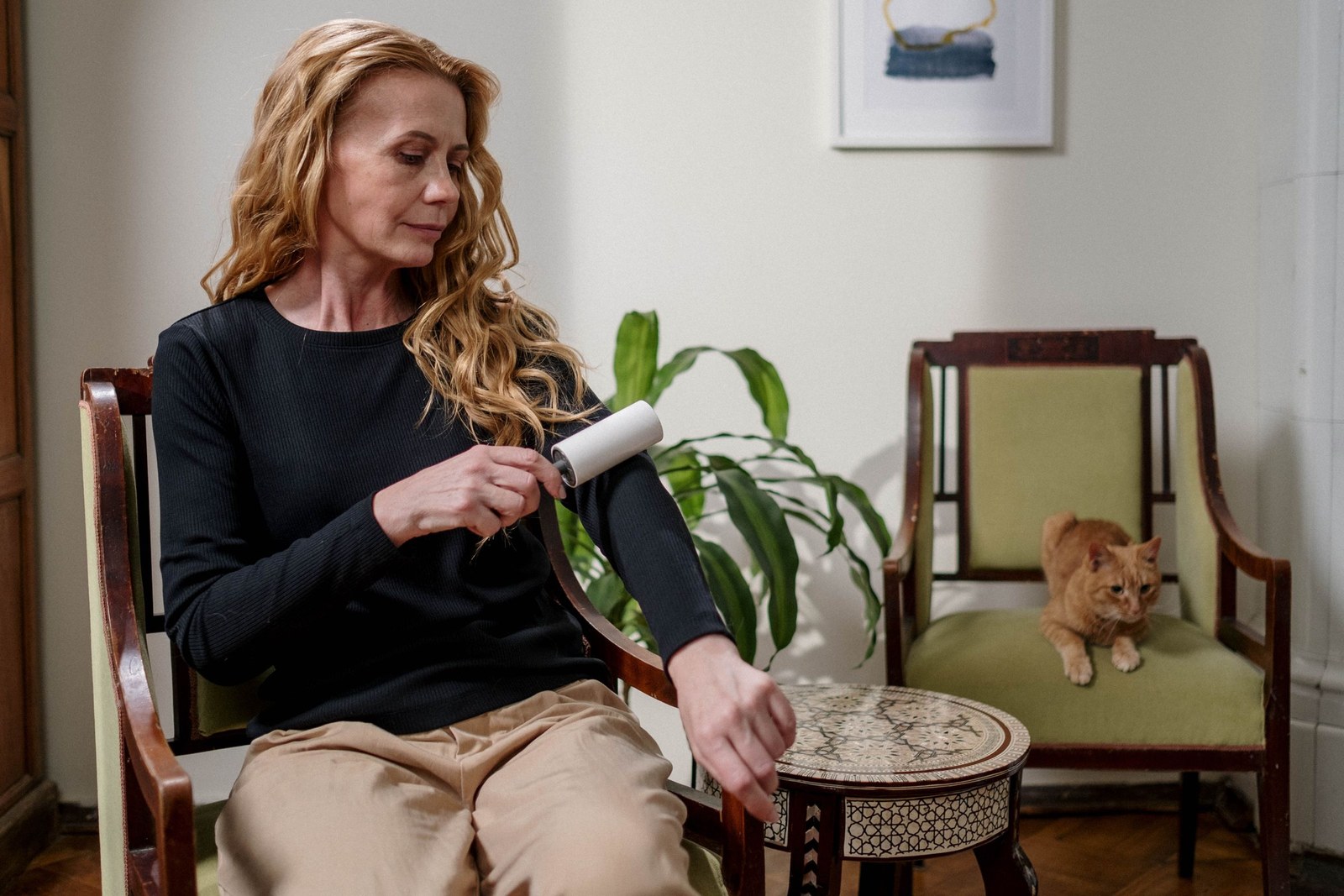
Cat hair stays under control when you work at it in small daily passes instead of saving it for one heroic clean. Run a lint roller briefly over the chairs she favours, protect the spots she claims with throws you can wash, brush her several times each week and vacuum upholstered furniture once or twice weekly — hair lifted early, or caught on the brush, never gets woven into the sofa.
Start at the source: the brush
Regular brushing is the real workhorse of hair control. Every hair collected on a slicker brush or grooming mitt is one that does not end up on a cushion or get swallowed by your cat during her own grooming. Short-haired cats usually do well with two or three brief sessions a week; long-haired breeds like Persians and Maine Coons benefit from more frequent attention, which also prevents the mats that form when loose undercoat tangles in the coat. During spring and fall shedding peaks, step the frequency up for a few weeks rather than fighting the aftermath.
Keep the brush where the cat actually is — by the sofa, not in a distant cupboard — and make sessions part of cuddle time so they happen without willpower.
Defend the furniture strategically
You will not keep a cat off every surface, and honestly, most owners do not want to. Instead, defend with washable layers:
- Throws and blankets on the exact spots your cat claims — her end of the sofa, the sunny armchair — shaken outside daily and washed weekly
- A quick daily lint roll of favourite chairs and cushions; thirty seconds while the kettle boils
- Vacuum soft furnishings once or twice a week with an upholstery attachment, which pulls out hair a lint roller only skims
- Rubber brushes or dampened rubber gloves swept over fabric, which ball loose hair up surprisingly effectively between vacuums
Hard floors show hair less than carpet but collect it in corners and along skirting boards; a quick sweep or robot vacuum run on the rooms your cat favours keeps the tumbleweeds from forming.
Clothes: the doorway routine
Keep a lint roller by the front door and use it on your way out, not in a panic in the car. Store clean clothes behind closed wardrobe and drawer doors — an open laundry basket is, to a cat, a freshly prepared bed. Tumble-drying clothes and throws for a few minutes before washing loosens hair into the lint filter where it belongs, and washing pet blankets separately stops you redistributing hair across the whole load. Dark fabrics show light hair brutally, so if your cat is pale, a throw in a forgiving mid-tone on her favourite chair saves a lot of rolling.
When the hair itself is the message
A baseline of shed hair is normal life with a cat, but a sudden increase — bald patches, itching, a dull or greasy coat — is not a housekeeping problem; it is a reason to call your veterinarian, since skin and health issues often announce themselves through the coat first. Solve the cause, not just the sofa.
Sharing the small jobs
None of these tasks is big — which is exactly why they get skipped or silently land on one person. If several relatives help with your cat, you can give the ones you choose access to her profile through KinsLe's Family Sharing, so each of them can open it directly. In KinsLe, Family Sharing is how a picked relative gets to see her profile at home.