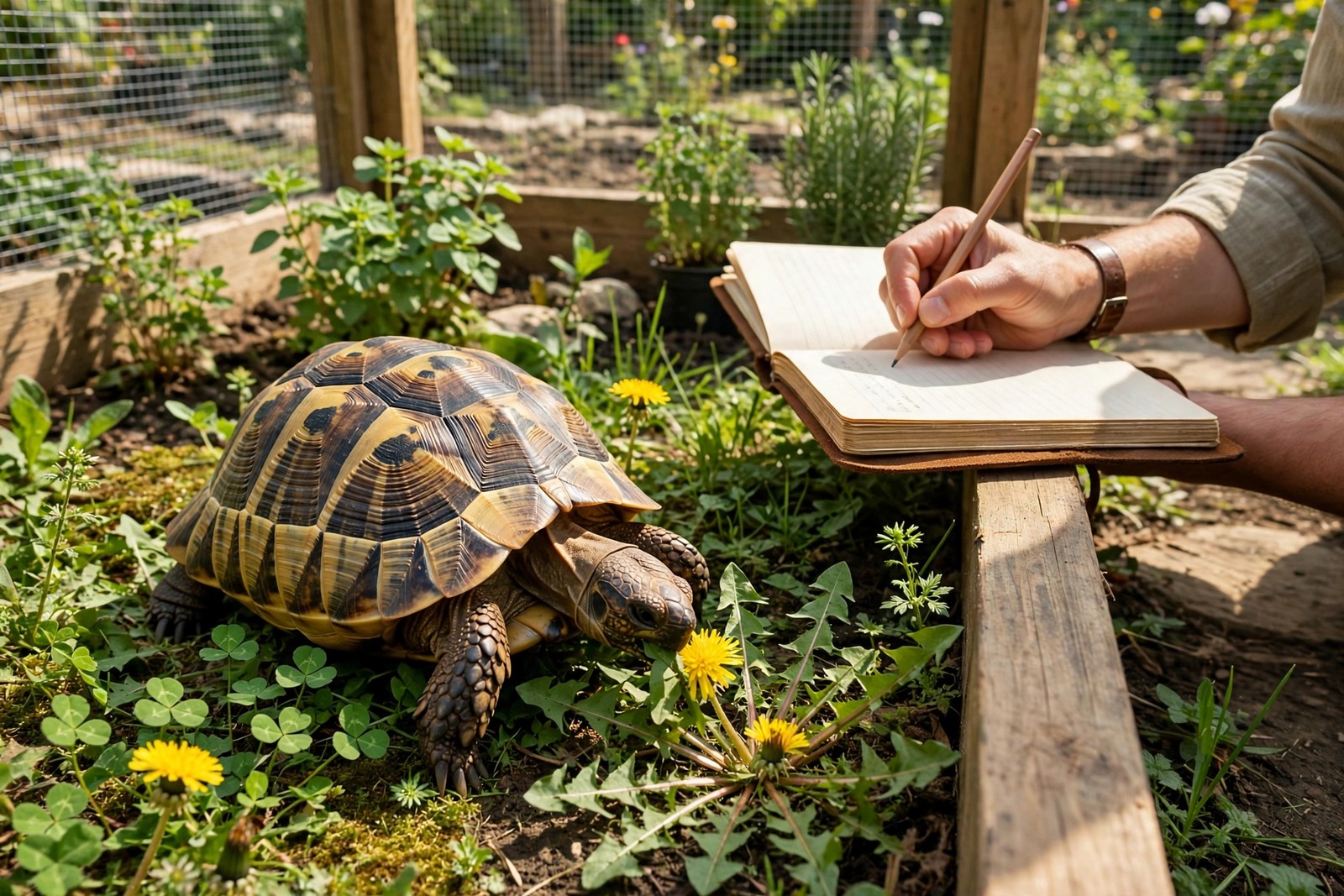
A tortoise that grazes outdoors eats a second diet you never weigh. Dandelion, clover, ribwort plantain, and sow thistle cropped from a run can supply a large share of the day's intake, so a feeding record that only lists indoor meals tells half the story and can mislead you into overfeeding on grazing days. The answer is not to measure the unmeasurable, but to log grazing in the units that do exist: time spent out, the plants available, the plants actually eaten, and a regular weight that shows whether the combined diet is working.
Log Grazing by Time and Plant
For each outdoor session, note the start and finish, or simply the total grazing time, plus a short plant list in two parts: what was growing in the run, and what you saw your tortoise choose. Tortoises have preferences, and a note such as two hours out, clover and dandelion cropped hard, plantain ignored, tells a future reader far more than the word grazed. Photograph the run every few weeks as the season turns, because the weed mix changes from spring growth to tough summer stems, and a photo dates that change better than a description. Record the area used as well, and flag any patch that has been mown, sprayed, or treated: a tortoise must never graze where weedkiller or fertiliser has been used until the product guidance and your vet say the ground is safe again.
Record Indoor Meals Separately
Keep indoor feeding on its own lines, with the greens and vegetables offered, a rough handful-based amount, and anything refused. On heavy grazing days many keepers offer a smaller indoor meal or skip it, and the log should show that decision and its reason, so the pattern reads as deliberate rather than as missed feeds. Note supplements on the indoor lines, since dusting happens on prepared food, and note bathing and drinking too, because outdoor tortoises often drink in a shallow bath after a warm grazing session. Separating the two streams, grazed and prepared, lets you adjust one without guessing at the other.
Let Monthly Weight Judge the Whole Diet
Because grazing cannot be weighed, weight becomes the referee. Weigh your tortoise monthly, on the same flat scale, at the same time of day, and record the figure beside a straight-line shell length once or twice a year. A steady or slowly rising line in a growing youngster, and a stable line in an adult, suggest the combined intake is about right. A falling trend across two monthly checks means the grazing is not covering the indoor shortfall, while a fast climb alongside a pyramidal, bumpy shell suggests rich food is arriving from one stream or the other. Bring the log to vet visits: appetite, grazing behaviour, and weight trend together give a reptile vet a far clearer picture than indoor meals alone.
One Record, Ready to Hand Over
Keep the grazing log, indoor meals, supplement notes, weights, and a list of safe weeds for your garden in a single packet, updated on the day rather than reconstructed later. A sitter then knows which run is safe, which weeds to pick, and what a normal grazing day looks like for this tortoise. KinsLe's Pet Passport keeps that combined record together in one portable packet, ready for vet visits, travel, boarding, and handoffs, so the outdoor half of the diet is never lost.