
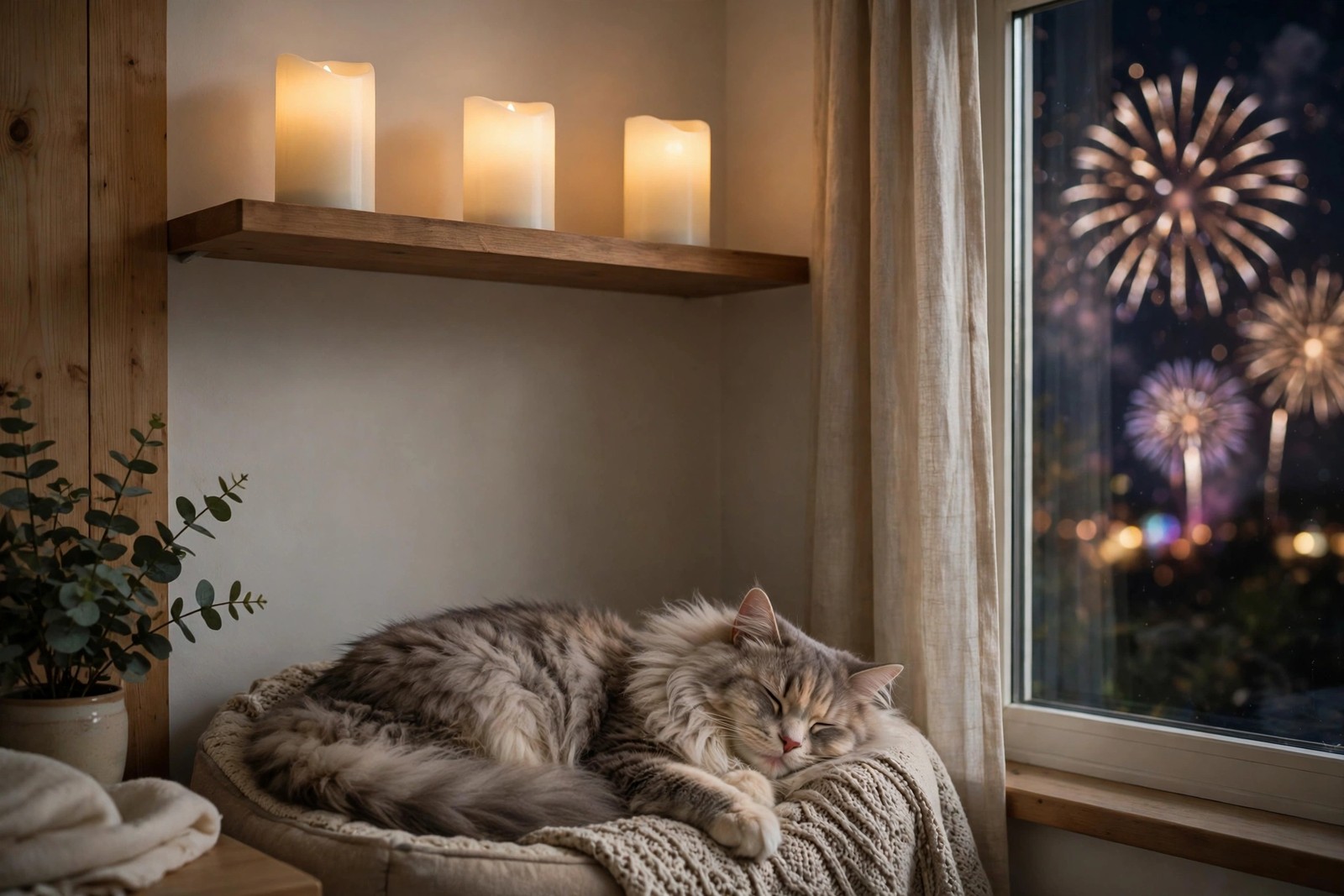
Celebration safety starts by moving every lit flame well beyond the reach of whiskers, fur and landing paws — or swapping real candles for battery-powered alternatives in holders — and by settling your pet in a separate, secure indoor retreat, fastened shut, long before the first fireworks begin outside that evening. Most injuries and escapes around celebrations are preventable with those few habits.
Candles: Burns, Knocked-Over Flames, and Curious Tails
A cat does not need to touch a flame to be hurt by it. A fluffy tail passing over a tea light can catch or singe, whiskers can brush a candle on a low table, and a cat jumping onto a mantel or counter can knock a candle into curtains, paper, or bedding. Scented candles add another wrinkle: spilled hot wax can burn skin and mats fur, and strong fragrances irritate some cats in small rooms.
Use heavy, wide-based holders that cannot tip easily, and place candles inside a fireplace, on a high stable shelf, or in a hurricane-style enclosed holder rather than on coffee tables and floor-level displays. Keep them away from the edges cats land on, blow them out every time you leave the room — no exceptions for just a minute — and consider flameless LED candles for mantels, windowsills, and holiday centerpieces. You get the same glow with none of the fire risk, which is why many cat owners make the switch permanent.
If your cat gets wax in its fur, let it harden and ask your veterinarian for advice rather than pulling it off, and seek prompt care for any burn or breathing difficulty.
Fireworks: Why Cats Bolt and How to Help Them Cope
Fireworks combine sudden booms, flashes, vibrations, and unfamiliar smells — a sensory assault for an animal with far more sensitive hearing than ours. Startled cats often bolt for any opening, squeeze through surprisingly small gaps, or hide so well that owners fear they have escaped when they are actually under a bed. Outdoor and indoor-outdoor cats face the greatest risk, because a fright outdoors can send them running far from home and across roads.
Before dusk, bring your cat indoors and settle it in a quiet interior room with water, a litter box, bedding, and a covered hiding spot. Close and latch windows and doors, draw curtains to mute flashes, and leave a television or radio on to soften the bangs. Check in calmly and briefly. If your cat panics badly at noise, talk to your veterinarian ahead of the season about coping strategies — plan that conversation early, not on the day itself.
Latches, Guests, and Celebration-Night Checks
Celebrations mean doors opening constantly and guests who do not know your cat's habits. Do a latch check an hour before people arrive: front and back doors, windows, and the door to your cat's quiet room. Put a sign on that door asking guests not to open it, and ask one household member to check on the cat during the evening.
Keep sparklers, matches, and lighter fluid stored away, and clear firework debris from your yard the next morning, since spent casings are chewable hazards.
When a Frightened Cat Gets Out Anyway
Despite good planning, a determined, terrified cat can slip past a guest. Search your home thoroughly first, then the immediate area, and ask neighbors to check garages and sheds. That is when KinsLe's Circle of Love matters most — it is the free community network on KinsLe that powers Lost Pet Alerts, which are free in every profile, show on the map, and let anyone who spots your cat message you directly. Neighbors who know your cat is missing, and who can message you directly with a sighting, turn a lonely search into a local one. Setting up your cat's free profile before celebration season means that network is ready when you need it.
Flameless candles and a latched quiet room remove most celebration risks in one evening of setup. Other owners in the Circle of Love on KinsLe who have lived through fireworks season with a nervous cat can tell you which quiet-room setups, curtain tricks, and check-in rhythms helped most.