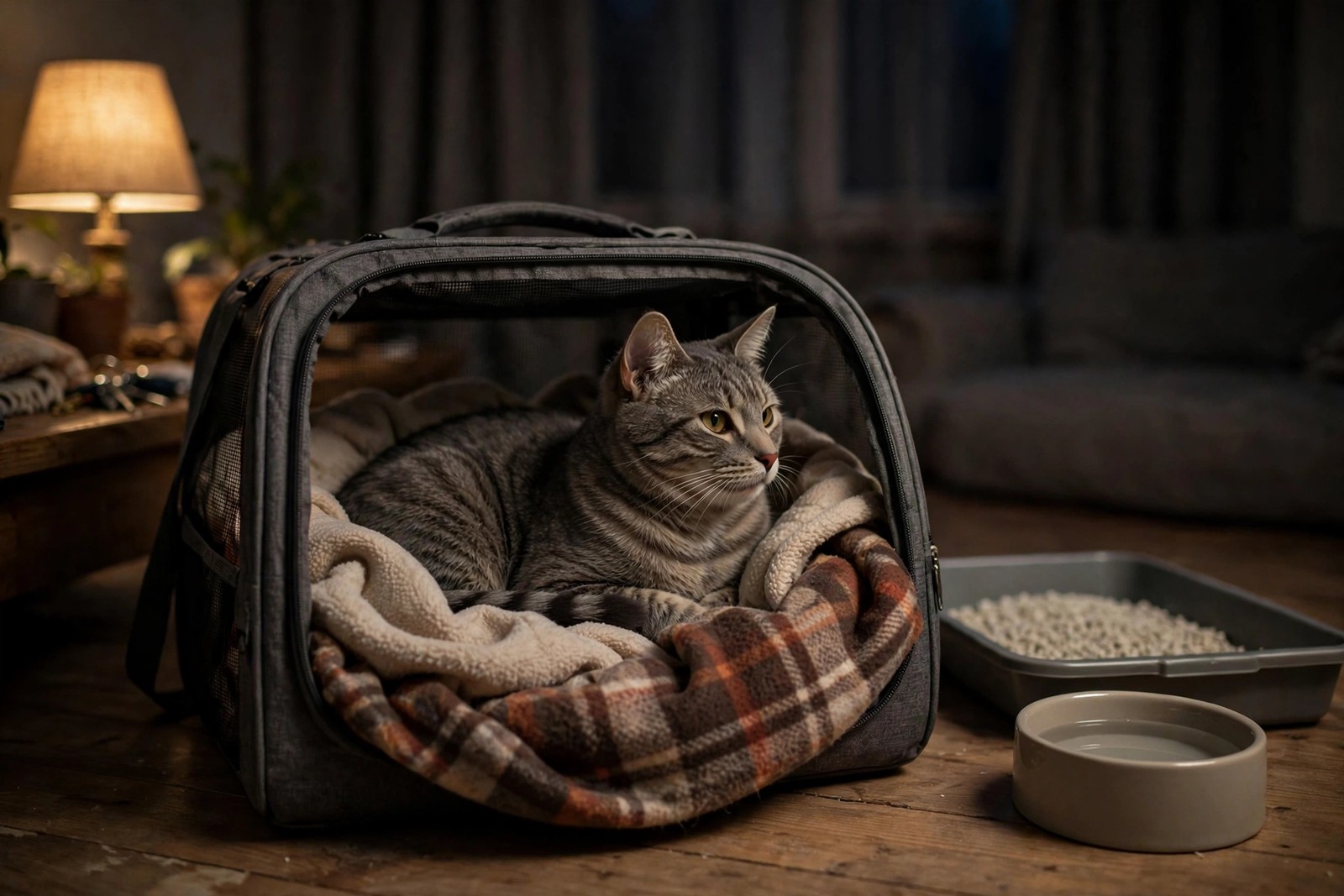
Most cats cope with fireworks best by being somewhere small, dark, and familiar while the noise happens outside a locked door. The plan has two parts: prevent the bolt, because frightened cats squeeze through gaps their owners would swear were too small, and provide a refuge that lets your cat hide on her own terms rather than racing from room to room looking for one.
Before Dark: Bring Her In and Shut the House Down
Timing is the whole game. Call your cat in and feed an early, tempting meal well before dusk, because once the first bangs start she may refuse to come home or may already be hiding somewhere outdoors. Then lock the cat flap — an unlocked flap is an open door to a panicked cat — close and latch windows including small bathroom ones, and draw curtains or blinds, which muffle sound slightly and, just as usefully, block the flashes that startle cats even between bangs. If visitors are coming and going, agree that the door to your cat's room stays shut, and put a note on it if you must; more cats escape during celebrations through doors opened by guests than through any other route. Before the evening, check that your cat's microchip registration holds your current phone number and address, and that any collar she wears fits safely, so a cat who does get out has a fast route home.
Build the Safe Room Properly
Choose the room your cat already favours, ideally away from the loudest side of the house, and stock it before dark: a litter tray well away from her food and water bowls, a covered hiding den such as a box or carrier lined with bedding that smells of home, a scratching post, and a few familiar toys. Some cats prefer a hiding place up high and others burrow under a bed or behind curtains; offer both a raised and a floor-level option and let her choose. Put the television or radio on at its normal volume in or near the room — familiar household sound at an ordinary level takes the edge off sudden bangs better than silence, and turning it up loud adds noise rather than masking it.
During the Noise: Calm, Present, and Hands-Off Unless Invited
Stay home if you can, behave as though nothing unusual is happening, and let your cat set the terms of contact. A cat who wants to press against you can be stroked and talked to quietly; a cat who has gone into her den should be left there, because dragging a frightened cat out for a cuddle teaches her the den is not safe and can earn you a panicked scratch or a bolt for the door when you open it. Do not pick her up and carry her around the house, and keep children to the same rules. Feeding a small, tasty meal or offering a favourite game between volleys is fine if she is interested; refusing both is normal and is not a problem to fix that night.
Afterwards, and If She Gets Out Anyway
Open doors cautiously the next morning and check washing machines, cupboards, the garage, and behind appliances before normal life resumes, because a cat may have wedged herself into a hiding place during the night and stayed silent there. If, despite everything, your cat is missing, search the immediate streets and gardens calling quietly, ask neighbours to check sheds and garages, and act the same night rather than waiting for her to wander home.
That first-night response is where KinsLe's Lost Pet Alert System earns its place: you can send a free alert to nearby Circle of Love members while the trail is fresh, and anyone who spots your cat can message you directly through it.