
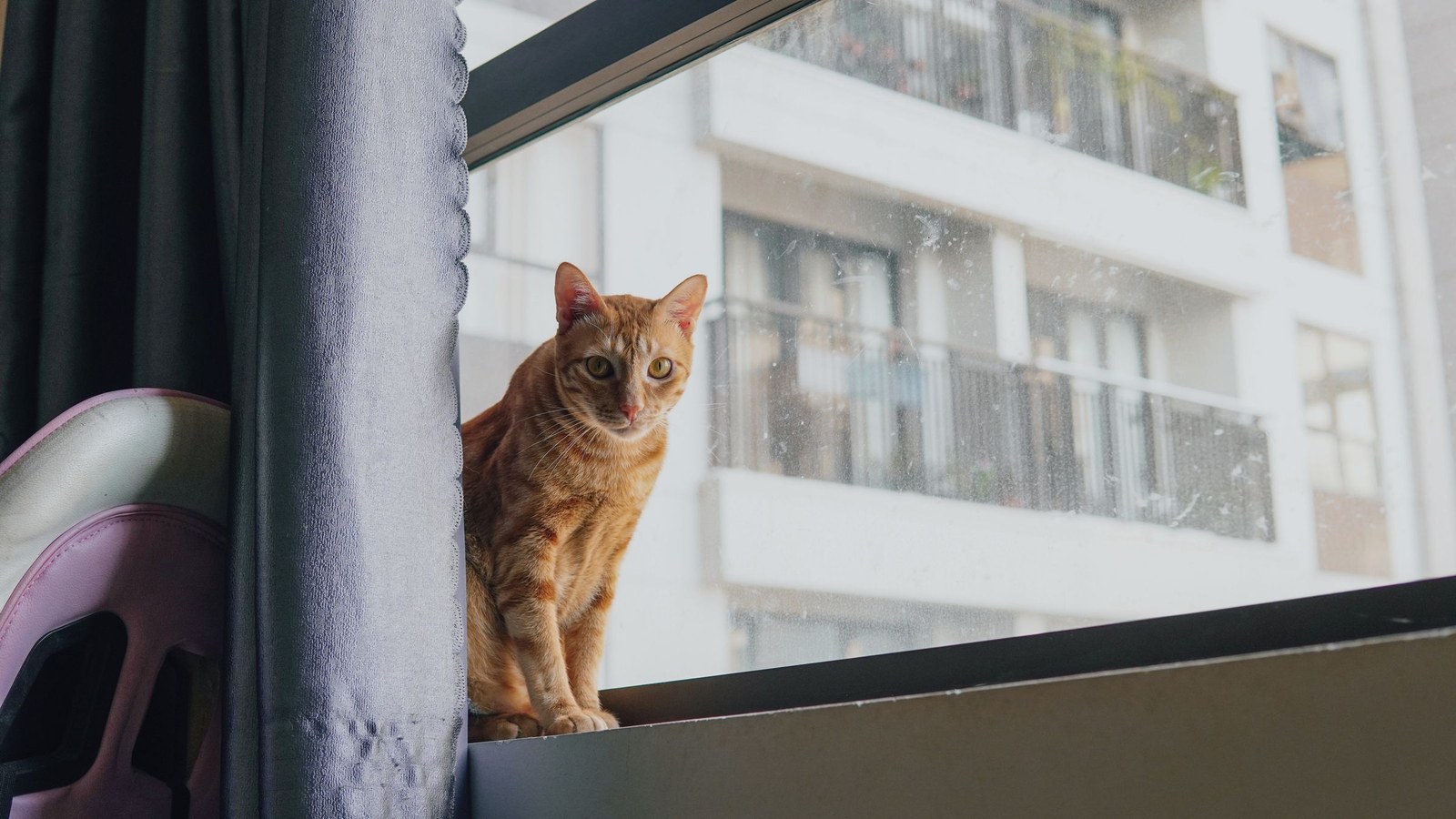
A cat leaning against a flimsy mesh panel high above the street is relying on a barrier meant only to keep insects out, and that barrier can give way under her weight or suddenly pop from its frame when she lunges at a passing bird outside. Supervise any open window, check screen frames regularly, and keep climbing furniture away from windows that are not secured.
Why Cats Fall From Windows
Veterinarians even have a name for it — high-rise syndrome — and it rarely involves a cat being careless. Cats focus intensely on a bird, moth, or leaf outside, shift or lunge against the screen, and the screen pops out of its frame or tears. Other cats simply lean their full weight into a screen while watching the street, nap on a sill and roll, or slip on a narrow ledge while turning around.
Falls happen from surprisingly low heights as well as tall buildings, and a short fall can be worse in one way: a cat may not have time to orient itself before landing. Balconies carry the same risks, with the added hazard of gaps between railings that a slim cat can squeeze through. Indoor cats are not immune to the instinct — a lifetime indoors does not switch off the urge to chase movement at a window.
Screens and Guards That Actually Hold
Start by testing every screen: push firmly from inside at the corners and center. If the frame wobbles, the mesh flexes out of its channel, or the screen is held only by light friction clips, it needs upgrading before the window opens again. Options that work for cat homes include heavy-duty pet-resistant mesh fitted in reinforced frames, screw-in window guards or grilles, and window locks or stops that limit how far a window can open to a gap too small for your cat's head.
For casement and sliding windows, look for guards made for that style and fit them exactly to the manufacturer's instructions. Re-check fixings at the start of every warm season and after any window cleaning, when screens are often refitted loosely. If you rent, ask your landlord about screw-in options and offer removable guard systems — many are designed to install without permanent changes.
Habits Around Open Windows and Balconies
Keep windows closed when you are out or asleep unless they are behind a verified guard. Move cat trees, sofas, and shelving away from unsecured windows so your cat is not encouraged to perch and lean there, and instead place an approved perch at a properly guarded window where your cat can watch the world safely.
On balconies, enclose open sides with securely fixed mesh or netting designed for cats, check for gaps at floor level, and supervise time outside regardless. Never leave a cat on a balcony unattended, and bring your cat in before fireworks, storms, or building work that could startle it into a jump or squeeze-through attempt.
If a Fall or Escape Happens
Search immediately — injured cats often hide silently close to where they fell, under shrubs, cars, or stairwells. Even if your cat seems unhurt, a veterinary check the same day is important because internal injuries are not always obvious. Move your cat gently in a carrier, keeping it warm and still.
KinsLe's Lost Pet Alerts add a second layer of help. They are free in every profile, the alert shows on the map, and a finder who spots your cat can message you directly through KinsLe. In a dense apartment area, those extra local eyes searching the courtyard and garage levels can make a real difference in the first hour.
Strong screens and a seasonal check cost little compared with the alternative. For a cat who remains unaccounted for, you can send word to owners near you through the Lost Pet Alert System on KinsLe, and the person who spots your cat will be able to reach you with a direct message.