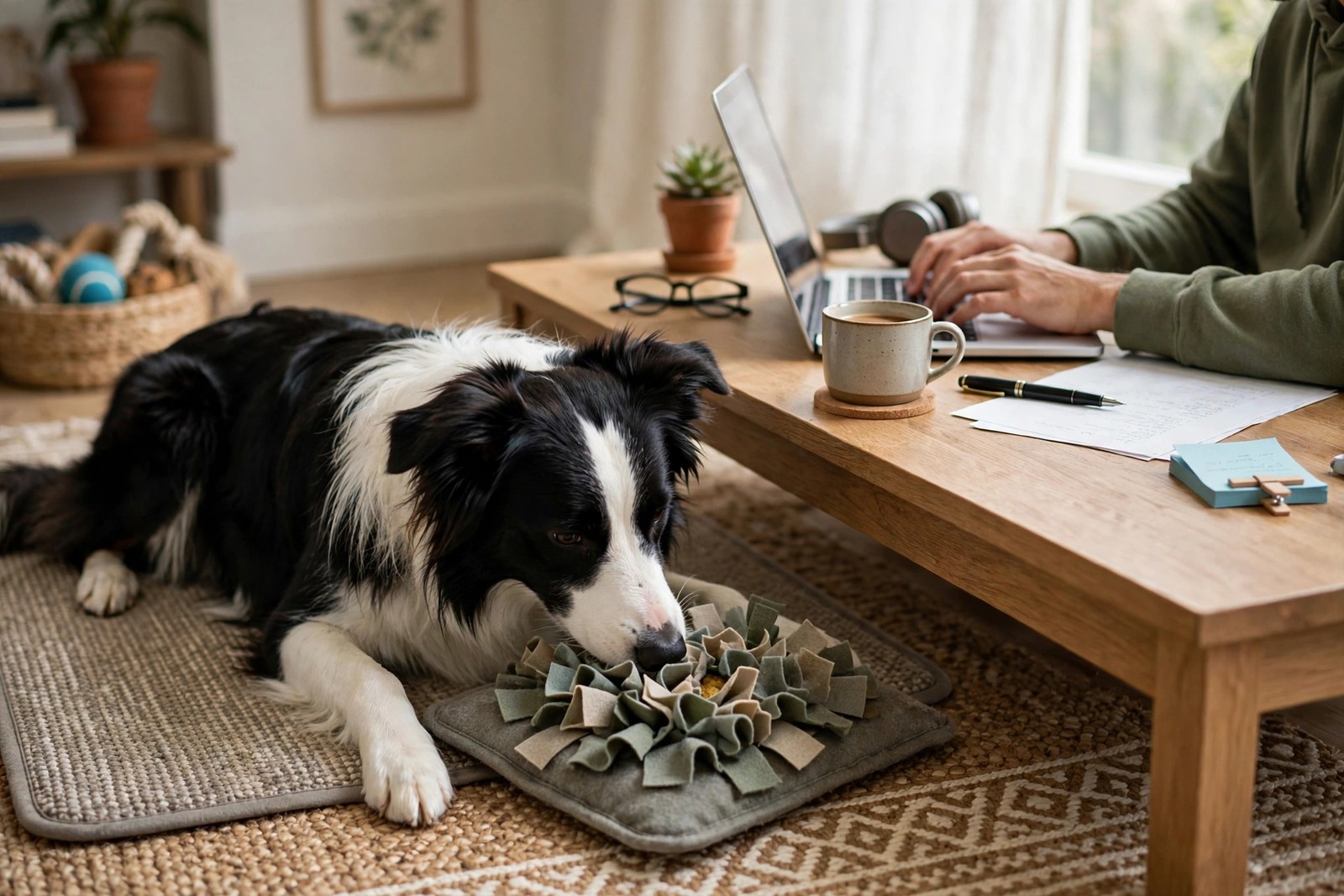
The goal is not a dog who is busy all day — it is a dog who has genuinely had his needs met and has learned that your work hours are rest hours. Adult dogs sleep for large parts of the day, and a dog who demand-barks at your desk is usually under-exercised, over-stimulated at the wrong moments, or has learned that nudging you pays. Fix the shape of the day first, and the behaviour during calls usually follows.
Start Before You Log On
The single highest-value change is front-loading the morning. Take a 30 to 45 minute walk before work that is built for sniffing, not distance: let your dog choose the route at grassy corners and read the neighbourhood at his own pace, because twenty minutes of intense sniffing tires many dogs more than a brisk march. Follow it with five minutes of play or simple training, then breakfast served in a puzzle feeder or scattered in the grass for a final foraging session. A dog who starts the day exercised, fed, and mentally worked is physiologically ready to sleep through your first deep-focus block.
Enrichment That Works While You Cannot
Reserve your best food toys for the hours you genuinely cannot be interrupted. A rubber chew toy stuffed with wet food, banana, or soaked kibble and frozen overnight can occupy a dog quietly for 20 to 40 minutes. A snuffle mat or a cardboard box layered with scrunched paper and hidden treats turns ten minutes of searching into real nose work. A lick mat spread thinly with plain yoghurt or mashed pumpkin suits dogs who settle better with repetitive licking than chewing. Keep two or three options in rotation and put them away between uses — a puzzle that lives on the floor all day becomes furniture within a week.
Schedule Breaks Like Meetings
Put two or three short breaks in your calendar and honour them like calls: a mid-morning toilet break and a few minutes of tug or fetch in the garden, a proper lunchtime walk or play session, and a mid-afternoon chew or training game. Predictability is what makes this work — a dog who knows the next break is coming can wait for it, while a dog who never knows when attention arrives has to keep asking. Between breaks, reward the behaviour you want the first times you see it: a dog lying quietly on his bed during a call should occasionally earn a calm treat delivered without fuss, so settling itself gets reinforced.
Teach a Settle for Call Times
Train a "place" cue away from work first: ask your dog onto a specific mat or bed, reward heavily for staying there in short sessions, and build duration gradually over days. Then move the mat beside your desk and use the cue when a call starts, giving a long-lasting chew as the session begins. Keep your dog behind a baby gate or in a separate rest area if doorbell deliveries trigger barking, and keep greetings when you emerge low-key so your return is not the highlight he waits and whines for. Puppies and adolescents need shorter gaps between breaks — an under-six-month puppy may need a toilet trip every one to two hours, which means your calendar, not willpower, has to carry the plan.
When the Household Shares the Load
If a partner, housemate, or family member is also home, agree out loud who owns each break, because "someone will do it" is how the lunchtime walk quietly vanishes and the 3 p.m. barking starts. Note which enrichment your dog actually finished and which he ignored, and adjust — some dogs are shredders, some are lickers, some only work for food. KinsLe's Care Teams helps here because the morning walk, midday play break, and evening puzzle can sit as assigned duties on your dog's profile, ticked off with timestamps, so everyone at home can see at a glance what has been done and what your dog is still owed today.