
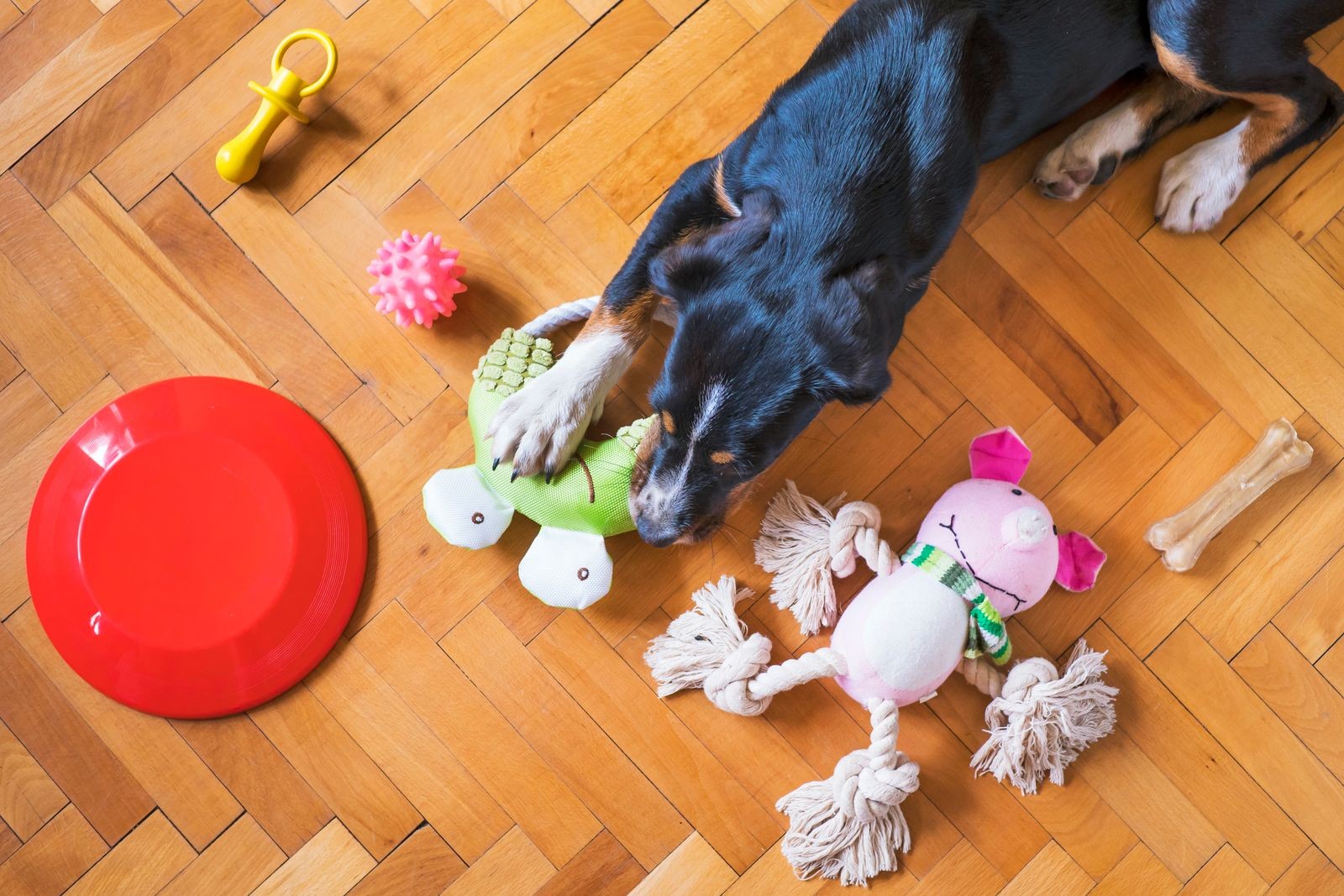
Keep your dog mentally stimulated by letting him work for food and information every day: swap some bowl meals for puzzle feeders, snuffle mats, and frozen stuffed toys, and add sniff-heavy walks where your dog sets the pace. Physical tiredness alone often leaves a smart dog rested by evening and looking for a project — usually your shoes or your couch. Mental work satisfies the seeking, problem-solving part of your dog in a way that extra laps around the block rarely do.
Why mental work tires dogs differently
Dogs evolved to search, scavenge, and figure things out. Sniffing in particular is hard work: a dog processing scent is gathering and sorting information constantly, which is why twenty minutes of free sniffing on a walk can settle a dog more than twenty minutes of marching at heel. Problem-solving — working kibble out of a puzzle, unrolling a towel, finding a hidden toy — adds focus and frustration tolerance in small, healthy doses. Owners of clever breeds like border collies, poodles, Australian cattle dogs, and terriers notice this most, but even famously laid-back dogs brighten up when the day includes something to figure out.
The sign you have pitched it right is a dog who works steadily, succeeds regularly, and then chooses to nap. A dog who gives up quickly needs an easier version; a dog who solves it in seconds needs the next level.
Feed the brain at mealtimes
The simplest change costs nothing: stop serving every meal from a bowl. Try a rotation across the week:
- Kibble scattered in a snuffle mat or rolled in a towel for breakfast
- A puzzle feeder or muffin-tin game for dinner
- A frozen stuffed toy — plain soaked kibble or a little wet food frozen inside a rubber toy — on busy evenings
- A cardboard box filled with scrunched paper and kibble for a supervised weekend shred
Introduce each feeder with easy wins. Smear or stuff loosely at first so your dog succeeds, then pack tighter or freeze longer as skill grows. Wash feeders regularly, supervise new toys until you know your dog will not tear off and swallow pieces, and size everything appropriately — a puzzle that frustrates a gentle senior should be retired, not forced.
Make walks about sniffing, not just distance
Build a sniffari into your week: a walk on a longer leash, in a safe area, where your dog chooses the route and stops to sniff as long as he likes. Grassy verges, park edges, and quiet streets after rain are rich in scent. You will cover less ground and that is the point. For dogs who walk the same block daily, even reversing the direction or visiting a new street once a week adds novelty their nose will register immediately.
At home, rotate toys rather than leaving a full basket out. Put half away and swap weekly — the reappearing toy is interesting again. Add one genuinely new smell or texture now and then: a cardboard tube, a new chew, a game in a different room.
Teach something new, briefly and often
Five-minute training sessions are mental exercise in their purest form. Teach a hand target, a chin rest, a spin, or the names of toys. Shaping games — rewarding your dog for offering new behaviors around a box or platform — are especially tiring because your dog has to think, not just repeat. Keep sessions upbeat, end on a success, and stop while your dog still wants more.
Keep the favorites documented with Pet Passport
What works is individual: one dog lives for frozen toys and ignores snuffle mats; another shreds boxes with joy. KinsLe's Pet Passport — your pet's records packet for vaccines, medications, allergies, and documents — is also a handy place to note the enrichment favorites that matter for care, so a sitter or family member keeps the right puzzles coming instead of guessing. A dog who gets his known favorites settles faster in someone else's care. Add favorites to the Pet Passport packet on KinsLe, beside your dog's vaccination records, medication notes, and allergy details, so a sitter finds the complete care picture.