Organisation fails at the handover, not at the vet
Most vaccination muddles do not happen because an owner does not care. They happen because the record lives in three places at once: a paper card in a drawer, a note in the vet's system, and a rough memory that the booster is 'sometime in spring.' The fix is a single, complete record for your dog that you control, plus reminders created at the moment the information is freshest — while you are still at the practice.
Build one record with the three facts that matter
For each vaccination, record what was given, the date it was given, and the date the next booster is due. That third date is the one owners most often lack, because a card showing past jabs does not always state when cover lapses. Ask the vet or nurse directly before you leave: 'When is the next one due?' and write the answer down there and then. If your dog has had vaccines at more than one practice — after a house move, or a rescue history — gather those entries into the same record and note which practice holds the originals, so gaps are visible rather than discovered years later.
Photograph paper vaccination cards as a backup, since cards get lost in house moves and chewed in ways digital copies do not. Keep the backup somewhere you can find it in under a minute while standing at a boarding kennel reception, because proof of vaccination is most often demanded exactly there, and at groomers, training classes, and when travelling.
Set reminders that leave time to act
A reminder on the due date itself is too late if your vet is booked up for weeks. Set the alert for several weeks before the booster is due, and set a second, firmer one closer to the date if the appointment is still unbooked. Use whatever system you already check daily — a phone calendar is fine — and title the reminder with the dog's name and what is due, so it cannot be mistaken for a vague errand.
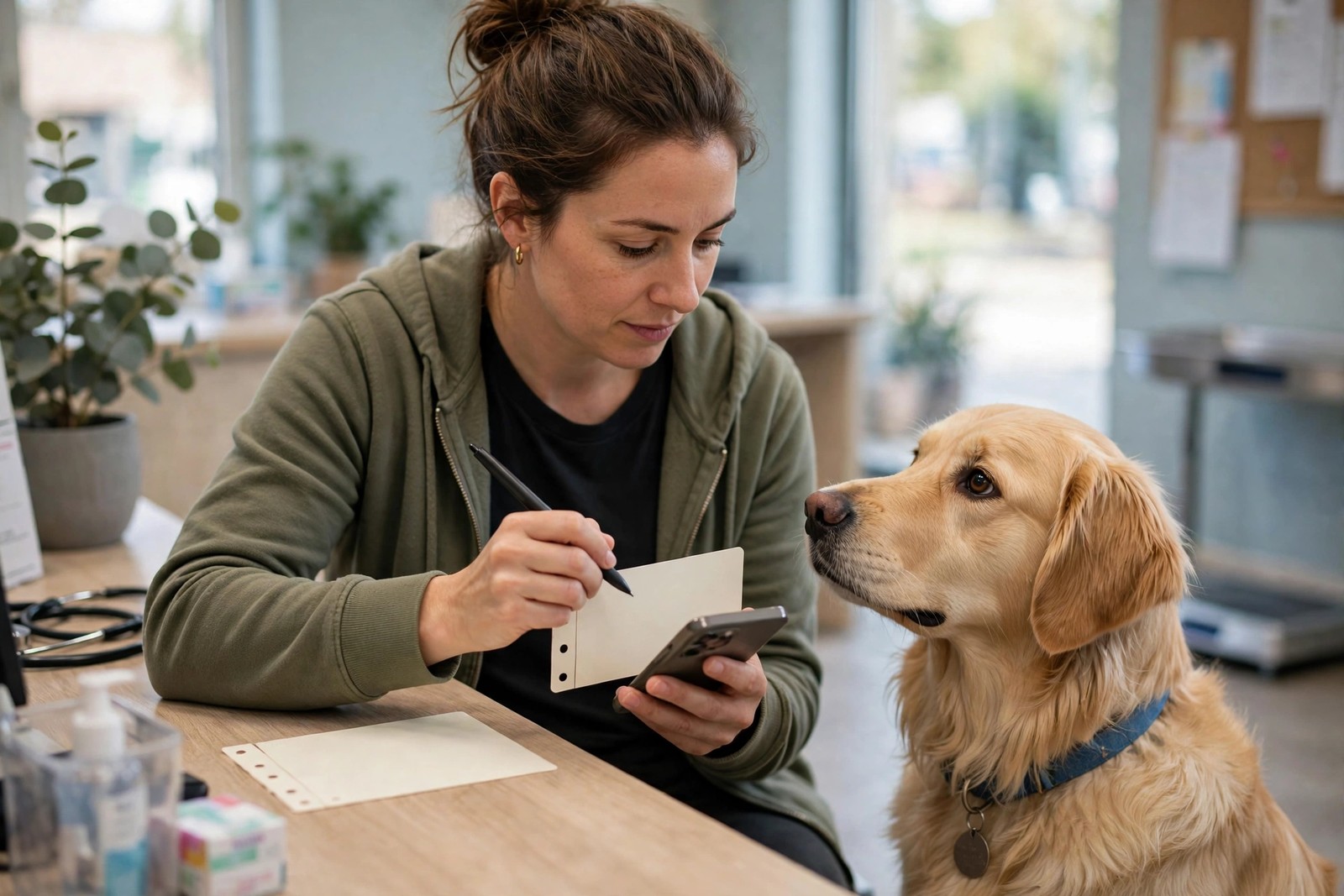
Tie the habit to the visit itself: before leaving any appointment where a vaccine was given, the next due date goes into the record and the reminder gets set. Owners who do it in the car park never rely on remembering at home. If you have more than one dog, keep separate due dates per dog rather than assuming littermates or housemates stay in sync — staggered adoption dates and different vaccine histories mean they frequently do not.
When the trail has already gone cold
If you genuinely do not know whether your dog is up to date, ask your vet to check their records and, where the history is incomplete, advise on restarting or testing as appropriate — guessing or simply booking a duplicate without telling the vet wastes the chance to get the record straight. A lapsed booster does not always mean starting from scratch, but only the vet with the fullest available history should make that call.
The point of all this is that proof travels with the dog, not with your memory of a drawer. KinsLe's Pet Passport brings your dog's vaccination entries together with the rest of their health records in one packet, so due dates and proof are ready whenever a vet, boarder, or border needs them.