
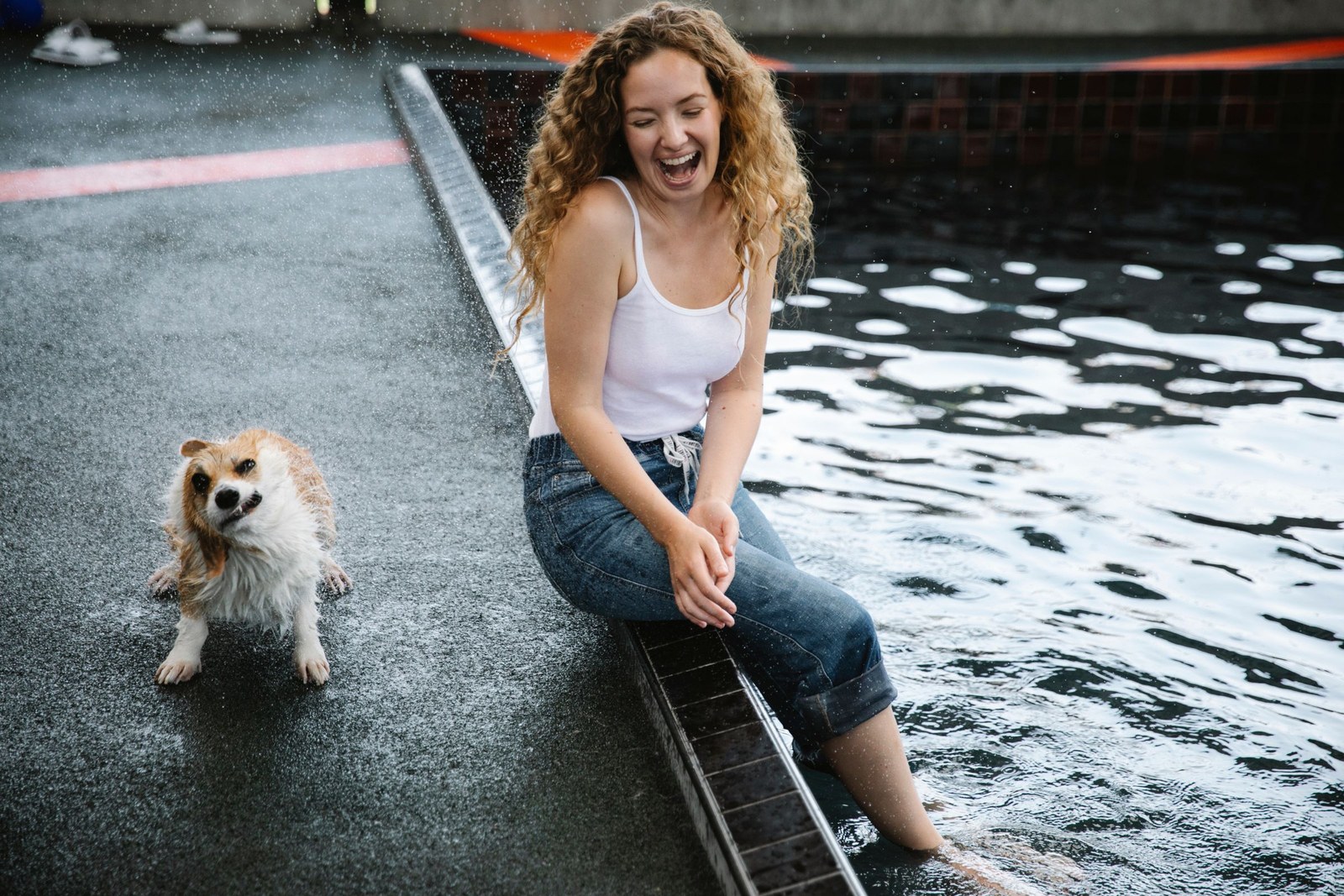
Start from the risk itself: a dog can fall in silently, panic, and tire within minutes if the way out is not obvious. So the pool area stays fenced or covered whenever nobody is actively watching, and early lessons focus on one skill — finding and using the steps. A dog who falls in and cannot find the exit can panic and exhaust surprisingly quickly, even a dog who swims well — the exit lesson is the one that saves lives.
Block access when no one is watching
Most pool accidents happen during unguarded moments, not swim sessions. Use a fence that separates the pool from the house and yard, with a self-closing, self-latching gate, or a safety cover rated to hold weight — a loose solar blanket is not a safety device and can trap a dog underneath. If your pool cannot be fenced, your dog should not have free yard access to it, full stop.
Check gates the way you would check a leash clip: latches fail, gardeners prop gates open, and visitors do not know your rules. Alarms that sound when the gate opens or when the water is disturbed add a layer for homes where dogs move between house and yard often. And be careful with pool decks themselves — wet surfaces are slippery for paws, and a running, excited dog can slide straight in.
Teach the exit, every dog, every pool
Dogs do not automatically understand steps. Get in the water with your dog and guide them, repeatedly and calmly, to the steps or ramp from different points in the pool until finding the exit is a habit, not a hope. Practice in short, positive sessions, and refresh it at new pools — your dog's knowledge of your steps does not transfer to a rental home or a friend's pool, where the exit may be a ladder they cannot use at all.
Consider a pool ramp made for dogs if your steps are steep or your dog is small, senior, or heavy-bodied. Mark the exit visually from the water if you can. For dogs who truly cannot swim well, a fitted life jacket during any pool time and a strict no-solo-access rule are the responsible combination.
Rules during swim time
Supervise actively — poolside and attentive, not inside watching through glass. Provide fresh drinking water and discourage drinking pool water; rinse your dog off after swimming to remove chlorine or salt water from the coat and skin. Watch for fatigue, and end sessions while your dog is still eager rather than exhausted.
Keep rescue basics in mind: know how you would lift your particular dog out — a large, wet, panicking dog is heavy — and keep a life jacket with a top handle on weaker swimmers so you have a grip. After any fall into the pool, even a brief one, watch your dog that day and contact your veterinarian if they cough persistently, seem tired, or breathe oddly afterward.
Make the pool rules clear to the whole household
Pool safety fails when the rules live in one person's head. So say the gate, jacket and watch-duty expectations out loud to everyone who uses the garden: gate always latched, someone always watching during swim time, and no dog ever poolside alone. That is how good rules survive busy households, busy weekends and a stream of summer visitors. Their profile can be shared with relatives you select in KinsLe Family Sharing, so family joining a pool afternoon have already seen the swimmer those latch and exit lessons were taught to.