
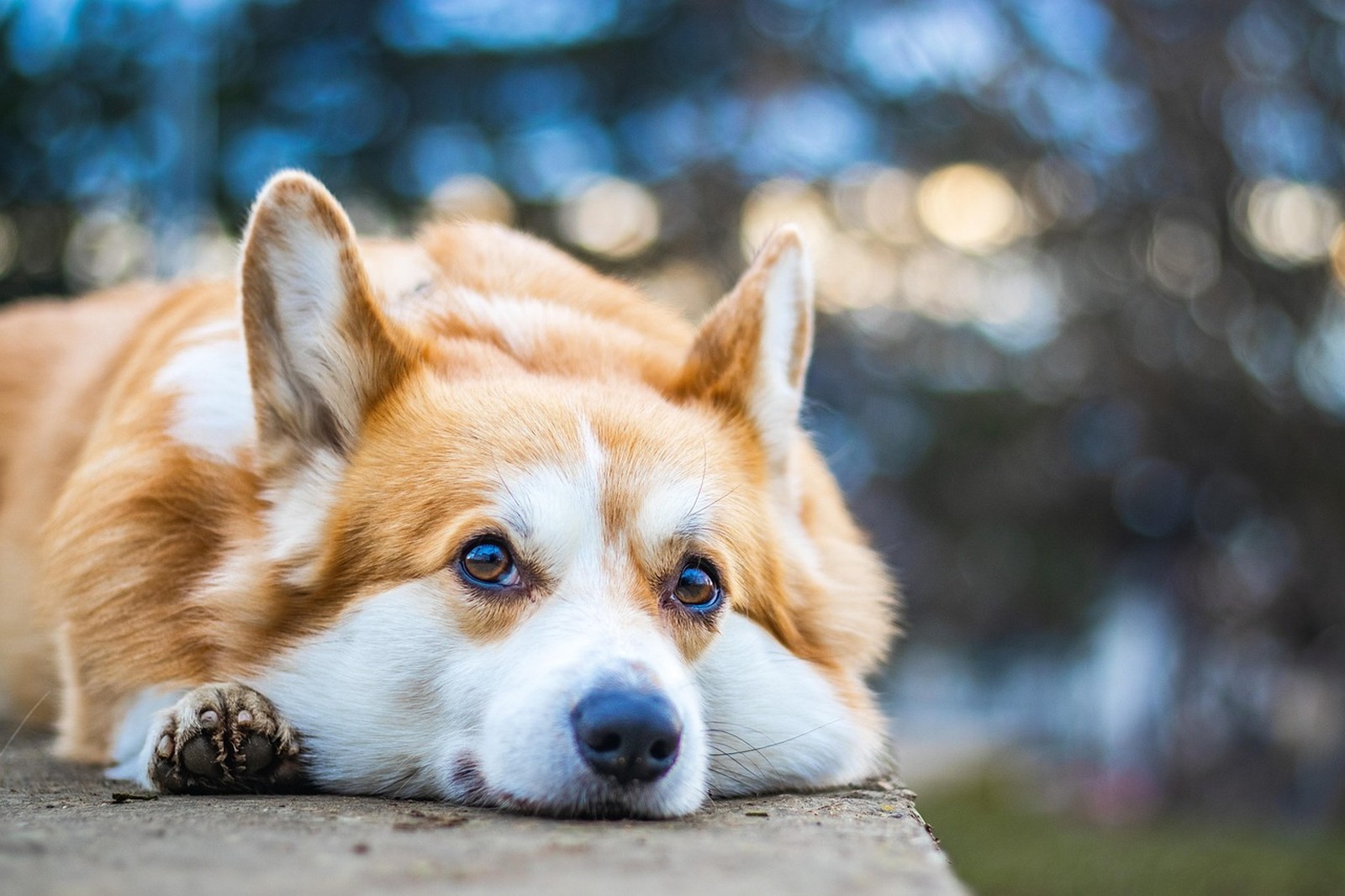
Double Coat, Short Legs, Long Day of Heat
A Pembroke Welsh Corgi carries a weatherproof double coat bred for Welsh farmland: a dense undercoat under a coarser outer layer. Properly maintained, that coat actually buffers him from heat as well as cold — but a packed, shedding undercoat felts into a blanket that traps warm air at the skin. His herding build adds two more problems. Short legs hold a deep, heavy chest just above ground level, where pavement radiates the day's stored heat, and the breed's legendary food drive means many Corgis carry spare weight that insulates the core and strains every pant. Add a working dog's determination to keep up, and he will trundle on long after he should have stopped.
Groom the Coat, Never Remove It
Brush him daily through the heatwave, teasing out the loose undercoat — you will be surprised how much comes away — so air reaches the skin and the outer coat can do its shading job. Shaving a Corgi is the classic mistake: it strips his sun protection, exposes pale skin to burning, and the regrowth often comes back patchy and less functional. Pay attention to the thick ruff, the breeches on his hind legs and behind the ears, where shed hair packs tightest. A dog who has been brushed out, offered a cool floor and left unhurried will usually manage indoor heat far better than an unbrushed one.
Walks and Weight at Corgi Scale
Walk before the heat builds and after surfaces genuinely cool — palm-test the pavement, remembering his chest rides far lower over it than your hand does — and favour grass, shade and short distances. He does not need his full herding-day mileage this week; a sniffy dawn amble and a gentle evening stroll protect him better than one heroic march. Keep to his measured ration even when the appetite performs: every extra ounce is insulation he must pant against, and a heavy meal before a walk adds digestive heat to the load. Scatter a few pieces of his normal food in shaded grass if he needs occupying — a Corgi's brain is a herding brain and wants a job.
Cooling and the Signs to Act On
At home, give him a cool hard floor to sploot on — that classic Corgi sprawl, hind legs kicked out, puts maximum belly on cool tile and is his own chosen air conditioning — plus water in his usual place, refreshed often. A damp towel under the chest or a shallow paddle he can stand in cools him without a bath he will resent. Escalate to cooling and a vet call for panting that stays harsh after rest indoors, thick drool, a tongue darkening, vomiting, or the very Corgi sign of a dog who plants himself and refuses to move: stubbornness is communication in this breed. Wobbliness or collapse is an emergency, full stop.
One Plan for Every Corgi Handler
Corgis collect admirers and extra walks. Agree that nobody adds a lunchtime outing or slipped treats 'because he looked sad', and that the brushing duty has a name against it each day. With KinsLe, Family Sharing puts those agreements in his shared profile beside his feeding measure and walk windows, so the whole household protects the coat, the waistline and the schedule together.