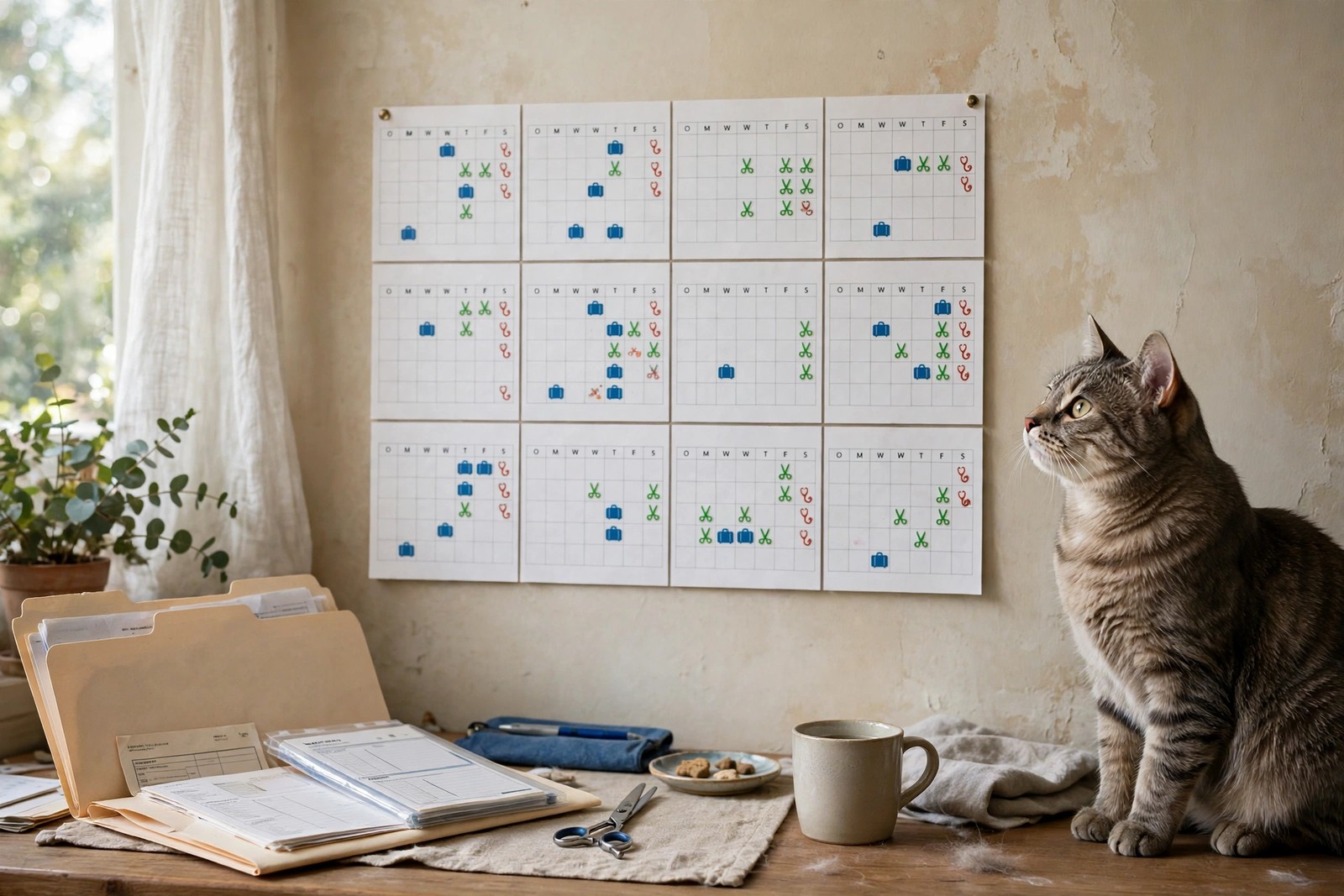
A cat's appointments fail quietly. Nothing dramatic happens; a vaccination entry simply passes its date while nobody was looking, a boarding place fills before a trip is booked, and a long coat mats through a grooming gap nobody noticed opening. A single yearly planner view prevents all three failures the same way: by putting every appointment type on one page, where clashes, gaps, and expirations are visible at a glance instead of scattered across a phone calendar and memory.
The Fixed Points of the Year
Start with the appointments that anchor the year and hang everything else around them. The annual veterinary visit is the first anchor, booked for the same season each year so it never drifts. Vaccination entries sit beside it, dated exactly as your veterinarian sets them, because the practice's schedule for your cat is the authority here, not a universal timetable; what the planner must do is make the next due entry impossible to miss, not invent one.
Grooming follows your own cat's coat rather than a calendar rule. A long or dense coat usually needs a steadier cadence than a short, easy one, and your cat's own history, how fast the coat mats, how the cat tolerates sessions, sets the rhythm. Put the grooming entries in at that cadence for the whole year at once, evenly spaced, so a busy month shows up as a clash while there is still time to move things.
Boarding is planned backward from the household's trips. The moment a trip is penciled in, the boarding entry goes on the planner and the booking is made, because catteries fill around holidays and school breaks long before owners start thinking about them. An unbooked trip sitting on the planner in a different color is the planner doing its job: the gap is visible months early.
What Each Entry Carries
A bare date and a practice name is a planner that still leaves you scrambling. Each entry carries its practical tail. For the veterinary visit: what to bring, including the records packet and a note of anything you want to ask, appetite changes, a new lump you have noticed, a behavior shift. For grooming: the style or clip the cat usually has and anything the groomer should know about handling. For boarding: drop-off and pickup times, the food to send, and the emergency contact for that trip.
Reminders are set when the appointment is made, not when it approaches. That single habit is what stops the planner from becoming a record of good intentions. One reminder a few weeks out suits boarding confirmations and vaccination dates; one the day before suits everything else.
Filing the Visit Back Into the Same View
The planner earns its keep after appointments, not just before them. When a visit is completed, file its note back into the same yearly view the same day: the weight recorded at the practice, any findings in the veterinarian's own words as you understood them, what was agreed for next time, and the next date if one was set. Grooming notes go back too, coat condition, any soreness the groomer flagged, and boarding notes as well, how the cat settled and ate. Over a year, the view stops being a diary of bookings and becomes the cat's running story, which is exactly what a new practice, a groomer, or a boarding facility wants to read.
That filing habit is why the planner belongs with the records rather than in a general family calendar. KinsLe's Pet Passport is the cat's records packet, and the yearly planner lives inside the Pet Passport view: vaccination entries, visit notes, and the year ahead in one place, so the appointment you are booking and the history behind it are never in separate systems. A weight trend spotted across three filed visit notes reaches the veterinarian as evidence rather than a vague feeling.
Filed back after each visit, the note from that appointment joins the Pet Passport planner on KinsLe, so weight and findings stay visible beside the next due date.