
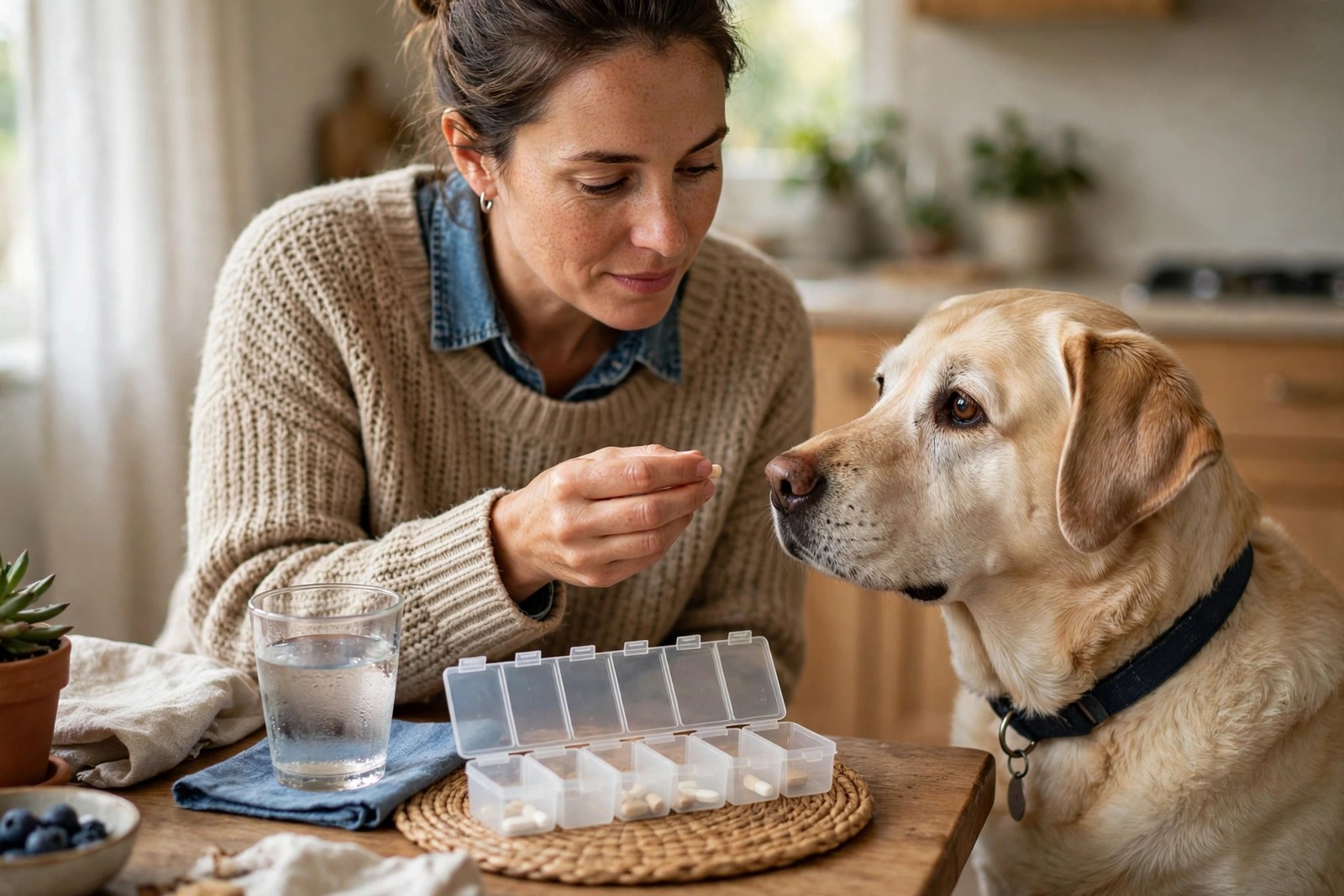
Keep track of your dog's medication schedule by writing down each medication's name, timing, and purpose in one list, and pairing it with a daily checklist or reminder that gets marked off as each dose is given — especially when more than one person helps. The system matters more than memory, because busy mornings and shared care are exactly when doses get missed or doubled.
Write the Schedule Down Properly
For each medication, record:
- The name as written on the label, and what it is for
- When it is given — morning, evening, with food, or a specific interval your vet set
- How it is given: in a treat pocket, crushed only if your vet says that is safe, or directly
- Start and end dates for short courses, or "ongoing" for long-term medication
- What to do if a dose is missed, based on your vet's advice — ask at prescribing time, not later
Keep the list where the medication lives, not in a notebook in another room. If your Spaniel takes one tablet with breakfast and a different one at bedtime, a two-line chart on the fridge, checked off with initials, prevents the classic "I thought you gave it" double dose.
Build Reminders That Survive Busy Days
A single phone alarm helps, but layered reminders help more. Set a recurring reminder for each dose time, add a refill warning several days before a supply runs out, and keep all medications in one spot so a quick glance shows what is running low. A weekly pill organizer can work for some dogs' routines, but only if your vet or pharmacist confirms the medication stores safely that way — some must stay in original packaging away from light and moisture.
When you travel or a sitter helps, hand over the written schedule, not a verbal summary. Show them once how you give it — how you hide a tablet in a small piece of cheese for a picky Dachshund, for example — and ask them to mark each dose as given.
Safety Rules That Non-Negotiably Apply
Never adjust, stop, or swap a medication because your dog seems better or worse, and never give a medication prescribed for another pet or a human painkiller unless a veterinarian has specifically directed it for your dog. Store medication out of reach — a determined dog chewing a whole bottle is an emergency, not a scheduling slip. If you realize a dose was doubled, a wrong tablet was given, or your dog swallows medication not meant for them, call your veterinarian or an emergency clinic for advice straight away rather than waiting for symptoms.
If side effects worry you — appetite change, vomiting, unusual sleepiness, or anything your vet flagged to watch for — contact the prescribing clinic and note when it started and which dose it followed. Good records make that conversation far more useful.
How Kimmy Helps the Schedule Hold
KinsLe's Kimmy, the built-in AI assistant, gives you reminders and nudges for medication times so the schedule holds even on busy days. A nudge at dose time, and a heads-up before a refill runs short, turns a good intention into a habit that does not rely on anyone remembering at 7 a.m. with the lead in one hand and coffee in the other. Pair Kimmy's reminders with your written list and marked-off checklist, and everyone helping — partner, family, or sitter — works from the same plan. Kimmy on KinsLe can answer your follow-up questions about building that checklist and refill routine, drawing its answers from the KinsLe Answers library.