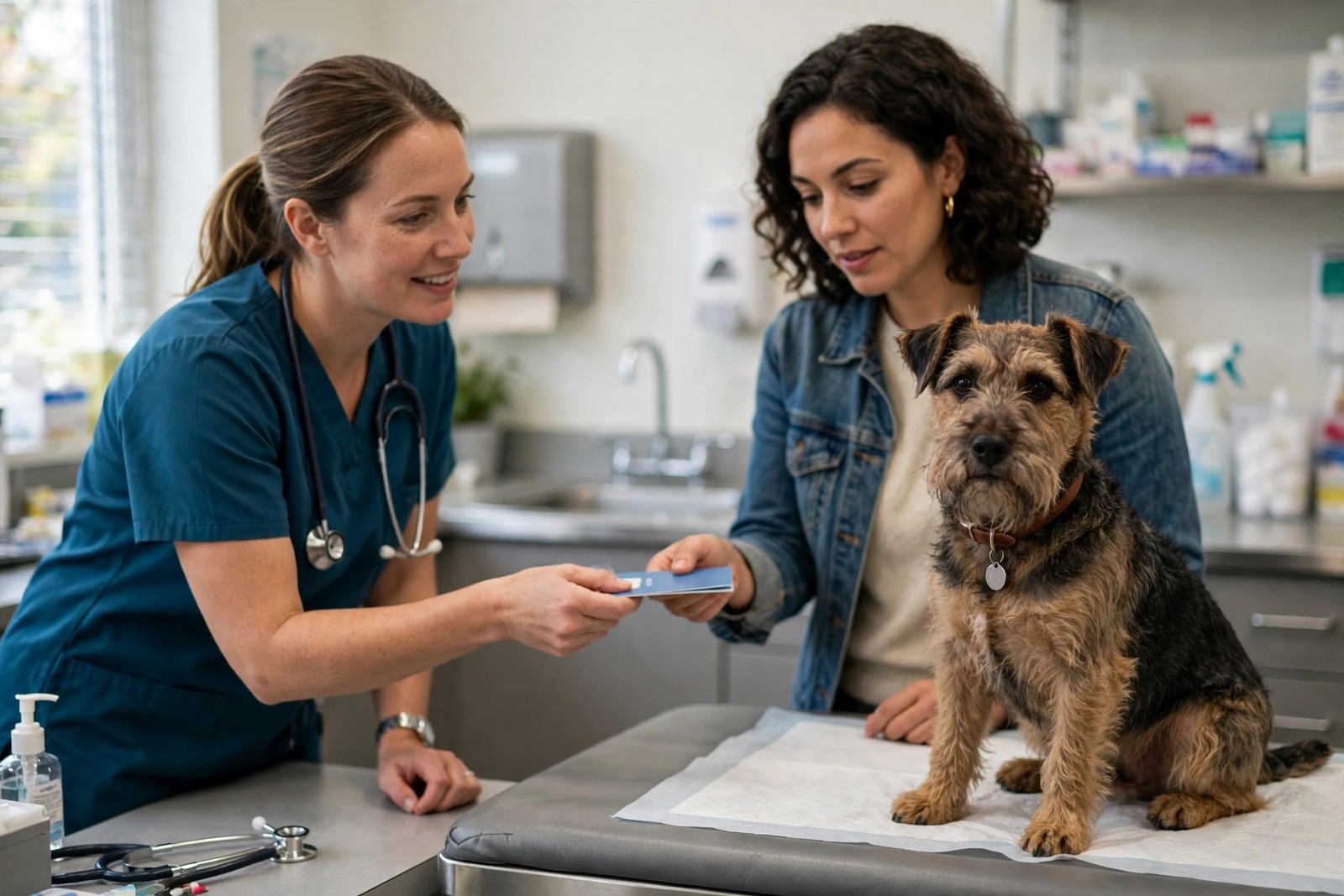
The tracking problem is never the vaccination itself — it is the date twelve or more months later, when nobody can remember whether the booster is due this spring or next. A reliable system captures the due date at the moment of the appointment, from the clinic, and then reminds you twice before it matters.
Record the Due Date, Not Just the Day It Happened
For every vaccination, note four things: what it protects against, the date it was given, the clinic that gave it, and — the entry owners skip — the due date for the next one, exactly as your clinic states it. Intervals differ between vaccines, and a puppy course involves several visits close together before the pattern settles into boosters, so a single assumed rhythm will quietly be wrong for at least one of them. If the printed record or sticker in the booklet shows a due date, copy that. If it does not, ask at the desk before you leave; clinics work from their own reminder systems and can tell you on the spot.
Two Reminders, Set on the Day
Set both reminders while you are still in the car park. The first belongs about a month before the due date — early enough to book an appointment at a time that suits you rather than taking whatever slot remains. The second belongs a week before, as the backstop that catches a postponed plan. Put the vaccine name in the reminder itself, not just its date, so that when it fires you know what you are booking. Owners with several dogs should keep one reminder thread per dog; a single household note is how one dog's booster silently rides on another's date.
Where the Master Record Lives
Keep one master list — a page in the vaccination booklet, a note on your phone, or a records app — and treat everything else as a copy of it. After each appointment, update the master list before anything else goes back in the drawer, and photograph the clinic's updated record as insurance against a lost booklet. When you change clinics, bring the full history with you and ask the new clinic to confirm the next due dates from it at the first visit; do not rely on records being sent over, because a gap in the paper trail reads as a gap in cover to boarding kennels and insurers alike.
The Proof Other People Ask For
Your own reminder system keeps your dog protected; the paperwork keeps her bookable. Boarding, daycare, training classes, groomers, and travel arrangements commonly ask to see vaccination proof, sometimes with rules about how recently a dose must have been given or how long before a stay it must be in place. Check those requirements when you book, not the week of the stay, and keep the proof reachable — a clear photo set on your phone covers most situations where the original booklet is at home. If a record is ever genuinely lost, your clinic can usually reissue the history from its own system, which is one more reason to note which clinic gave each dose.
When You Are Already Behind
If you discover a booster has lapsed, do not quietly restart your own count and hope. Call the clinic, explain the gap honestly, and ask what they recommend from here — the right next step depends on the vaccine, the length of the lapse, and your dog's circumstances, and it is their call to make. Then rebuild the record from that appointment, with its stated due date, and your system is honest again from that day forward. That clean, dated, always-current record is precisely what KinsLe's Pet Passport holds for you — each vaccination, its due date, and the proof itself in one portable packet you can show any clinic, kennel, or border desk.