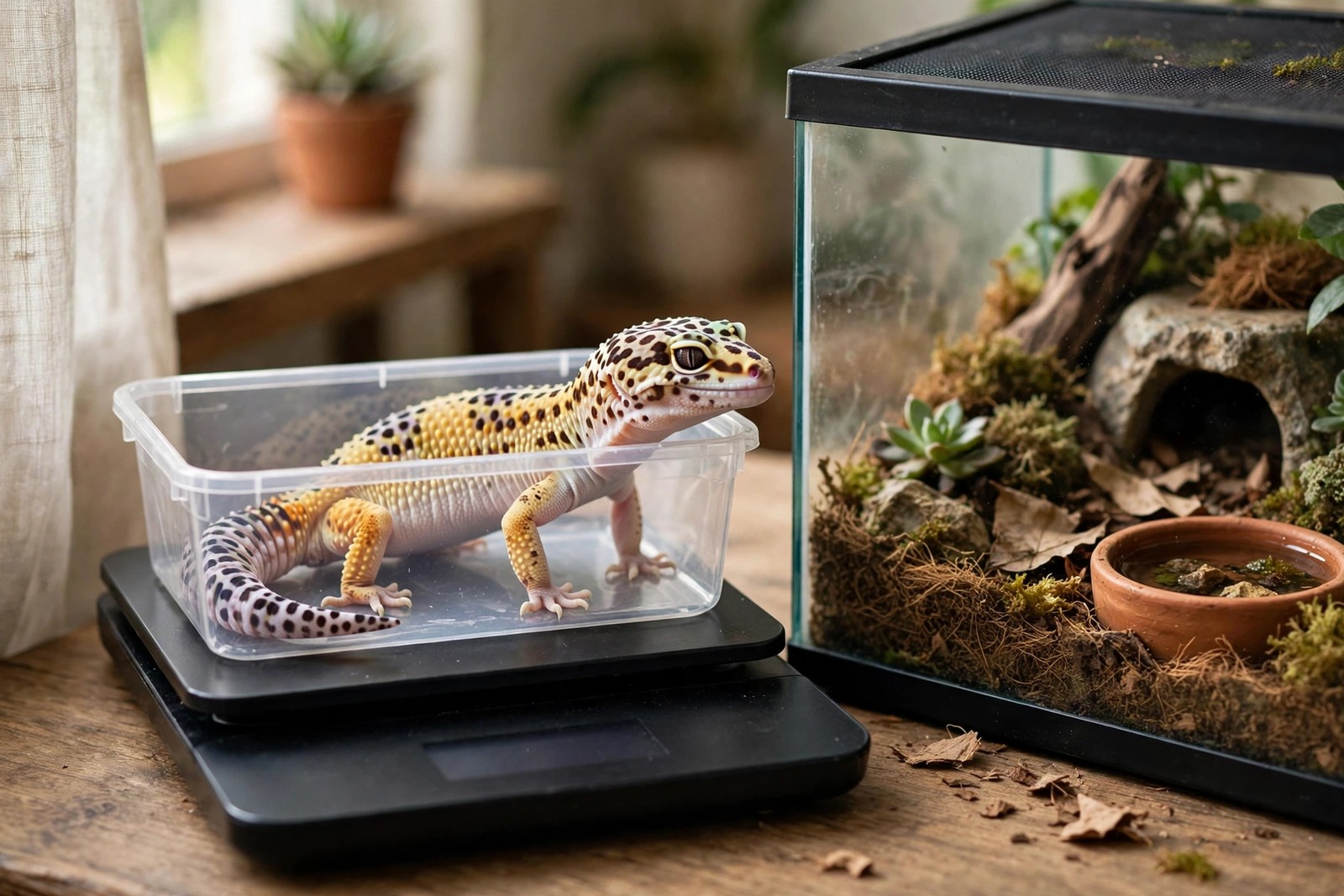
A gecko can lose condition quietly for weeks before the change is visible, which is why keepers who track weight and sheds catch problems while they are still small. The system is deliberately plain: a small gram scale, the same weighing routine each time, and a log that pairs every weight with shed dates and a note on whether the shed came off complete. No single reading matters much on its own. The trend across months is the health record, and it takes only a couple of minutes to keep.
A Small Gram Scale and a Tub
Weigh in grams, because a gecko's meaningful changes are far too small for a bathroom scale to register honestly. A small kitchen style gram scale and a lightweight tub the gecko can sit in calmly are the whole kit: weigh the tub, then the tub with the gecko inside, and subtract, or zero the scale with the empty tub on it first. Weigh at the same point in the routine each time, ideally before a feed rather than straight after a large meal, and keep handling brief and low over a surface, because a gecko dropped from height can be badly hurt. Every entry carries the same fields in the same order: the entry label date, the weight, the shed date, and whether that shed came off complete. An example entry reads Monday weigh in, tub method, tail fat, moving well.
The Rhythm That Fits the Gecko's Age
Many keepers weigh weekly while a gecko is young and growing, because growth should show as a steady climb and a stall is worth noticing early. For a settled adult, the same keepers often settle into a slower rhythm, weighing on a regular day every few weeks, since adult weight should hold in a narrow, familiar band and frequent handling adds stress without adding information. Whatever rhythm you choose, write it at the top of the log and keep it, because readings taken at ragged intervals are hard to compare, and a gap of months hides exactly the slow slide the log exists to catch. Sheds follow their own pace, faster in youngsters, and each shed gets logged on the day it happens rather than added to the next weigh in from memory.
Read the Trend, Not Single Readings
Look at the line, not the dots. A steady line, gently rising in a youngster and level in an adult, is the picture of health, and one odd reading after a big meal or a shed is usually just that: odd. Consecutive falls across several readings are different, and so is a shed that repeatedly leaves stuck pieces on the toes or tail tip, because stuck shed can tighten as it dries and damage the skin beneath. Those two patterns, a falling trend or repeated incomplete sheds, are the vet conversation, raised with the log in hand so the veterinarian can see when the change began. Never chase a single low reading with extra feeding before the next scheduled weigh in; recheck on rhythm, confirm the trend, and let the pattern, not one number, decide what happens next.
Keeping the Record With the Rest of Its History
The weight and shed log lives in the gecko's own records packet, the Pet Passport, alongside feeding notes and any vet visit summaries, so every part of its history sits in one packet you can hand over in seconds. Keep the log on paper by the enclosure or in a note you actually update, because the best system is the one still running in six months, and review it whenever you clean the enclosure fully, scanning for the two patterns that matter. When a caregiver feeds while you are away, the same log shows them the rhythm to follow and the last readings to compare against, which keeps the record unbroken. Vet conversations start from evidence when your Pet Passport sheets within KinsLe show consecutive readings and stuck shed notes in one unbroken sequence.