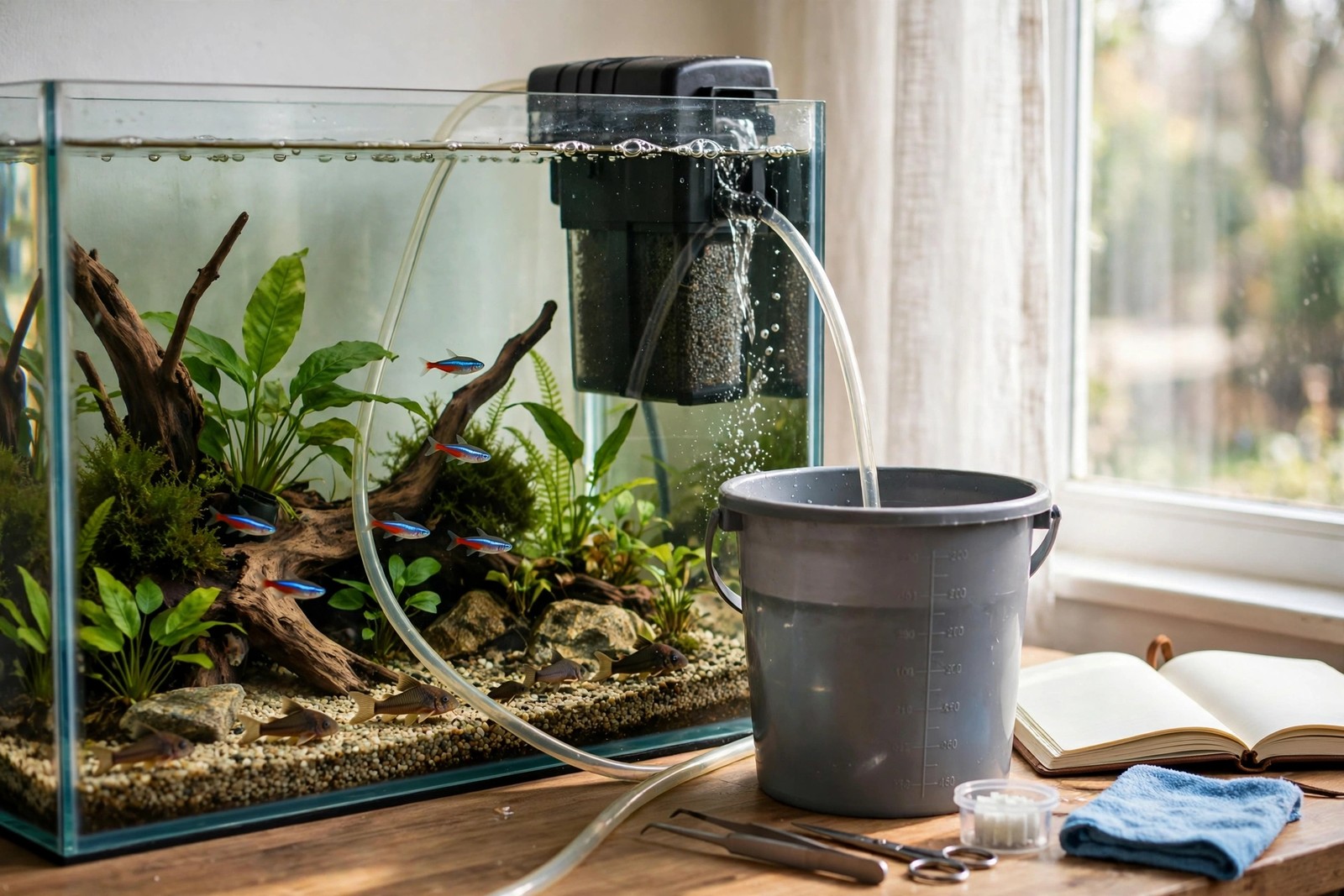
Water changes and filter care are easy tasks to do and surprisingly easy to lose track of, because a tank that looks clear gives you no reminder of when you last changed water or rinsed the filter media. A single running log solves it, provided each entry records the details that matter next time — not just that a task happened, but how much, what you did, and what you noticed.
What to Write Down for Every Water Change
Give each water change one log line with four fields: the date, the volume changed, whether conditioner was added, and the temperature of the replacement water. Volume should be recorded in a repeatable unit — buckets of a known size, or litres or gallons marked on your siphon container — because a quarter-change habit that quietly shrinks to a tenth is a common reason water quality drifts. Conditioner is recorded as added or not added, following the product's own label directions for the volume you changed, so a second person doing the change can see at a glance that the new water was treated. Temperature matters because a large change filled much colder or warmer than the tank can stress the fish; noting that the replacement water matched the tank tells your future self the change was done properly. Add a fifth note when anything was unusual: cloudy water, a dead fish found, algae scrubbed, or a test result that prompted an extra change.
What to Write Down for Filter Work
Filter entries need a different set of fields: the date, which media you rinsed, which media you replaced, and a flow note. Name the media specifically — sponge rinsed, polishing pad replaced, ceramic media left untouched — because each type is handled differently and on a different rhythm, and a log that just says filter cleaned hides whether you are replacing media far too often or never. Rinsed media should be recorded as rinsed in removed tank water, which is the detail that protects the beneficial bacteria the filter exists to house. The flow note can be three words — normal, reduced, or restored — taken from watching the outflow or the spray bar before and after the work. A pattern of reduced flow returning quickly after cleaning points to media that is clogging, a pre-filter that needs more frequent rinsing, or an impeller that needs attention, and the log turns that suspicion into dated evidence.
Make the Log Look Forward, Not Just Back
A record of past tasks still leaves you counting weeks on your fingers, so add the forward half of the system: when you finish a task, write its next due date immediately. Water changes usually sit on a repeating weekly slot on the same day, which anchors the habit and makes a missed week obvious in the log. Filter checks sit on a slower rhythm, typically monthly, with media replacement dates driven by what the flow notes and the media itself show rather than by a fixed calendar. Keep the log where the work happens — a notebook by the tank, or a notes page you open while the siphon runs — and complete the entry before you put the buckets away, because entries written later lose exactly the details, like volume and flow, that make the log useful. Anyone else who maintains the tank during a holiday should write in the same log in the same format, so there are no gaps to reconstruct afterwards. KinsLe's Pet Passport holds that water-change and filter log alongside your fish's other records in one portable packet, so the full maintenance history travels with the tank's story rather than living in scattered notes.