
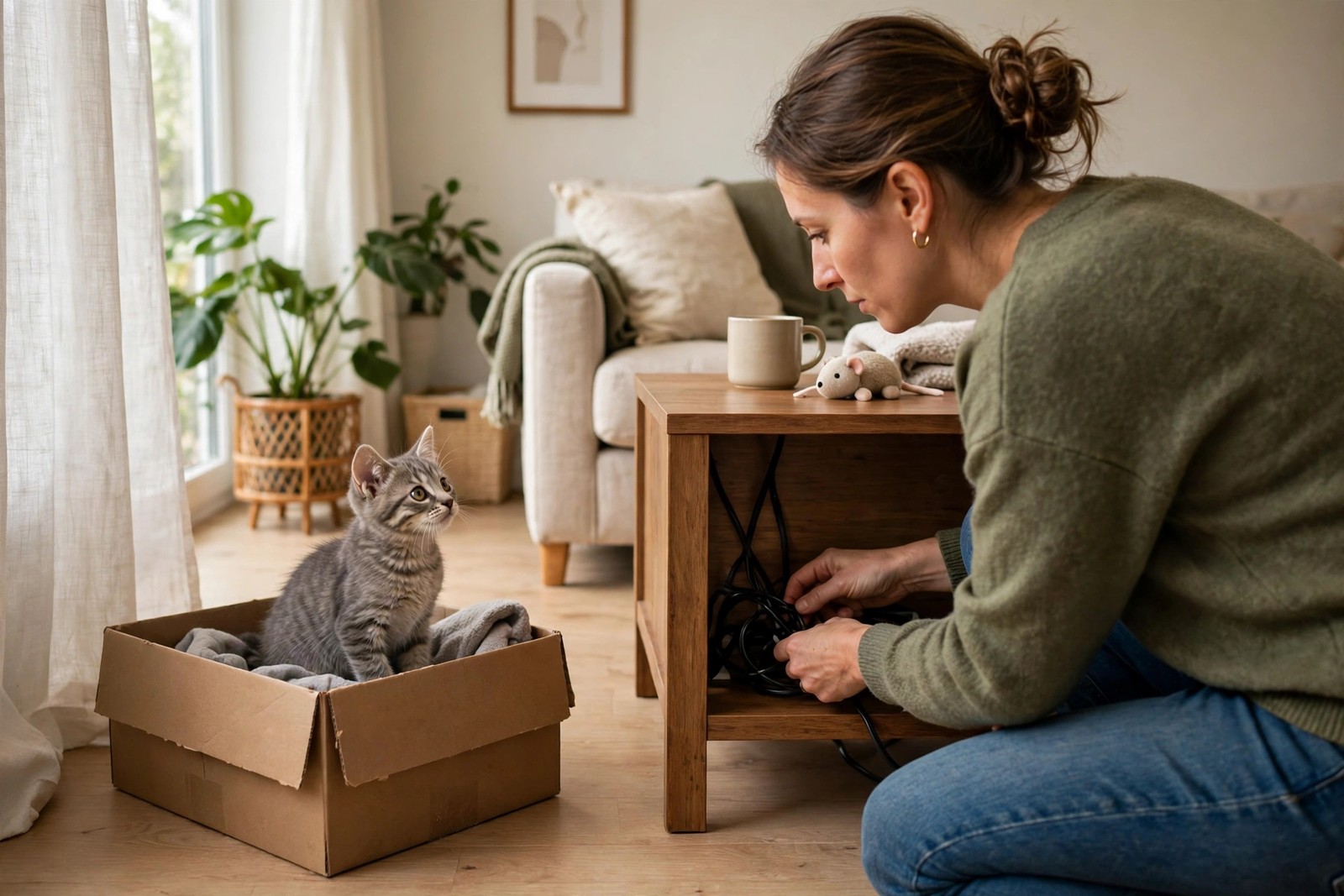
You kitten-proof a home by getting down to kitten level — literally on your knees — and removing or securing anything she can chew, swallow, climb, topple, or squeeze behind: cords, string and hair ties, small objects, cleaning supplies, and the gaps behind appliances. A kitten explores the world mouth-first and can fit through any opening her head fits through, so the room-by-room crawl is not a gimmick; it is the whole method.
Start with the swallowables
The most dangerous kitten items are the string family: yarn, ribbon, tinsel, rubber bands, hair ties, dental floss, and sewing thread (with or without a needle attached). Swallowed string can bunch and damage the intestines, which is a surgical emergency — store all of it behind closed doors or in latched drawers, and put sewing and gift-wrapping away the moment you finish. Add to the sweep: coins, buttons, small toy parts, children's tiny building bricks, twist ties, and any medication — a single dropped pill is kitten-sized trouble. Keep human medicines in closed cabinets, never on counters.
Cords, gaps, and climbing hazards
Bundle electrical cords into cord covers or tuck them behind furniture, because teething kittens chew, and a lamp or phone-charger cord is exactly mouth height. Block the gaps beside and behind the refrigerator, washer, dryer, and oven with boards or rolled towels — kittens famously nap inside warm appliances, so always check the washer and dryer drums before closing the door, every single time, until it is reflex.
Then look up. Secure wobbly bookshelves and floor lamps, move breakables off the edges kittens will inevitably land on, and put dangling blind cords up out of reach with a cleat or cord wrap. Toilet lids go down (a small kitten can fall in and not climb out), and doors to the garage and outside get a look-down-before-you-close habit from everyone in the house.
Chemicals, plants, and the kitchen
Move cleaning supplies, laundry pods, and antifreeze — which tastes sweet and is lethally toxic — into latched or high cabinets. Check every houseplant within reach against a reliable cat-safe list before the kitten arrives, and relocate anything toxic or doubtful; lilies in particular are extremely dangerous to cats and should not be in a kitten's home at all, even in a vase on a high shelf, since petals and pollen drop. In the kitchen, assume she will find the one thing you missed: use stove knob covers or remove knobs, and keep hot pans attended.
Room by room, then re-check monthly
Work through bedroom, bathroom, laundry, and living room with the same crawl, then set a monthly reminder to redo it — a kitten who could not reach the counter in October is standing on it in December. Provide legal alternatives in every room, too: a scratching post, a cardboard box, and a couple of toys make the forbidden stuff less interesting.
If your kitten keeps defeating your proofing or fixates on chewing cords, treat it as a behavior question worth professional input rather than an arms race.
Getting a professional eye on your setup
KinsLe's Pet Services Directory helps you find local groomers, vets, sitters, and trainers near you — a local trainer who does kitten consults can spot the hazards a first-time owner walks past and help with cord-chewing or climbing habits before they set. If the cord-chewing keeps returning despite covers and blocked gaps, book a kitten consult with a trainer, using KinsLe to search the Pet Services Directory for consults near home.