
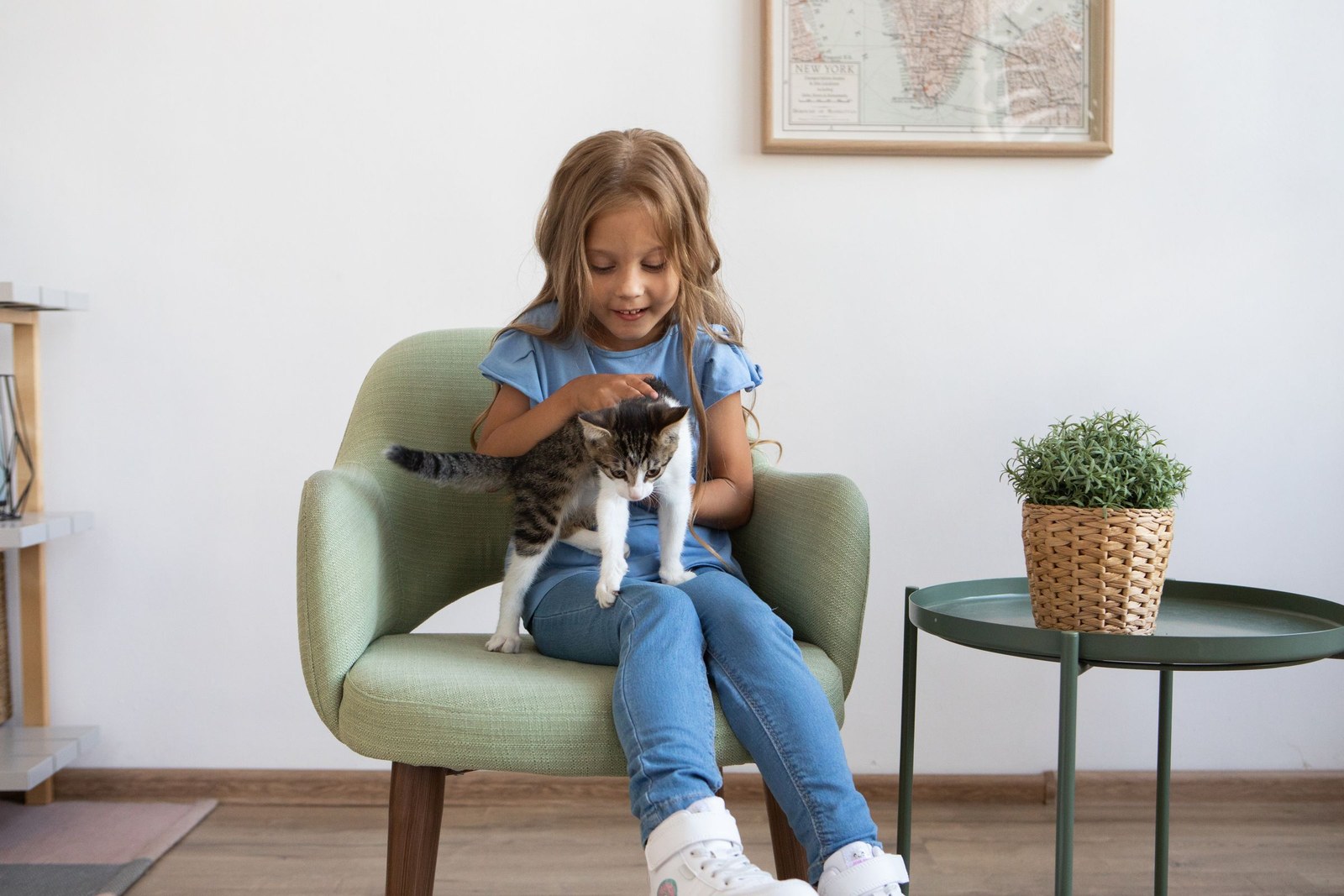
You know a cat's temperament fits your family when her natural energy, confidence, and tolerance for noise and handling match the household she is moving into — and the only reliable way to judge that is to spend unhurried time with her and ask the people who know her daily behaviour, not just meet her for five minutes.
Watch the cat, not just the first impression
A shelter kennel is a strange, loud place, and cats react to it in opposite ways. Some confident cats shut down completely and hide at the back, while some usually quiet cats become unusually clingy with visitors. So treat the first minutes as a rough sketch, not the portrait.
Spend at least twenty to thirty minutes if the shelter allows it. Sit on the floor, let the cat approach you, and notice the recovery time after a sudden noise. Does she startle and then relax, or stay frozen? Does she rub against you, play with a wand toy, or prefer to watch from a distance? All of these are fine answers — what matters is whether that style of cat suits your home.
Match energy to household
Think honestly about your family's rhythm:
- A busy home with children and visitors suits a confident, social cat who has lived with kids before
- A quiet flat with one or two adults may be perfect for a shy cat who would be overwhelmed elsewhere
- A household wanting an active playmate should look at adolescents and young adults, not assume a kitten is automatically easy
- Someone home all day can offer the company a people-oriented cat craves
Children should meet the cat too, calmly and supervised. A cat who tolerates gentle handling and can walk away freely will show you far more than one who is passed around like a toy.
Ask the questions that reveal settled behaviour
Staff and foster carers are your best source. Ask how the cat acts after a week of settling, not just today. Ask about litter habits, night-time activity, reaction to other cats and dogs, grooming tolerance, and whether she is a lap cat, a beside-you cat, or an independent soul who checks in twice a day. Foster homes are gold here: they have seen the cat choose a sleeping spot, greet guests, and handle the vacuum cleaner.
Red flags and green lights
Be cautious if a seller or shelter rushes you, discourages a second visit, or dismisses your questions. Green lights include staff who gently steer you away from a poor match, honest notes about quirks, and a cat who, given time and space, shows curiosity about you. Remember that kittens change — the boldest kitten sometimes grows into a reserved adult — while an adult cat's temperament is largely what you see.
Learning from people who have done it
KinsLe's Circle of Love is the community of pet lovers around every profile, and it is full of owners who have been through this exact matching process. Their lived experience — what surprised them, what they would ask next time — is the kind of practical wisdom that helps a good match become a great one. Before you decide, ask adopters in the Circle of Love on KinsLe what surprised them once a shy or confident cat settled at home, because that lived experience can sharpen the questions you bring to the shelter.