
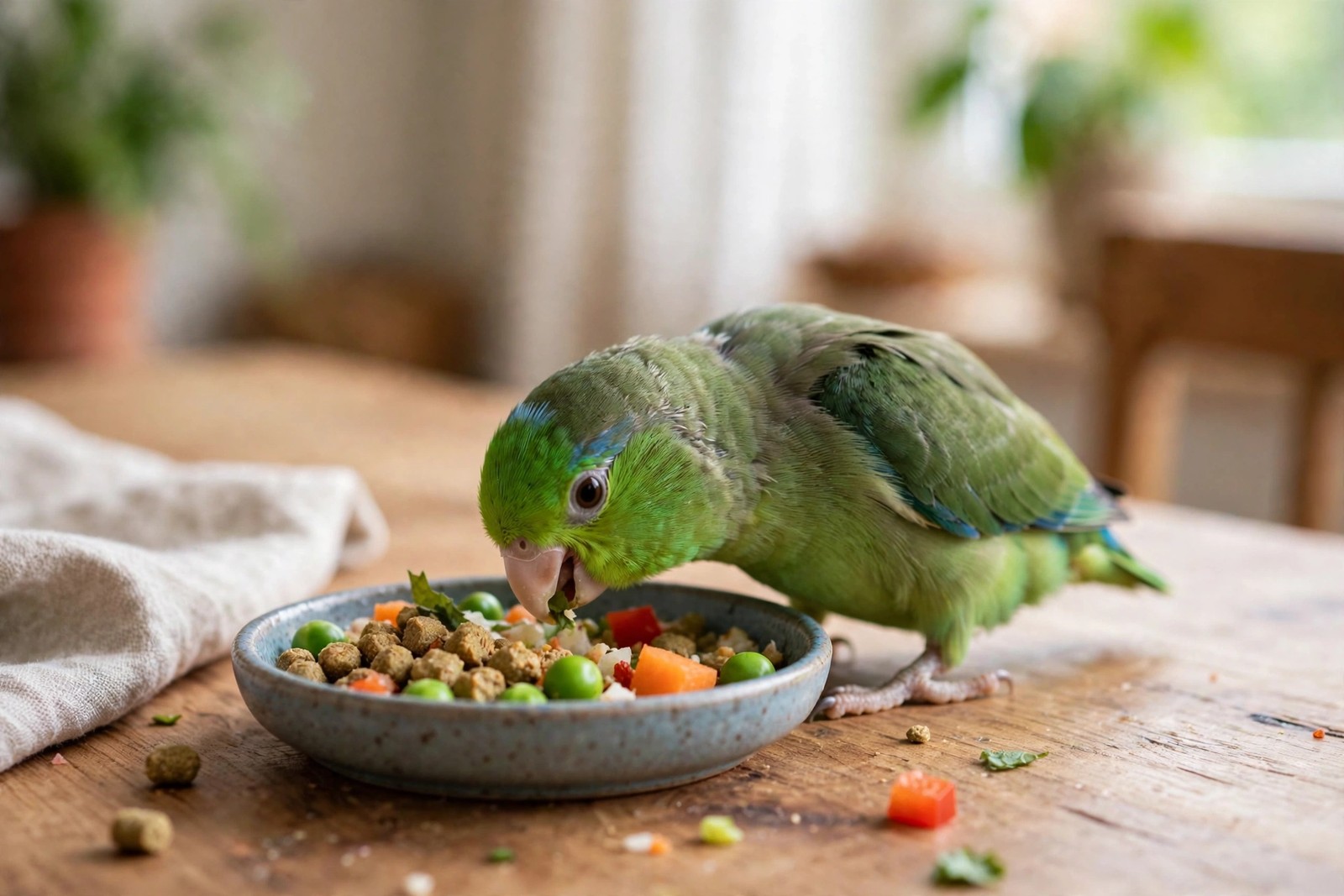
A young bird is fully weaned when it is eating independently — cracking seed or eating pellets, fruits, and vegetables entirely on its own — and maintaining its weight without any hand-feeding for a sustained period. Not tasting food, not eating while a breeder watches hopefully, but reliably feeding itself, day after day. Bringing home an unweaned baby without expert support can be dangerous, so this is a milestone worth verifying, not assuming.
What Weaning Actually Means
Weaning is a gradual process, sometimes called abundance weaning when done well, where a young bird transitions from formula to adult foods at its own pace. The bird experiments, wastes plenty, learns textures and flavors, and slowly takes over its own feeding as hand-feeds are reduced only when the bird is clearly eating enough alone.
Species differ in timing, and individual birds differ within a species. A schedule printed in a book is a guide, not a deadline. Reputable breeders never rush this stage to free up a cage or meet a sale date — they let the bird's eating and weight set the pace.
Signs Your Bird Is Truly Ready
Look for a consistent pattern, confirmed over days rather than a single good morning:
- Eating a full range of offered foods alone, including the staple diet, not just favorite treats
- Maintaining a stable weight on daily or regular weigh-ins through the transition
- No begging behavior that leads to hand-feeding, and no crying for formula as a routine
- Confident, coordinated eating — cracking, hulling, or mashing food effectively for its species
- Normal droppings and steady energy on the independent diet
Ask the breeder to show you the bird eating, and ask how long it has been fully independent. A good breeder will answer proudly and precisely, because a solid wean is their workmanship.
Red Flags to Walk Away From
Be cautious if a breeder pressures you to finish hand-feeding yourself as a bonding shortcut, cannot tell you when the last hand-feed was, or describes the bird as mostly weaned. Mostly weaned is not weaned. A bird sent home too early can lose weight quickly, regress, and end up needing urgent avian vet support — and inexperienced hand-feeding carries its own serious risks.
It is always acceptable to wait. A breeder who suggests another week or two for the bird's sake is showing you exactly the judgment you want.
Your First Days at Home
Even a fully weaned young bird may eat a little less during the first days in a new home. Offer the same foods the breeder used, weigh regularly at first, and keep routines calm and predictable. Contact the breeder and your avian vet promptly if appetite drops, weight slides, or begging returns — regression happens and early advice protects the bird.
Start Records From Day One
KinsLe's Pet Passport is a great place to keep the hatch and weaning records your breeder provides from day one — the records packet for vaccines, medications, allergies, and documents that will grow with your bird through every vet visit and stage of life. Ask for those records before you leave the breeder, not weeks later. Before leaving the breeder, file the final hand-feeding date, independent-eating confirmation, and first weigh-in figures in the Pet Passport on KinsLe, so the records packet your bird starts with already proves the wean was complete.