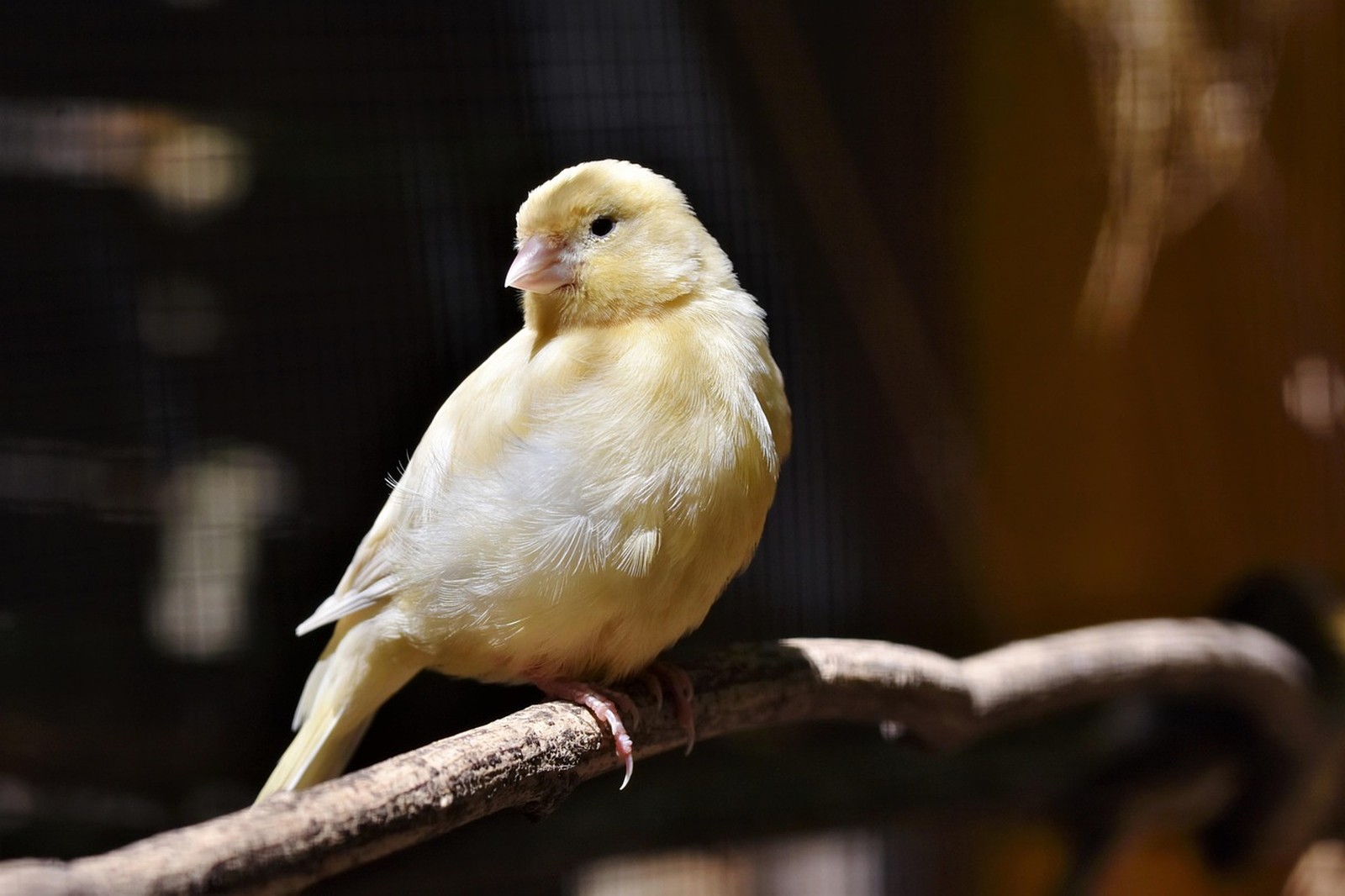
Canaries are not strongly dimorphic — a male and a female of the same variety can look almost identical — so sexing them is done mainly by ear and behaviour, and by a laboratory test when the answer truly matters. Work through the clues in order of reliability, and be patient with a young bird, because the clearest sign of all takes time to appear.
The Song: The Clue That Settles Most Cases
A mature male canary sings: not a chirp, but a sustained, rolling song with phrases that rise, fall, and repeat, delivered in bouts that can run for many seconds at a time. He sings most strongly as daylight lengthens toward the breeding season, often with his head up, throat working, and body held upright on the perch as though performing. A female canary vocalises too — short chips, chirps, and contact calls — and an occasional hen produces brief, simple warbling, but she does not produce the male's full, complex, sustained song. If your bird performs that song daily, you can be confident you have a male. The catch is age and season: young males begin with quiet, rambling practice singing at a few months old and develop the full song as they mature, and a male outside breeding condition, moulting, unwell, or kept in dim, short days may sing little or not at all. Silence from a young or moulting bird proves nothing either way.
Behaviour and Appearance: Supporting Clues Only
Behaviour backs up the song evidence without replacing it. Males court: they sing to a companion or even to a mirror, hop and display on the perch, and may offer regurgitated seed to another bird. Females approaching breeding condition tear up paper and carry nesting material, crouch in response to a singing male, and — definitively — lay eggs; an egg in the cage is proof of a female, though the absence of eggs proves nothing. Colour is the weakest clue of all. In some varieties males average slightly brighter, but variety, diet, and individual variation swamp any sex difference, and sellers who sex canaries confidently by shade alone are guessing. The shape of the vent differs subtly in breeding condition, males showing a more prominent, angled cloacal bump while a laying-ready female's vent is rounder and flatter, but reading that difference takes a practised hand and gentle handling; if you need it checked, let an avian vet or an experienced breeder do it rather than experimenting on a small, easily stressed bird.
DNA Sexing: The Answer When You Must Be Sure
When the sex decides a pairing, a sale, or why a supposed pair is not breeding, use a DNA test. A vet or testing service analyses a small sample — typically a freshly plucked feather or a drop of blood taken by the vet — and reports the sex from the bird's chromosomes, which works for birds of any age and removes all the guesswork of song and behaviour. It is the standard route for breeders, and it is worth the modest effort for any owner who would otherwise spend months interpreting a quiet young bird.
However you reach the answer — song, an egg, or a laboratory result — note it once and keep it with the bird, and KinsLe's Pet Pass is the natural home for it: the confirmed sex sits alongside your canary's other identity details, so anyone reading the profile sees the settled fact rather than a guess.