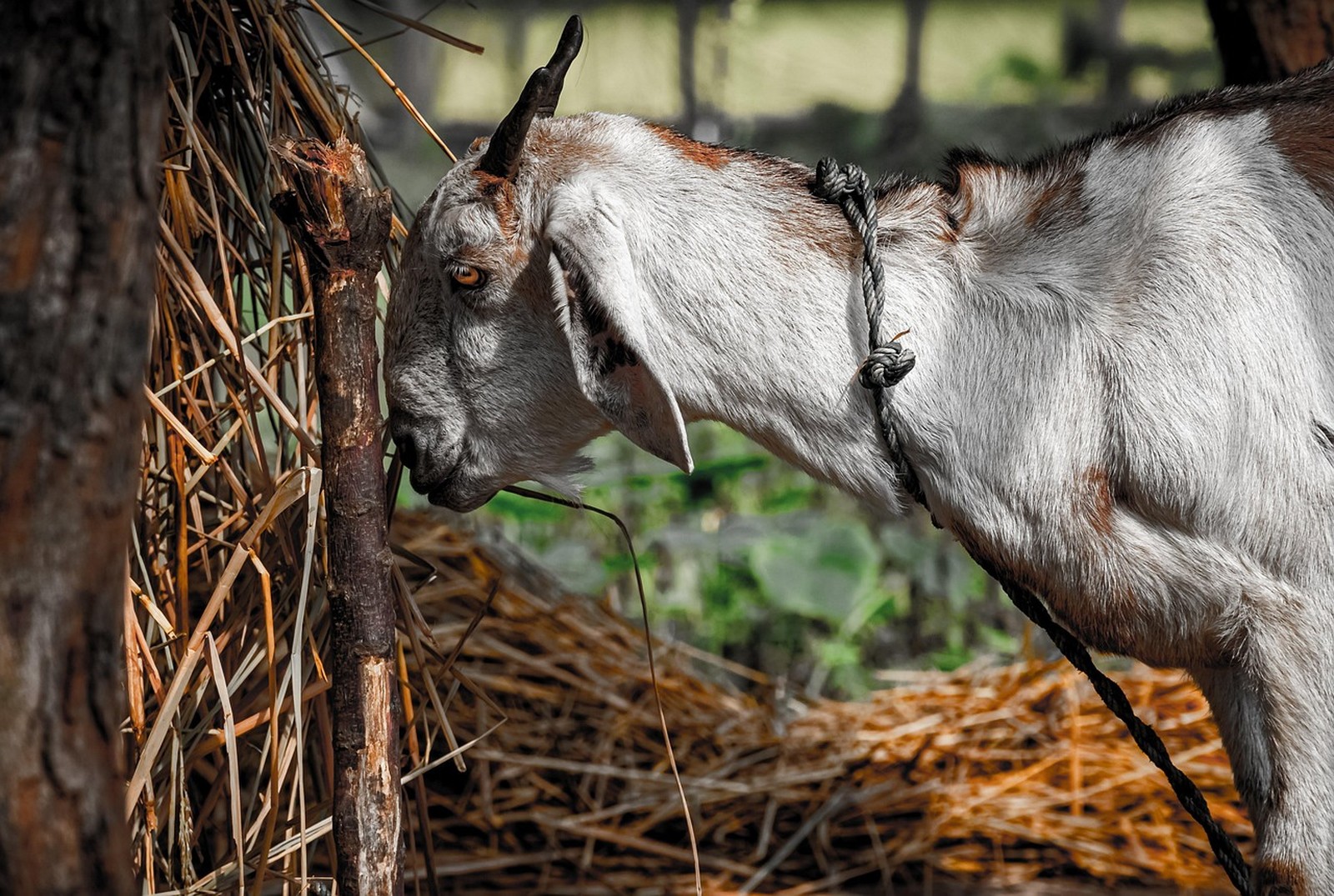
Forage is the foundation of a goat's diet — hay, pasture and browse that keep the rumen working — so the honest answer comes from reading the animals themselves over time, not from glancing at a full rack once. Four checks, used together, tell you the truth.
Body Condition: Feel, Do Not Just Look
A goat's coat, especially a long or winter coat, hides condition, so score by hand. Run your fingers over the ribs, the spine and the breastbone area with steady pressure. In a goat holding good condition, the ribs can be felt with light pressure under a thin, smooth covering — present to your fingers, but not sharp, and the spine feels rounded rather than jagged. Ribs that feel sharp with little covering, or a spine that stands up in peaks, point to a goat who needs more or better forage and a closer look. At the other end, ribs you cannot find even with firm pressure mean condition is being laid down as fat, which brings its own problems. Score each goat individually and write the score down, because the herd average hides the one thin goat at the bottom of the order.
Rumen Fill: The Left Flank Tells the Day's Story
Look at the goat from behind and from the left side. The rumen sits on the left, and a goat who has eaten well shows a left flank that looks full and softly rounded after a period at the rack or out browsing, while the right side stays comparatively flatter. A hollow, tucked-in left flank late in the day, in a goat who has had access to forage, is a useful warning that intake is down — she may be unwell, bullied away from the feed, or finding the forage unpalatable.
Weigh What Goes In and What Comes Back
For hay-fed goats, weigh the hay you put out for a few typical days and weigh or honestly estimate what is left and what has been dragged into the bedding and wasted. Goats are selective feeders who pull hay through racks, sort the leaves from the stems, and waste a surprising share if the rack design lets them. A rack emptied daily looks like appetite, but if half of it is trampled bedding, the goats ate far less than you fed. Equally, untouched hay day after day with goats losing condition suggests the forage itself is the problem — mouldy, dusty or very coarse hay may fill the rack without feeding the herd — and a fresh, better-quality supply is the first change to make. On pasture and browse, walk the ground: goats prefer browse and varied plants over short grass, and a paddock grazed down to bare stalks with the hedgerow stripped as high as they can reach is telling you the land has stopped providing, however green the other side of the fence looks.
Access, Teeth and the Goats at the Bottom
Watch one whole feeding from start to finish. Enough rack space and more than one feeding point matter because confident goats eat first and longest, and a shy or young goat may get only the picked-over remainder. A goat who approaches eagerly but eats slowly, drops partly chewed hay, or leaves while others continue deserves a mouth check and a vet conversation, because forage only counts if she can process it. Sudden drops in intake, droppings that change markedly, or rapid condition loss in any goat are health signals, not ration puzzles, and belong with your vet promptly. Keep the dated condition scores, rumen notes and hay weights together so a change in the ration can be judged against evidence at the next check. KinsLe's Care Teams lets you assign the condition scoring and left-flank checks to a named helper for each goat, with every completed check marked complete with a timestamp, so a quietly thinning goat is spotted by the record, not by chance.