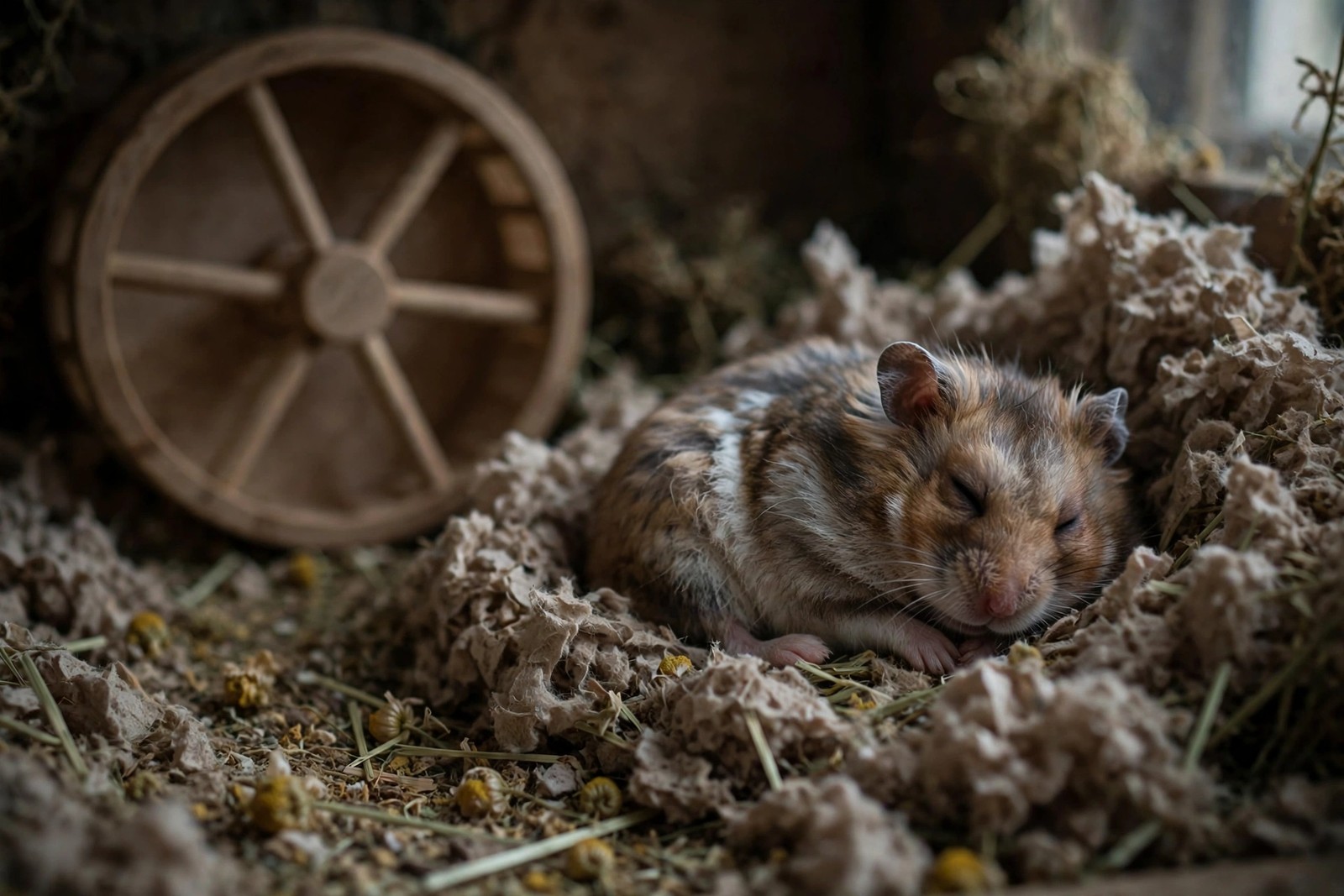
Hamsters age quickly by human standards, and the change rarely arrives as one dramatic moment. Instead, the nightly routine quietly edits itself: the wheel spins for shorter stretches, the emergence from the nest drifts later, and a hamster who once scaled the cage bars in seconds now picks a route along the floor. Because hamsters are nocturnal and hide weakness instinctively, the owners who spot ageing earliest are the ones comparing against a remembered — or better, written — baseline of what their hamster used to do.
The wheel and the nightly routine
Reduced wheel use is usually the first sign. A young adult hamster may run for long, fast bursts through the night; an older one typically runs more slowly, stops often, or manages only a fraction of the former distance before returning to the nest. Watch from across the room rather than beside the cage, since a hamster who feels observed may freeze instead of moving naturally. Also note the timing: emerging well after dark instead of at dusk, spending longer sitting and sniffing before starting to forage, and retiring earlier are all typical of an older animal pacing limited energy.
Activity appetite changes too: an ageing hamster often ignores new toys and rearranged tunnels it would once have investigated thoroughly, preferring familiar routes, and burrows less, builds shallower nests and abandons far-corner food stashes.
Body, coat and movement changes
Weigh your hamster weekly on a kitchen scale, in a cup or tub it cannot leap from, and write the figure down. Gradual, slight weight loss over months is common in old age as muscle thins, and you may feel the spine and hip bones more clearly under gentle handling. Rapid loss over days is a different matter and deserves a vet visit.
The coat tells a parallel story. Older hamsters often look a little moth-eaten: fur thins, especially over the back and rump, loses its gloss, and may grow patchy or unkempt because grooming becomes slower and less flexible work. Bald patches with red, flaky or wounded skin are not plain ageing, though — sore skin, lumps, discharge from the eyes or ears, overgrown or broken teeth and a wet tail area all warrant a vet rather than watchful waiting.
Movement changes are equally specific. Look for a slight wobble or unsteadiness when turning, hesitation before small climbs that were once automatic, dragging or stiffness in the back legs, and slips when descending from a platform. An older hamster may also startle more easily and dislike being picked up from above, partly because eyesight and hearing commonly fade with age.
Sleep, temperature and temperament
Older hamsters sleep longer and more deeply, and can be slower to wake and orient when the nest is disturbed — one reason to avoid digging an elderly hamster out for handling. They also feel the cold more; a hamster who once slept in scattered spots may now pack extra bedding into one warm nest and stay there. Keep the cage draught-free at a steady room temperature, with plentiful soft bedding for insulation.
Temperament often softens. Many elderly hamsters become noticeably calmer and more tolerant of gentle handling, sitting in a cupped hand they would once have bolted from. The opposite change — new biting, squeaking when touched, or hiding from any approach — suggests pain or illness rather than age alone.
Gradual ageing versus needs-a-vet change
Ageing is slow, symmetrical and stable from week to week. Book a vet visit promptly if you see a sudden stop in eating or drinking, laboured or noisy breathing, inability to walk or repeated falling to one side, diarrhoea or a wet, soiled rear, bleeding, a fast-growing lump, or a hamster who is cold, limp and unresponsive when gently roused. Small prey animals deteriorate fast, and early treatment gives the best chance.
Weekly weights, wheel observations and coat notes are far more useful written down than remembered, and KinsLe Pet Passport keeps those dated notes alongside vet visits and health records in one portable packet, so you can show a vet exactly when the slowing began and how steadily it has progressed.