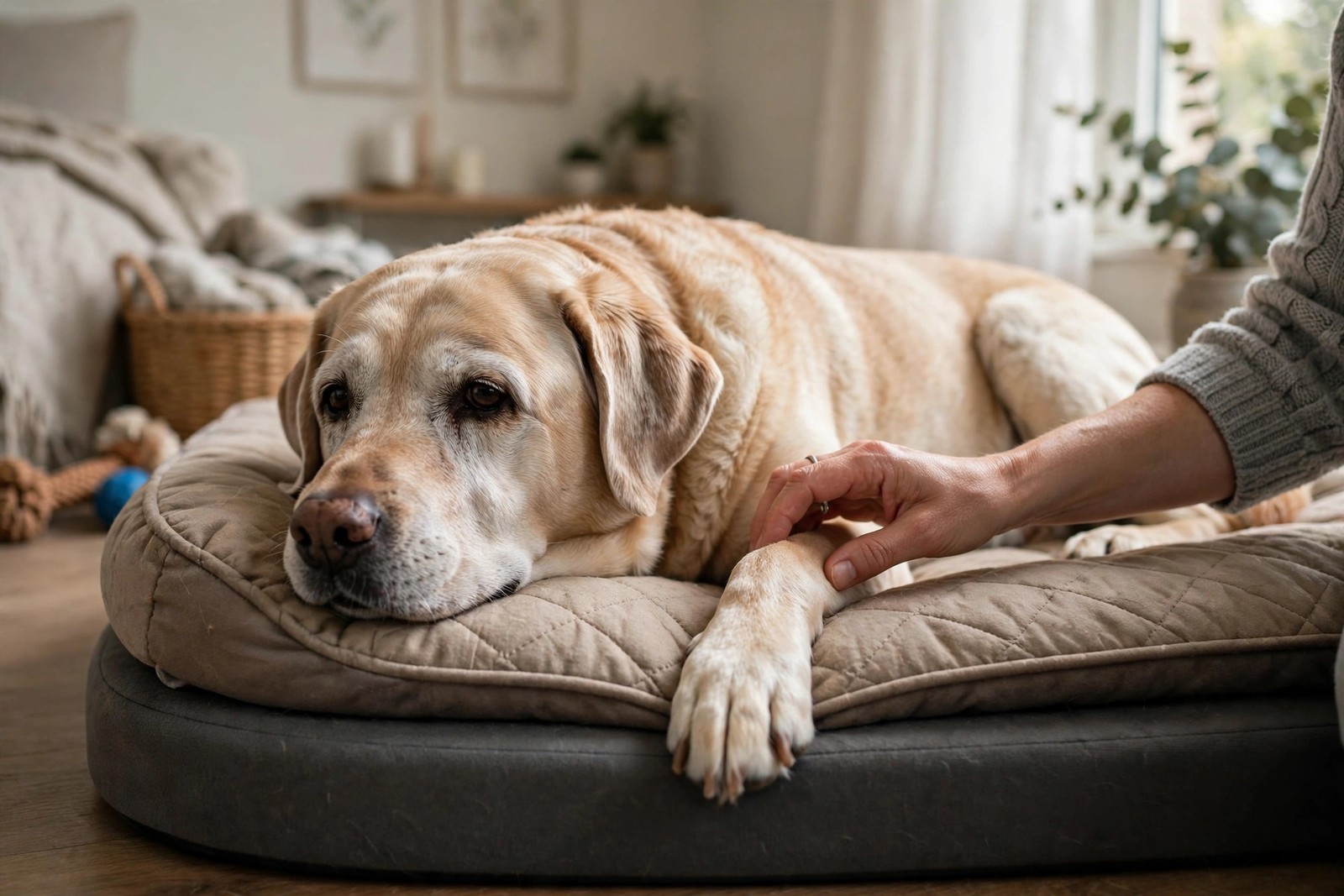
Most senior dogs do not whine, yelp, or hold up a paw when they hurt. Pain in an older dog usually arrives disguised as slowing down, and the cruel part is how easily it gets written off as "just old age" — when stiffness, withdrawal, and lost enthusiasm are often pain that can be helped. Your job is not to diagnose the cause; it is to notice the change from your dog's own baseline early and describe it well to a veterinarian.
Movement Signs: Where Pain Shows First
Watch the transitions, not just the walking. A dog who is slow to rise after lying down, stiff for the first minutes and then "warms out of it," reluctant on stairs she used to take easily, hesitant to jump into the car, or lagging behind on routes she once led is showing the classic pattern of joint and mobility pain. Limping that appears after rest or after a longer walk, bunny-hopping with the back legs, scuffed nails from dragging feet, and a roached or hunched back while standing are all worth reporting. So is a dog who has stopped getting up to greet you — owners often read it as calmness when it is actually the price of standing.
Behaviour and Body Signs Owners Miss
Pain changes temperament. A senior who becomes grumpy when a particular spot is touched, moves away from grandchildren she tolerated before, hides in quiet corners, or sleeps far more — or, confusingly, far less — may be hurting. Night-time restlessness, pacing, panting while resting in a cool room, and repeated licking or chewing at one joint or spot on the body are frequent pain signals that owners mistake for anxiety or habit. Appetite dropping, taking longer over food, dropping kibble, or chewing on one side points toward mouth and dental pain, which is extremely common in seniors and easy to overlook. House-soiling in a reliably trained dog, trembling, a tucked tail and ears held back, dilated pupils, and vocalising — a yelp when lifted, a groan when settling — complete a picture worth taking seriously even when each sign alone seems small.
Run a Simple Weekly Check
Once a week, do the same short routine so changes stand out. Walk your dog a familiar short route and note pace and willingness. Watch her rise from her bed, climb one step or a kerb, and turn in a tight circle both ways. Gently run your hands over her back, legs, and joints and note any flinch, tension, or licking of your hand. Film thirty seconds of her walking toward and away from you on your phone; video from this month compared with last month shows a limp or shortening stride far more clearly than memory does. Write down appetite, sleep quality, and any new sign with a date — a list that says "stiff after rest since the 3rd, now also reluctant on stairs" changes a vet appointment from guesswork into a plan.
What Not to Do, and When to Go
Never give human painkillers or leftover medication prescribed for another pet or an earlier problem, and do not start supplements or therapies as a substitute for an examination — some common human pain medicines are dangerous for dogs, and pain that is managed blind can mask something progressing. Book a veterinary visit promptly for any new sign, and go the same day if your dog cannot get up, cries out persistently, stops eating, breathes with effort, has a suddenly swollen joint or belly, or seems distressed and cannot settle. Bring your dated notes and video, a list of current medications and foods, and recent history, all of which travel neatly in KinsLe's Pet Passport, the portable packet that keeps your senior dog's records, medication list, and vet history together so the patterns you have spotted at home reach the consulting room intact.