
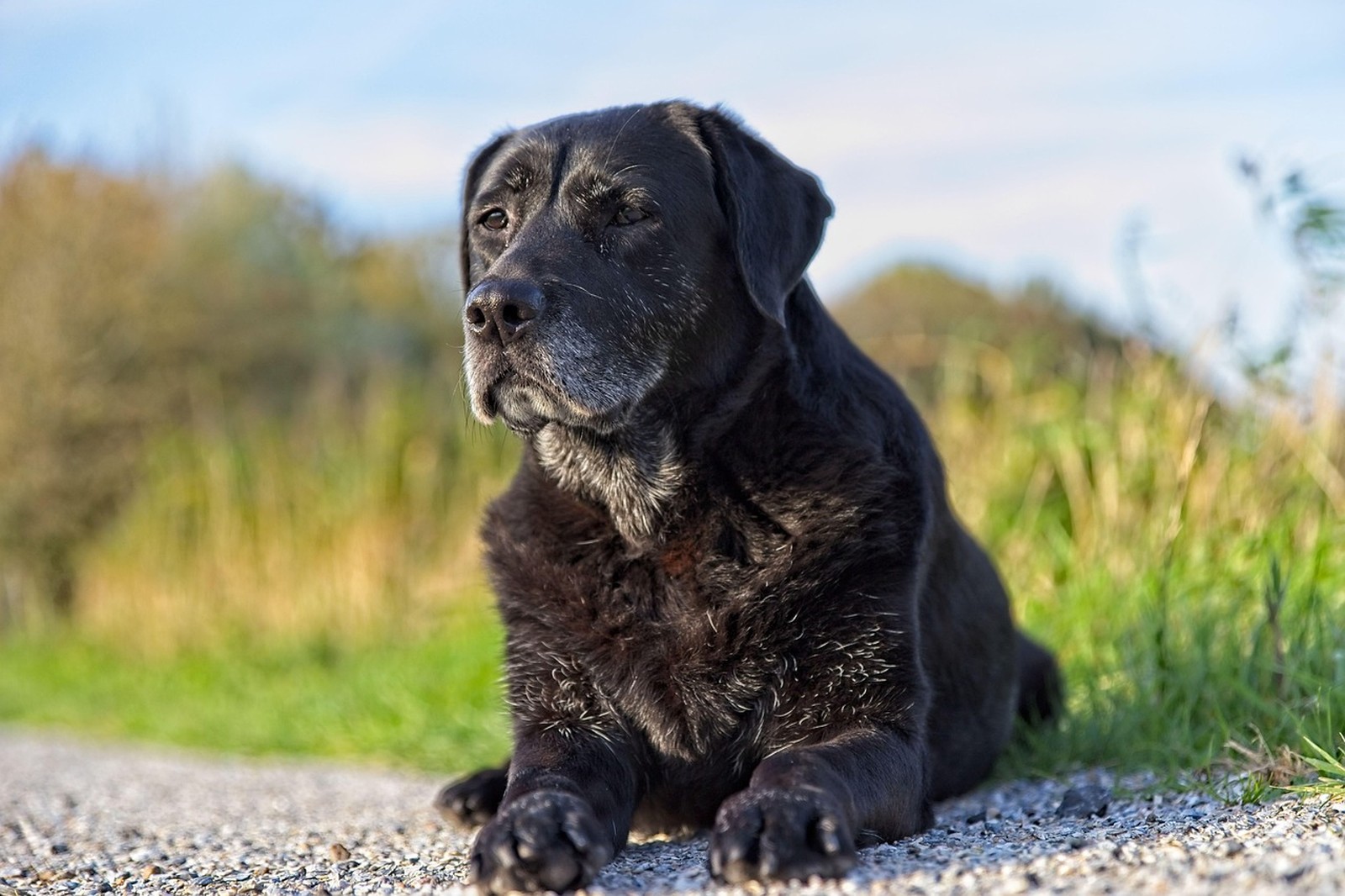
You can judge whether your senior dog still has a good quality of life by looking at the whole picture across days and weeks — appetite, comfort, mobility, toileting, interest in family and favourite things, and whether good moments still clearly outnumber hard ones — rather than by any single bad day. It is one of the hardest assessments an owner ever makes, and a written record over time is far more trustworthy than memory in an emotional moment.
The things worth watching
Think in categories rather than a single score. Is your dog eating with some enthusiasm, even if meals are smaller or need encouragement? Can they get up, move about, and toilet without distress or frequent accidents they cannot help? Do they still seek out company — choosing to lie near the family, greeting you, showing interest in a visitor or a favourite toy — even if they play for two minutes instead of twenty?
Pleasure matters as much as function. A dog who can no longer manage a long walk but still adores a slow sniff around the garden, a gentle fuss, and a sunny spot to doze in may be having many good hours a day. Watch breathing comfort at rest, ability to settle and sleep properly, and whether familiar pleasures still register at all. Those are the honest measures, not whether your dog can still do everything they did at five.
The good-day, bad-day record
Memory plays tricks: one dreadful night can eclipse three good weeks, and one bright morning can make us discount a month of decline. A simple note solves that. Each evening, take thirty seconds to log the day — good, middling, or bad — plus a line about eating, moving, and enjoyment. After three or four weeks, patterns become visible that no single day reveals: a slow trend, a mostly-good dog with occasional bad days, or bad days quietly becoming the majority.
Share that record with your veterinarian. A dated log transforms the conversation from impressions into evidence, and your vet can check whether treatable problems — unmanaged pain, nausea, dental discomfort, thyroid issues — are quietly dragging the score down.
Comfort measures that genuinely help
Small changes buy real quality: ramps or steps for the car and sofa, non-slip mats on hard floors, a supportive bed somewhere warm and central, shorter and more frequent walks, raised food bowls, and help keeping bottoms and bedding clean for dogs who struggle. Keep routines familiar and visitors calm. Many old dogs also love low-demand activities — scatter feeding in grass, a slow "sniffari" where they set the pace entirely, gentle grooming if they enjoy touch.
Talking about the hardest decision
There is no perfect day, and owners almost never feel certain. Many vets suggest deciding in advance, while you are calm, what your dog's non-negotiables are — the things whose loss would mean life is no longer good for them — and writing them down. That list, plus your log, gives you something steadier than grief to consult when the time comes. Whatever you decide, deciding out of love and observation is never betrayal.
Keeping the record without effort
A log only helps if it actually gets kept. Kimmy, KinsLe's built-in AI assistant, can nudge you each day to record that brief good-day note, building the clear record you and your vet need without relying on memory at the hardest time. In KinsLe, Kimmy can field questions that follow up on a run of bad days, a fading appetite, or restless nights, and the KinsLe Answers library is where those responses come from.