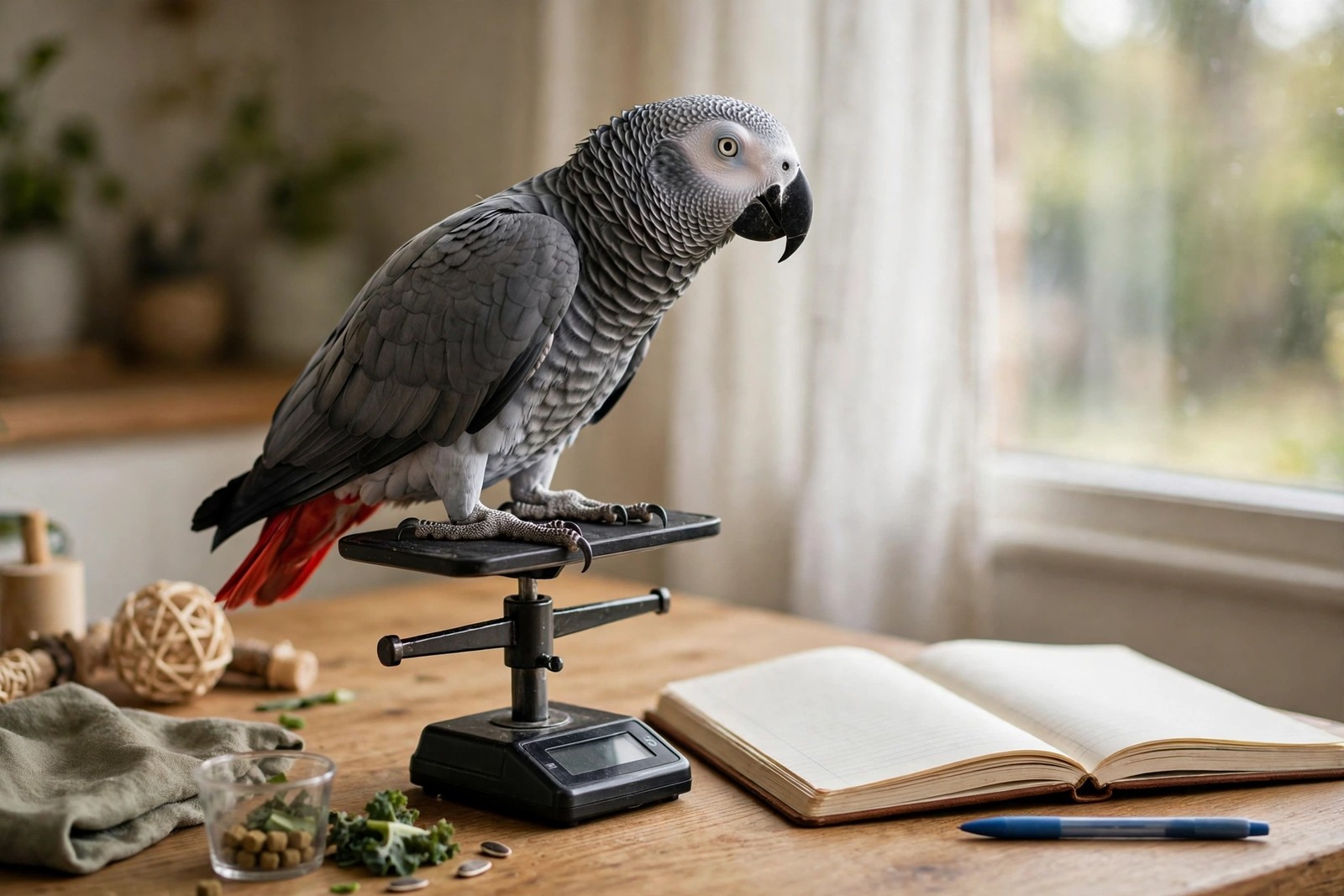
A diet-change programme for a parrot lives or dies on its log, because the changes you are managing are measured in single grams on a bird who may weigh only a few hundred. Feathers hide the body completely, so weight and keel condition are the only honest evidence of whether the new diet is working, whether it is working too fast, and whether your parrot is eating the new food or quietly starving beside a full bowl.
Set Up the Weighing Ritual
Use a digital gram scale accurate to one gram, fitted with a T-stand or perch your parrot already steps onto willingly, and train the step-up onto it with a tiny treat before the programme starts so weighing never becomes a wrestling match. Weigh at the same time every day — the gold standard is first thing in the morning, before breakfast and after the first large morning dropping, because a full crop or a recent meal can swing a small parrot's reading by several percent and make day-to-day comparisons meaningless. During the active diet change, weigh daily; once the weight is stable in the target zone, most owners drop to two or three times a week, with the same ritual every time. If your parrot will not perch, weigh him in a familiar small carrier and subtract the carrier's weight, recorded once and written on the log itself.
Know the Target and the Guardrails
The target is a range, not a single number, and it should come from your avian vet, who sets it from your bird's species, frame, current condition, and history rather than from a generic chart — two parrots of the same species can have healthy weights that differ by a wide margin. Write the range at the top of the log: current weight, target range, and the weekly rate of change the vet wants to see, which for a diet change is deliberately slow. Treat rapid loss as a red flag, not a success: many avian vets want a call if a parrot loses around ten percent of body weight, drops steadily for several days in a row, or stops eating the new food, because birds conceal illness and a diet transition can mask it. Equally, no movement at all after several weeks usually means the old food is still being found somewhere — a treat cup, a partner's hand, a foraging toy you forgot you filled.
Score the Keel, Not Just the Scale
Weight alone cannot tell fat from muscle, so pair the log with a body-condition check once or twice a week. With your parrot calm, feel the keel — the breastbone running down the centre of the chest — and the muscle on either side of it. In a bird in good condition the keel is palpable but cushioned, with the chest muscle rounding smoothly on both sides; a keel that juts sharply with hollowed muscle either side suggests too lean, while a keel buried in soft tissue with a rounded, split chest suggests too much fat. Score it on a simple one-to-five scale, use the same scale every time, and log the score beside the weight. Over a month, the two lines together — grams drifting toward target, keel score holding in the middle — are what your vet will actually judge the programme by.
Use a Log Format You Will Still Keep in Month Three
One line per weighing is enough if the columns are right: date, time, weight in grams, keel score when checked, what was offered and what was actually eaten, any new food introduced, droppings normal or changed, and a brief note on energy and behaviour. Judge progress on the weekly average, not on single readings, and graph or review the trend at the same time each week so noise does not trigger panic adjustments to the diet. Bring the whole record to every review, stored in KinsLe's Pet Passport alongside blood results, vet-set targets, and diet sheets, so the portable packet shows your avian vet the full story of the programme at a glance rather than your best recollection of it.