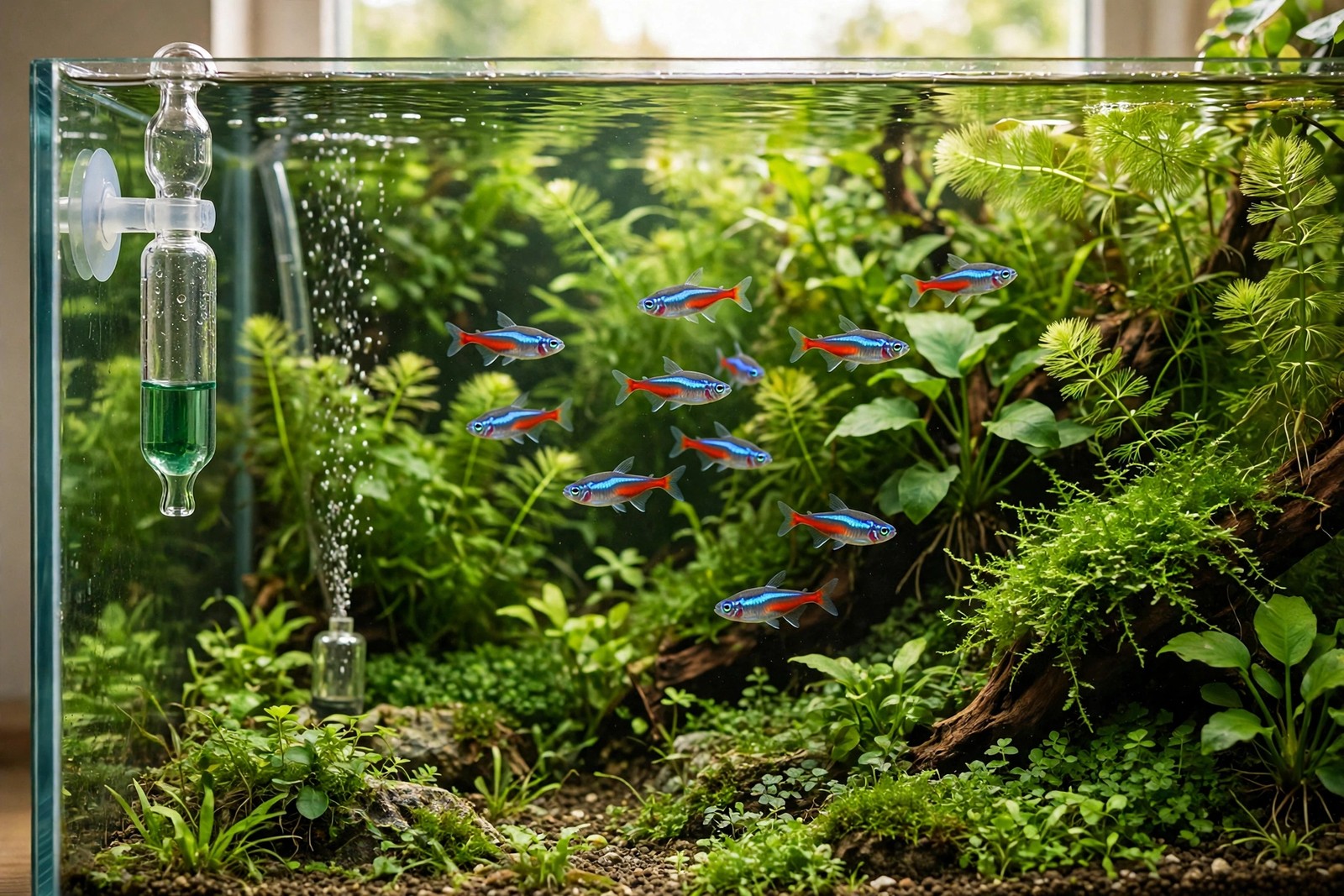
A planted tank asks you to run two routines at once — gas and fertilizer for the plants — inside a home that belongs to fish. The keeper who manages both well is not the one chasing the fastest plant growth; it is the one running a steady rhythm the fish experience as stability. CO2 on the lights' schedule, fertilizer on a fixed schedule, water changes on a reliable rhythm, and fish behavior read every day as the final verdict on all of it. When plant ambitions and fish comfort collide, the fish win, every time.
CO2 Runs With the Light
Plants use CO2 only while they photosynthesize, so the clean routine is to run CO2 with the light period and stop it when the lights go off. A timer makes this automatic and identical every day: gas starts with or shortly before the lights, stops with them, and the tank's fish get a genuine night without added CO2 while plants are not using it anyway. Consistency matters more than cleverness here — a tank on a timer settles into a daily pattern the fish adapt to, instead of swinging with an owner's memory.
Read the level with a drop checker, the small glass indicator whose color you can judge at a glance from across the room. Check it at the same point in the light period each day, because a checker read ten minutes after the gas starts tells a different story from one read mid-afternoon. You are looking for steadiness over days, not a perfect reading once.
Fertilizer on a Set Schedule
Fertilizer works the same way: dosed on the schedule you have set for your tank, in the steady pattern you chose, rather than in irregular catch-up doses after a forgotten week. Plants use nutrients gradually and predictably; the fish experience sudden changes in the water, not good intentions. A keeper's schedule — which days, which part of the routine, in what order alongside feeding and checks — is the substance, and it should be written down where anyone tending the tank can follow it exactly.
Fish First, Always
The non-negotiable rule sits above both routines: the fish are the tank's residents, and the plants are its decoration. Learn the emergency signs cold. Fish gasping at the surface, hanging at the top, or going lethargic and listless mean the water is short on what they need, and the response is immediate and practical — cut the CO2 and aerate, with surface agitation or an air stone, before investigating anything else. Do not finish the fertilizer dose first. Do not wait to see if it passes. Gas off, air in, then diagnose.
Slower warning signs deserve the same respect on a longer clock: fish eating less, hiding more, or losing color in a tank where the routines recently got more aggressive is the tank telling you the balance tipped. Step the plant routines back toward the last rhythm the fish were comfortable under.
Water Changes Hold the Rhythm
Regular partial water changes on a set rhythm are the routine under the routines. They export what builds up, refresh what gets used, and give the whole system a weekly reset point that makes CO2 and fertilizer easier to judge. Keep the day and preparation consistent, and add matched, treated water gently, at a pace the fish barely register.
Splitting Tank Duties at Home
Write the tank plan down with names on it: one person owns the daily drop checker glance and fish watch, another owns fertilizer days and notes each dose as given, and water changes belong to a named person on the fixed day, with a backup who knows the preparation steps. A planted tank fails quietly when everyone assumes someone else checked the gas. On busy weeks, KinsLe keeps the routine from drifting, while Care Teams records who checked the drop checker, who dosed fertilizer, and who watched the fish.