
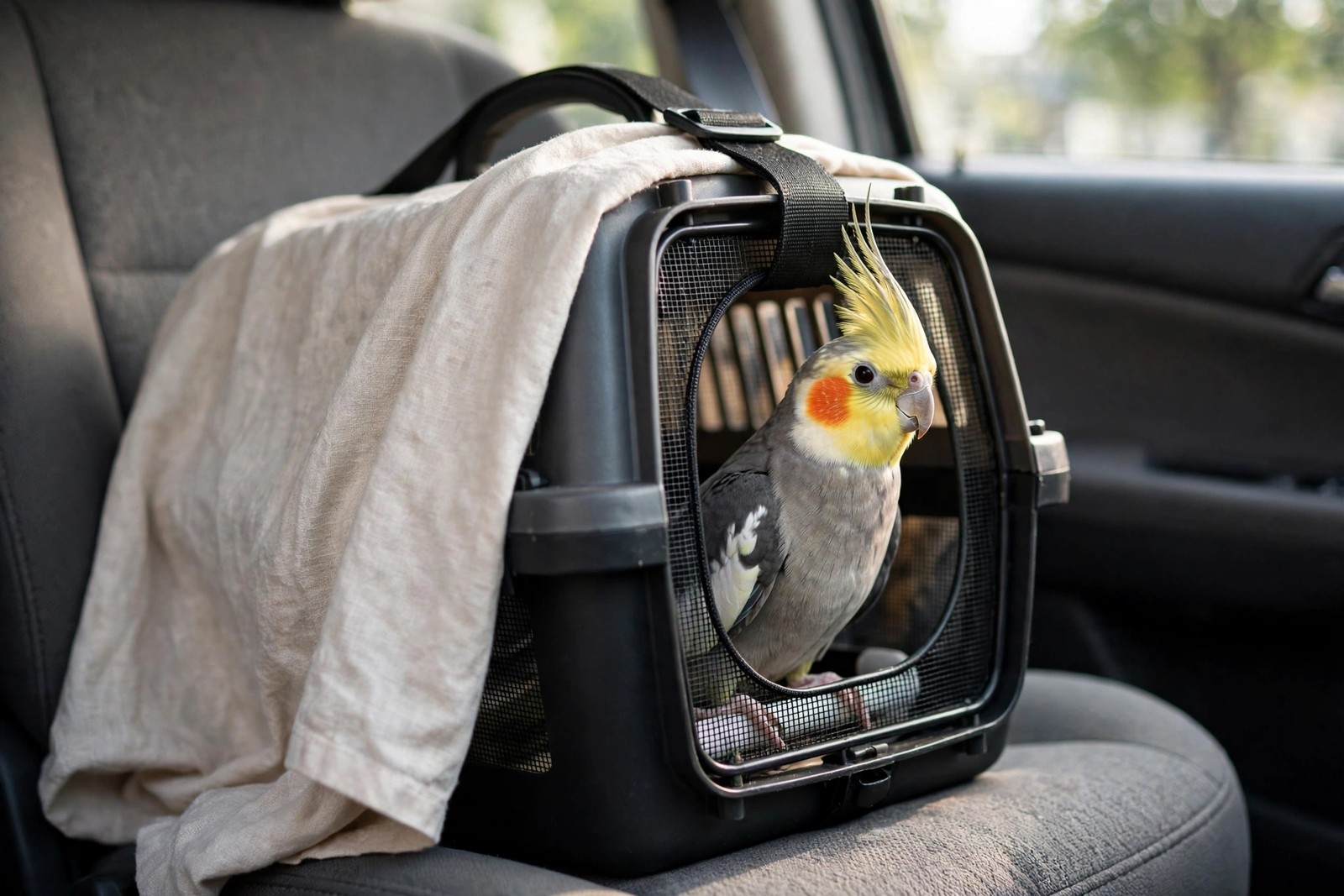
You can make car trips much less stressful for your cockatiel by securing the carrier so it cannot slide, keeping the car at a comfortable, steady temperature with no direct air blasting from vents, covering part of the carrier if passing scenery unsettles your bird, and keeping the whole ride quiet and predictable. Most cockatiels do well once the carrier feels familiar and the car stops being a place of surprises.
Start Before the Engine Does
Stress often begins before the trip. If your cockatiel only sees the carrier on vet day, the carrier itself becomes the warning sign. Leave it out at home, let your bird perch in it for treats, and do a few short practice sits in the parked car. Keep those sessions brief and end them well, so the car becomes boring rather than alarming.
On travel day, stick to your normal morning routine as much as possible. A rushed, noisy capture at the cage undoes all that practice. Allow extra time so you can invite your bird onto a hand or perch calmly.
Set Up the Car for a Small Bird
Place the carrier on a stable surface — a secured seat or footwell position where it cannot tip, slide, or be struck by a moving object — and fasten it with a seatbelt or strap where the design allows. Position it away from direct vent airflow and out of harsh sun through the window. Cockatiels are sensitive to temperature swings and fumes, so pre-cool or pre-warm the car before bringing your bird out, and never use strong air fresheners, sprays, or cigarette smoke anywhere near the ride.
Covering one or two sides of the carrier with a light cloth can help a bird who startles at passing trucks and shadows. Leave clear airflow and check that the cover cannot fall in and block ventilation.
During the Drive
Keep music low and voices calm. Sudden loud sounds, shouting at traffic, and a dog barking freely in the same car all raise the stakes for a prey animal. Drive smoothly where you can — gentle braking and turns matter more to a perched bird than to a belted human.
For longer drives, offer familiar food and a chance to drink at safe stops, using secured cups that will not spill. Talk softly now and then if your cockatiel usually responds well to your voice, but do not keep opening the carrier to check — a steady, undisturbed ride is usually kinder.
Safety Rules That Never Bend
Never leave your cockatiel alone in a parked car, even for a few minutes — temperatures inside can change dangerously fast. Never let your bird ride loose in the car, on a shoulder, or near an open window; a startle flight in a moving vehicle endangers everyone. Keep the carrier closed until you are inside a secure room at your destination, and wash hands after handling stops if you have been around other animals.
If your bird pants, holds its wings away from its body, or stays fluffed and silent well after arrival, let them settle in a quiet spot and contact your avian vet for guidance if those signs do not ease.
Identification for the Road
KinsLe's Verified QR ID Pet Profiles mean your cockatiel carries a unique QR ID on its profile — worth having in place before any journey, so identification is settled if anything goes wrong on the road. Set it up at home, not in the parking lot. If your cockatiel is ever separated from you at a rest stop or destination, a finder who scans the code reaches the Verified QR ID Pet Profiles record on KinsLe and can identify your bird from the details held there.