
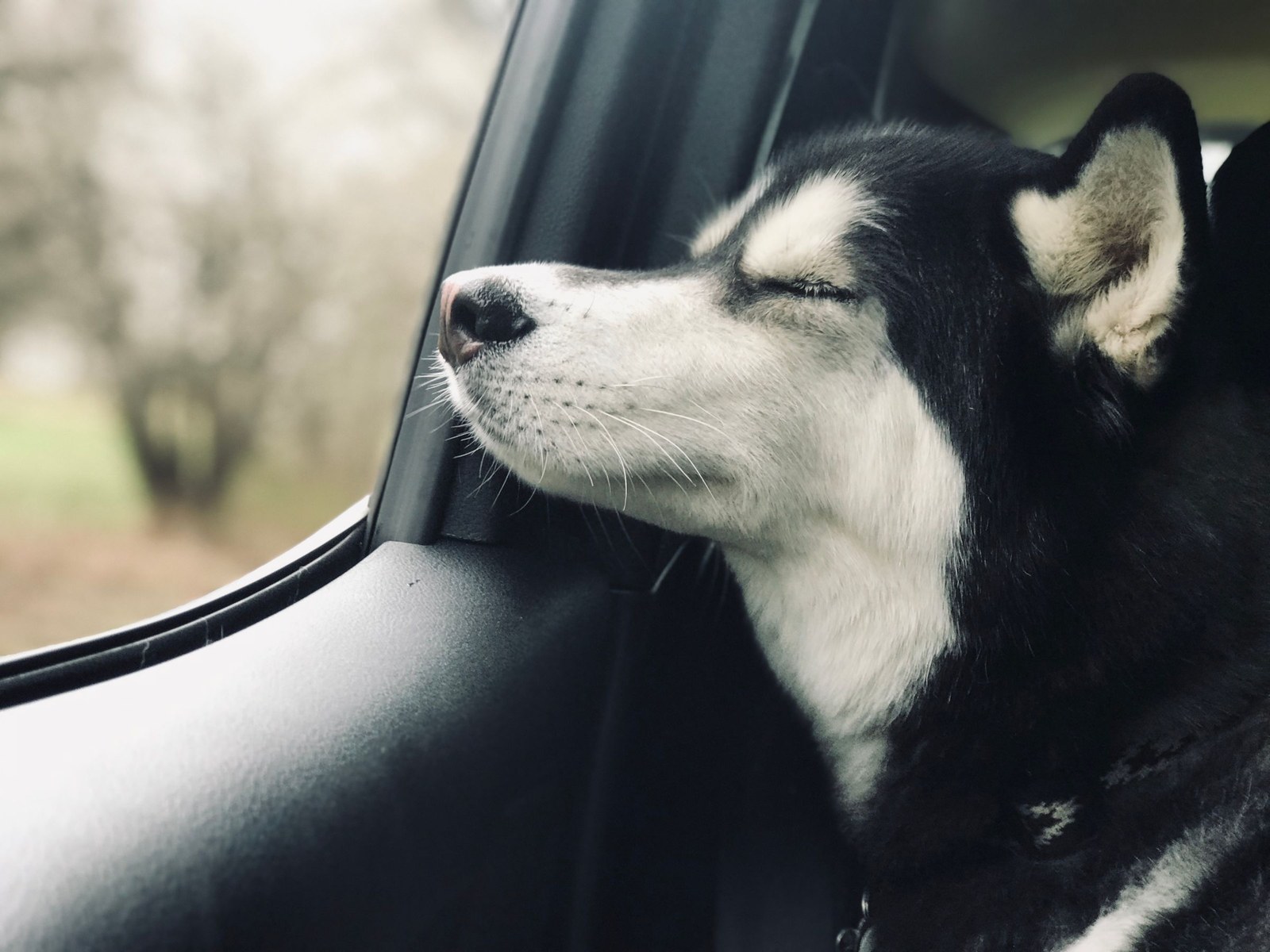
A first long car ride goes best when it isn't really your dog's first ride at all. Do a couple of medium practice drives in the week or two before you go — thirty to sixty minutes, ending somewhere enjoyable — so the big day feels like a longer version of something familiar, not a brand-new experience layered on top of hours of motion. On departure day, a well-exercised, lightly fed, securely settled dog will almost always travel better than one loaded straight from the couch.
Prepare the dog, not just the car
Give your dog a proper walk or play session before you leave. A dog who has burned off energy is far more likely to nap through the middle hours of a drive. Feed a light meal several hours before departure rather than a full breakfast at the door; a completely empty stomach can cause nausea in some dogs, but a full one sloshing through winding roads is worse.
Do a final toilet break right before you set off, and if your adult dog has never worn a car harness or ridden in a crate, introduce that gear at home first. Wrestling with new equipment in a gas station parking lot helps no one.
Set up a space your dog can settle in
Reserve a consistent spot — usually the back seat — with a familiar blanket or bed that smells like home. Secure your dog with a harness clipped to a seatbelt or a well-ventilated crate anchored so it can't shift. Loose dogs become projectiles in a sudden stop, and drivers get distracted by a dog trying to climb into the front.
Pack within reach:
- Water and a spill-proof bowl for stops
- A long-lasting chew or lick mat for settled, awake moments (only when parked or when a passenger can supervise)
- Poop bags, paper towels, and an enzyme cleaner for accidents
- A spare leash and a towel for muddy paws
- Any medication your dog needs during travel hours
Keep the cabin cool and offer a cracked window or steady air conditioning. Most dogs prefer watching the road ahead or curling up to sleep over staring out a side window at blurring scenery.
Pace the day like a dog would want it
Plan stops every two to three hours — more often for seniors, young adults with small bladders, or anxious travelers. At each stop, walk your dog on leash for five to ten minutes, offer water, and let them sniff. That sniffing is not wasted time; it's how dogs decompress.
Never leave your dog alone in a parked car, even briefly, especially in warm weather — temperatures inside rise dangerously fast. Rotate drivers or take your dog with you on leash for restroom and food breaks where permitted.
If your dog shows drooling, panting, or restlessness that doesn't ease after a break, shorten the day's driving or check in with your veterinarian for advice before the return trip.
Keeping home base in the loop with Care Teams
Long drives often leave someone at home handling the pets who stayed behind, or waiting to take over feeding the moment you arrive. KinsLe Care Teams let you assign feeding, walks, medication, and grooming duties to family members, with completions marked and timestamped — so while you're on the road, you can see that the cat was fed, the other dog was walked, and evening meds were done, without a string of 'did anyone...?' texts. It keeps the whole household coordinated around both ends of the journey.
Travel gets easier each time your dog learns the routine ends safely at home or somewhere fun. Care Teams on KinsLe close that loop for the drive home, with the person covering the evening walk for the dog who stayed home, the one feeding the cat, and the one giving meds each holding a written duty whose completion shows for everyone.