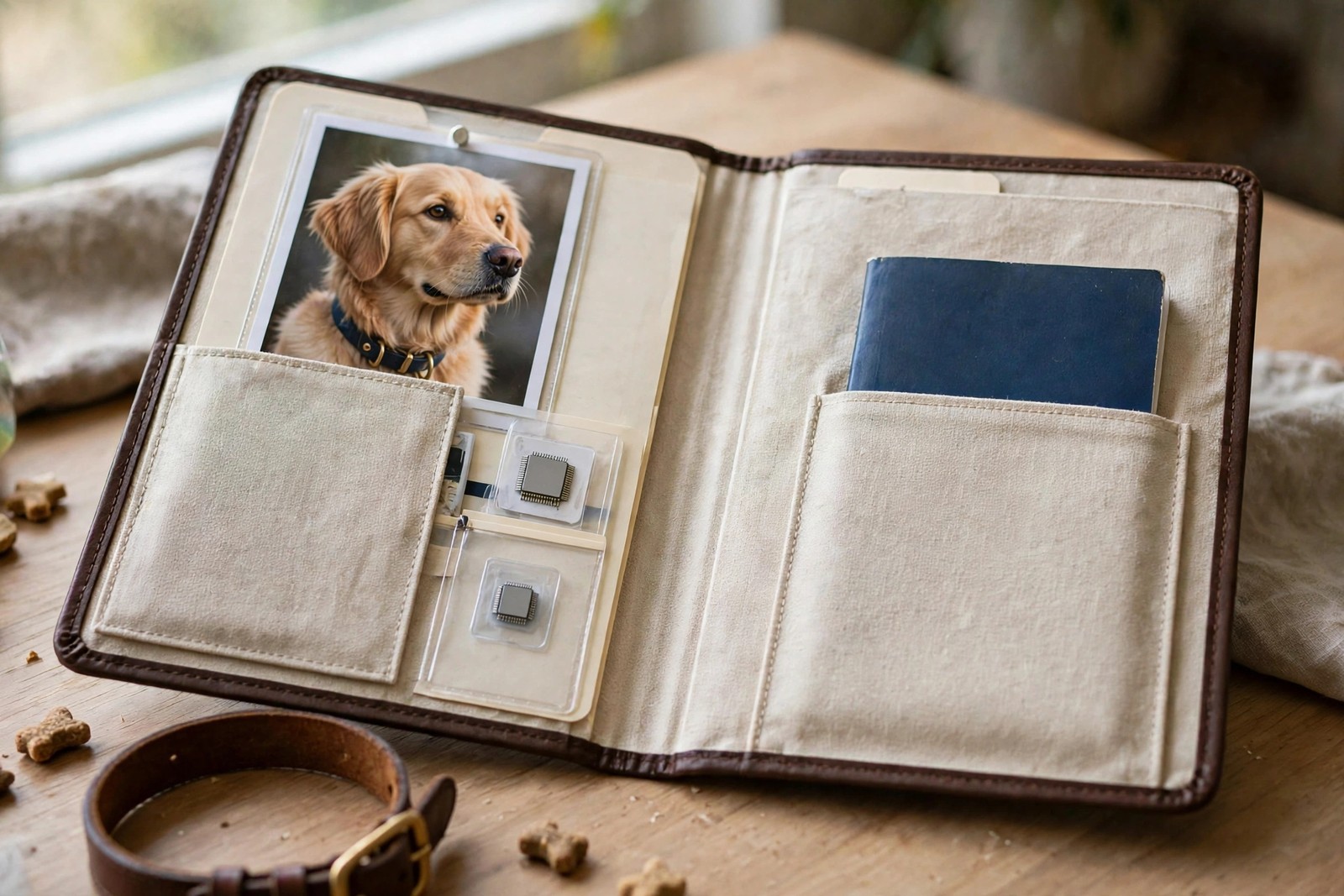
A health passport folder is not a drawer of everything the vet has ever printed. It is a slim, fixed-order packet that a stranger — a new vet, a kennel nurse, a sitter — can open and understand in two minutes. Building one takes an afternoon; the discipline is in deciding what earns a place and keeping the order identical every time you add to it.
Page One: Identity and Microchip
The first page identifies the dog beyond argument. A recent clear photograph, full body and face; her name and the name she answers to; breed or mix, colour and markings, sex, and date of birth or best-estimate age; weight at last check. Then the numbers that reunite and verify: microchip number in full, the database it is registered with, and the phone numbers registered against it. Finish the page with you — your mobile, a second household contact, and your home address. Anyone who finds this folder with this dog should be able to reach a human from this page alone, without opening another section.
Section Two: Vaccinations, in Date Order
File vaccination records newest last, so the history reads forwards, and keep a one-line summary at the front of the section: vaccine, date given, date next due. That summary line is what boarding kennels and daycare actually scan, and it is what you will check before booking anything. If your clinic issues stickers or a stamped booklet, the booklet lives in this section rather than in a coat pocket, and a photograph of each new entry on your phone backs it up the day it is added.
Section Three: Medications and Allergies, Flagged Loudly
This section gets a coloured divider or a marker on its edge, because in an emergency it is the one read under pressure. List current medications by name with when and how they are given and what they are for; list anything given regularly for parasites with the product type and last date; then allergies and known reactions in their own unmistakable block — including foods, not just medicines — plus any past reaction worth warning about, such as a bad response to sedation. If the answer is none, write 'no known allergies' rather than leaving the space blank; a blank reads as unknown, and unknown slows treatment.
Sections Four and Five: History and Contacts
The history section holds visit summaries, test results, X-ray or scan reports, and referral letters, again in date order, with a brief index line at the front for anything major: operations, ongoing conditions, injuries. Behind it, the closing section carries the people: your regular vet with address and phone, the out-of-hours or emergency clinic your practice directs you to, your insurer with policy number if you have one, and your emergency contact and regular sitter. A person using this folder at midnight should never need to unlock your phone to find any of those.
Paper, Digital, and Keeping It Alive
Paper wins on speed and works with dead batteries; digital wins on backup, sharing, and never being left at home. The honest answer is both, with one declared the master — update it first and copy to the other. Review the folder at each vet visit and at any change: new medication, new vet, new phone number, new microchip registration detail. A passport that is ninety percent current is trusted completely, which is why the remaining ten percent matters. That two-format discipline is exactly what KinsLe's Pet Passport supports — the same identity, vaccination, medication, and contact packet kept as one portable record you can pull up or hand over wherever your dog is being cared for.