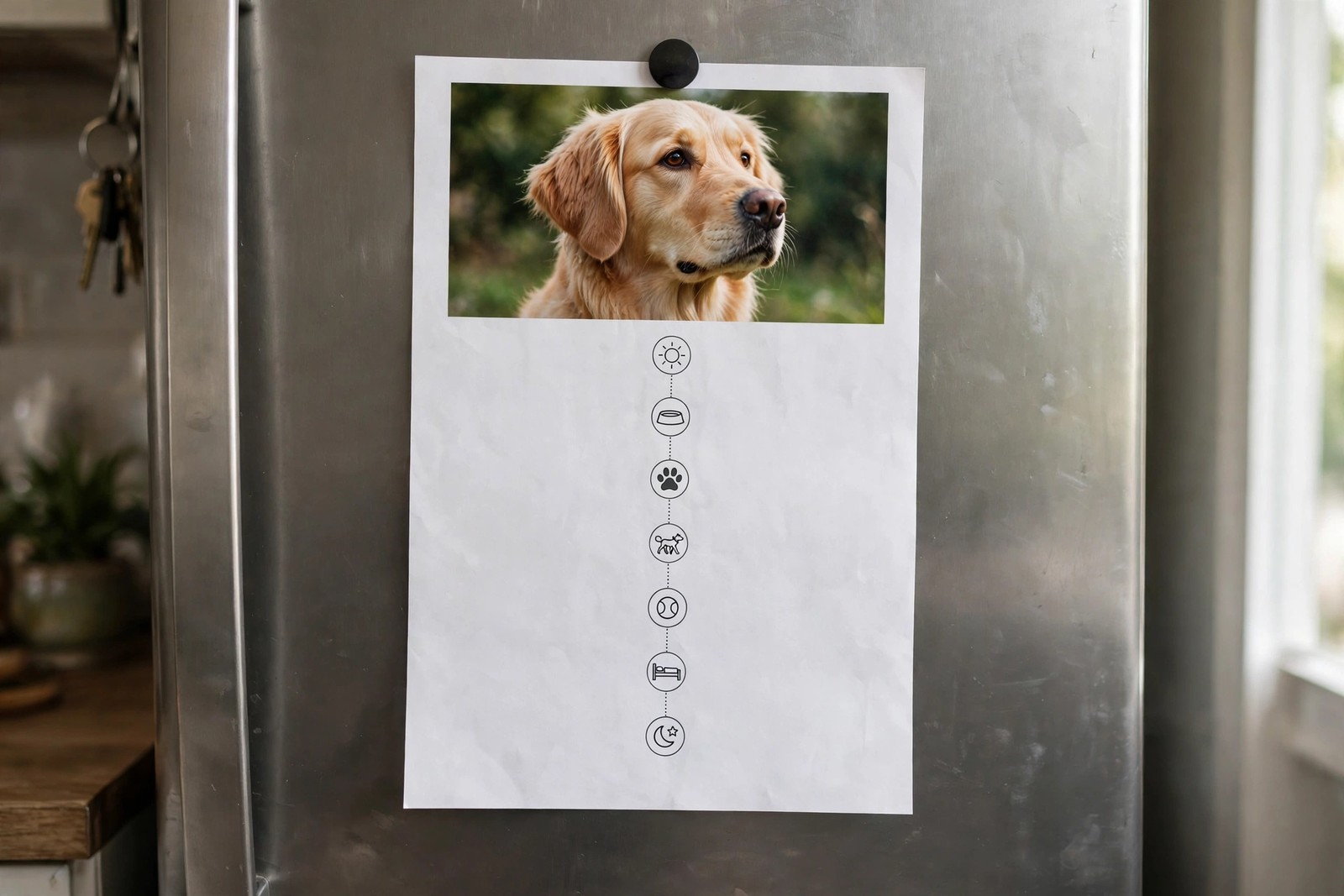
The test of a one-page care sheet is a tired sitter at 7 a.m. with a hungry dog circling her feet. If she can find what to feed, how much, and what happens next without reading a paragraph, the page works. Everything in the layout serves that moment: order by time, measure in the units your kitchen uses, and reserve the page strictly for what a stand-in needs during the days you are away.
The Header Strip and the Timeline
Open with a single line that carries identity and rescue at once: your dog's name in large type, a small photo, her breed and age, and your mobile number, with a second trusted contact beside it. Below that, run the day as a timeline rather than as topics — roughly four blocks work for most dogs. Morning: wake time, toilet trip, breakfast, walk length and route notes. Midday: toilet break, any second small meal or chew, water refresh. Evening: main walk, dinner, play or training habits. Bedtime: last toilet trip, where she sleeps, and what settles her. A sitter follows a day in order; she should never have to assemble it from a feeding paragraph here and a walking paragraph there.
Feeding and Medication, in Kitchen Language
Write feeding the way it happens at your counter: which food, how many cups or grams or tins, at which meal, where the food lives, and what gets added. Include the rules that protect the routine — no extras beyond the listed treats, what she is never fed, and how she behaves around food if guarding or gobbling means the sitter should feed her separately or stay nearby. Medication sits inside the timeline at the hour it is given, not in a separate medical block: name, time, with food or without, and the trick that gets it taken if there is one. A separate short line can carry allergies, again placed where a feeder will see it before the bowl goes down, not buried at the foot of the page.
House Rules, Walks, and the Quirks Only You Know
House rules get short, blunt lines: furniture yes or no, doors that stay shut, garden gate routine, what happens when the doorbell goes. Walking notes should cover the collar and lead she uses, the harness if she pulls, how she is with other dogs, traffic, and off-lead — most owners should simply write 'never off lead' for a sitter, in bold. Then the quirks section, which experienced sitters value most: the thunderstorm behaviour, the sound that spooks her, the game that winds her up before bed, the corner of the park to avoid, the way she asks to go out at night. Three or four honest lines here prevent more problems than a page of general care advice.
The Emergency Strip and the Second Copy
Close the page with a band along the bottom that cannot be missed: your vet's name and number, the out-of-hours clinic, your emergency contact who can authorise decisions if you are unreachable, and one line on anything a vet must know immediately. Print two copies — one on the fridge, one photographed into the sitter's phone — and test the sheet by handing it to a friend and asking them to talk you through a day; anywhere they hesitate is anywhere the page needs a shorter line. Update it whenever food, medication, or routine changes, and date the footer so an old copy cannot quietly outlive a new one. That tested sheet is the paper half of the handover; a KinsLe Care Pass completes it by giving the same sitter temporary, scoped access to your dog's fuller profile and records for exactly the days she is in charge.