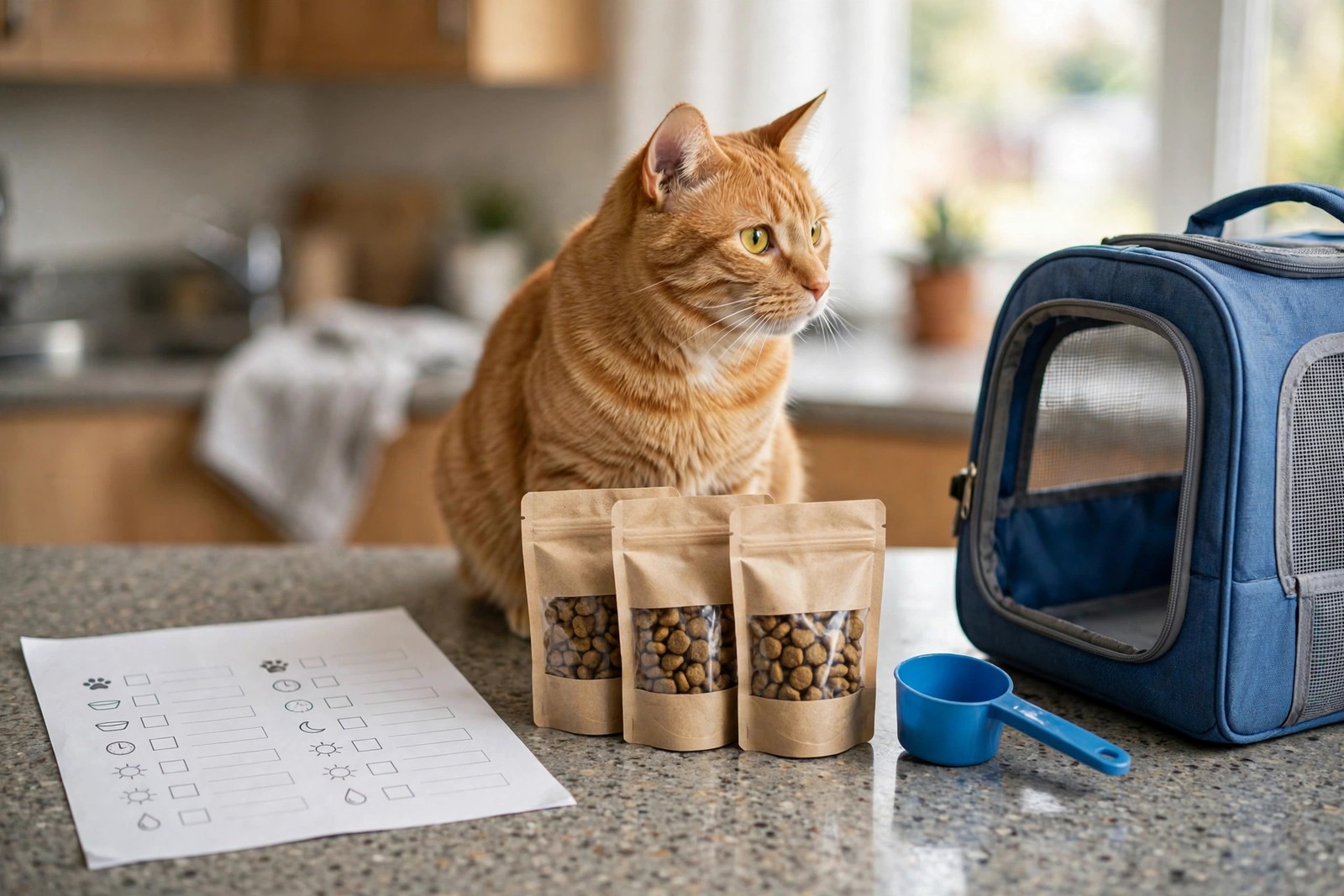
A good travel care sheet is not a biography of your cat. It is a working document a sitter can follow at 7 a.m. with a hungry cat circling their ankles, and again at midnight if something seems wrong. One or two pages, in large clear sections, beats a long affectionate essay every time. Write it for your actual sitter — a neighbour popping in twice a day needs different detail from a live-in friend — and walk through it together in your home before you leave, bowls and litter tray pointed out in person.
Section one: the cat, in practical terms
Start with name, age, appearance and one recent photograph, then the facts a stranger needs fast: where she usually hides when nervous (under the spare bed, on top of the kitchen cabinets), whether she is indoor-only, and how she behaves with visitors — shy cats may not appear at all for the first visits, and your sitter should know that a no-show at the bowl, with food eaten overnight, is normal for her rather than an emergency. Note her microchip number, collar details if she wears one, and any unmistakable markings in case she ever needs describing to someone else.
Section two: feeding, written so it cannot be misread
Give amounts in units your sitter can measure without guessing: one pouch morning and evening, forty grams of dry food in the blue scoop, water bowl rinsed and refilled daily, the water fountain topped up to its line. State where the food lives, what to do with leftovers, and which extras are allowed — three treats after the evening visit, say — and which are forbidden, including any foods she must never have and the houseplants she chews. If she is a grazer, a fussy eater or a food thief who raids bags left on counters, say so plainly; sitters forgive quirks they were warned about.
Section three: litter, medication and daily rhythm
Describe the litter routine exactly: which tray, which litter, scooped morning and evening, waste bagged and put in the outside bin, a full change on a named day if your trip is long. Add the rhythm of the household your cat expects — blinds opened in the morning, play session before the evening feed, lights off at night — because cats settle best when a sitter keeps their landmarks.
Medication deserves its own boxed section even if the answer is “none.” If there is medication, write what it is, when it is given, how you give it (in a small ball of wet food, for example), and what to do if a dose is missed or spat out — usually note it and tell you, never double up unless your vet has said otherwise. Leave the medication in its labelled packaging beside the sheet.
Section four: normal versus call for help
List her normal: appetite, typical litter output, usual sleeping spots, the noises she makes. Then list your thresholds in plain language: not eating for a full day, straining in the tray without producing urine, repeated vomiting, hiding somewhere new and refusing all contact, or any breathing difficulty means phoning your vet the same day, and you immediately. Give the vet's name, address and phone number, the out-of-hours service, your own mobile, and a local backup person who holds a spare key and can step in. Note that you authorise the sitter to seek urgent vet care and how payment is handled, so nobody hesitates over money in an emergency.
Finish with house specifics: carrier location (already assembled, by the front door), doors that must stay shut, and what to do if she slips outside — sit down, call calmly, put familiar-smelling bedding by the door, and phone you rather than chasing her. Print two copies, one for the sitter and one taped inside a kitchen cupboard, and store the matching health history — vaccinations, recent treatment, weight — in KinsLe Pet Passport, whose portable packet lets your sitter hand the vet your cat's real records instead of reconstructing them from memory.