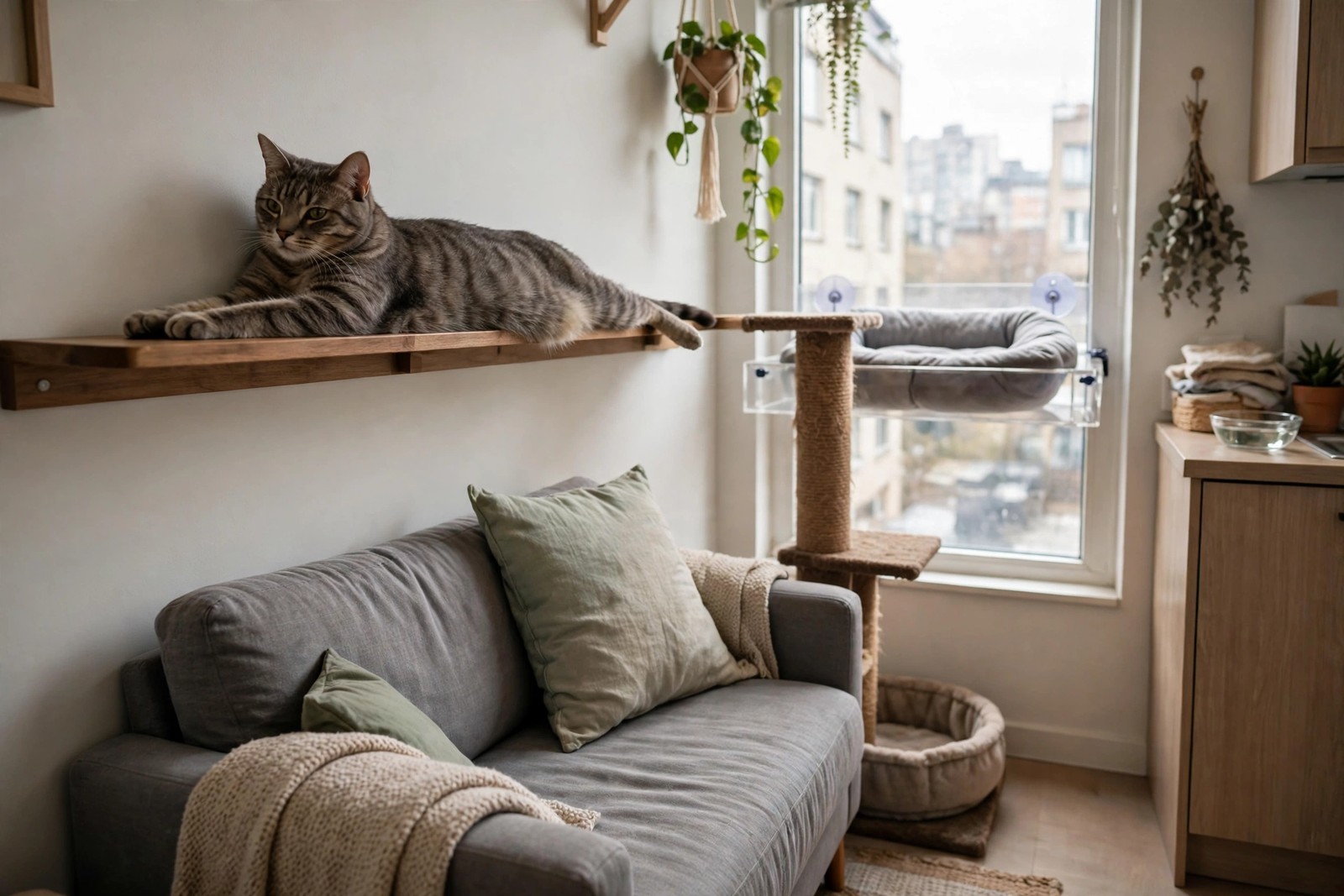
A cat does not experience your apartment in square metres; she experiences it in routes, heights, and smells. A studio that frustrates a dog can suit a cat completely, provided you build upwards, defend three separate zones inside one room, and stay ahead of litter odour that has nowhere else to go.
Height Is Your Extra Room
Cats claim territory vertically, and a flat with safe height feels several times larger than its floor plan. Build one continuous route rather than isolated perches: a tall scratching tree beside a run of wall shelves, a cleared top of a wardrobe reached from a bookcase, a window perch with a view of the street. Each landing should bear her weight without wobbling — a cat who is rattled by a shifting shelf abandons the route entirely — and the highest point in the room should be hers, ideally where she can supervise the door. Even a single well-placed shelf above your desk changes the maths: it is a bed, a lookout, and a refuge from visitors' feet that costs no floor at all. Keep one low hide in the mix too, a covered bed or box at floor level, because cats want a choice between surveying and vanishing.
Three Zones in One Room
In a single living space, separation is about distance and barriers, not doors. Litter goes in the quietest, most ventilated corner you have — beside a bathroom if the layout allows, never next to the food station, and as far from your own bed as the flat permits, because neither of you benefits from the alternative. Food and water sit at the opposite end, near the kitchen area, with water a little apart from the food bowl as many cats prefer. Sleep and scratching occupy the warm middle ground: her main bed up on the vertical route, and a scratcher placed where she actually wants to scratch — for most cats that means right beside where she wakes up and next to the sofa she would otherwise choose, not hidden in a corner she never visits. If she ignores a provision and chooses her own spot, move the provision; she is telling you where the zone is.
Litter Management When There Is No Spare Room
One cat in a small flat usually needs one tray, kept immaculate — in a studio, litter discipline is the whole game. Scoop daily without exception, top up rather than letting levels drop, and do a full change and wash on a fixed weekly rhythm so it never becomes a negotiation. A covered tray or one with high sides contains scatter and some odour, a mat outside the entrance catches what paws carry, and the tray's corner should have moving air rather than a sealed cupboard, which concentrates smell every time she or you opens it. If odour persists despite clean litter, the tray is too small, the litter depth too shallow, or the corner too airless — fix the geometry before blaming the cat.
Energy, Air, and the Daily Burn
Small homes cannot absorb unspent hunting energy, so schedule it out: two short play sessions a day with a wand toy, morning and evening, ending with a small meal, mimics the hunt-and-eat rhythm cats are built around and prevents the 3 a.m. furniture circuit. Open windows behind secure screens or a mesh, since indoor air and outside smells are enrichment in a flat with no garden; a cat who can watch birds from her perch has a television you do not pay for. Rotate a handful of toys weekly rather than leaving all of them out — novelty, not quantity, holds interest in a small space. And agree the system with anyone you share the flat with, because zones collapse when one person feeds beside the tray or moves the scratcher: in KinsLe, Family Sharing lets relatives you select open her profile.