
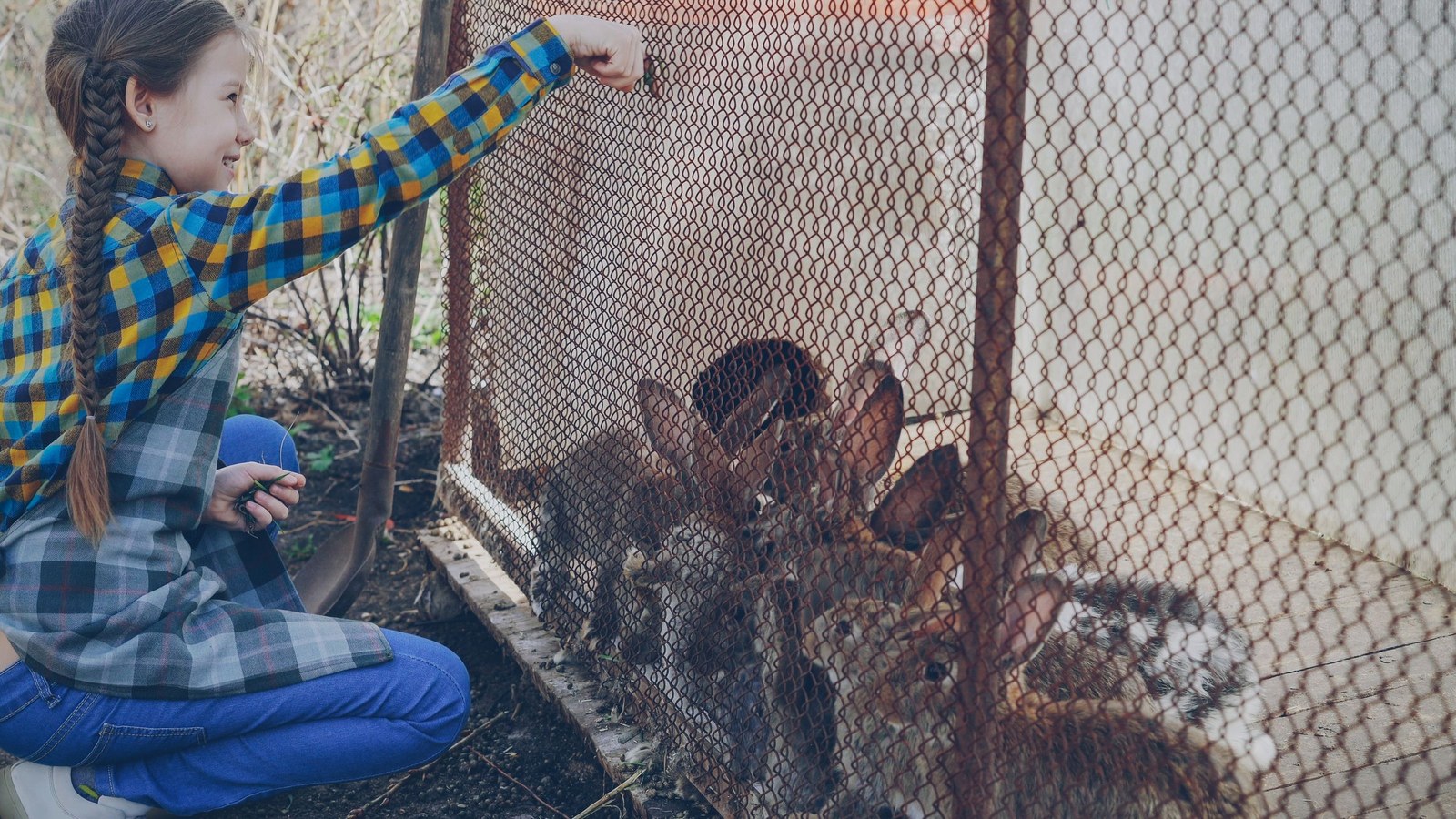
Build a predator-safe outdoor enclosure with strong welded mesh on every side, a solid roof, a floor that stops digging or a mesh skirt buried around the edge, and bolts or latches that neither predators nor clever paws can work loose. Chicken wire is not enough — it keeps pets in, but a determined fox, raccoon, or neighborhood dog can tear straight through it. Think of the enclosure in three layers: walls that cannot be chewed or pulled apart, a top that cannot be lifted or landed on, and a bottom that cannot be dug under.
Choose Mesh That Actually Stops Predators
Welded wire mesh with small openings — around 13mm to 19mm — is the standard vets and rescues recommend for rabbits and guinea pigs. The small gaps stop foxes and cats from reaching a paw through, and the welded joints resist pulling in a way twisted chicken wire never will. If you are building a wooden hutch with a run attached, replace any factory-fitted chicken wire with welded mesh before your pets move in. Run your hand over every panel edge: sharp cut ends should be folded or covered so a rabbit pressing against the side cannot cut a cheek or eye.
Block Digging From Both Directions
Predators dig in, and rabbits dig out, so the floor matters as much as the walls. The strongest option is a mesh floor laid under the whole run, covered with turf or soil so feet are not standing on wire. Alternatively, bury a mesh "skirt" angled outward around the perimeter, roughly 30cm deep, so anything digging at the fence line hits wire. If the run sits on paving slabs, make sure there are no lifted corners and that the frame is fixed down so a strong animal cannot shove it sideways.
Latches, Roofs, and the Shelter Inside
Fit bolts or two-step latches on every door. Simple hook-and-eye catches and gravity latches can be nudged open by raccoons, dogs, and even an enthusiastic rabbit bouncing against the door. A solid roof — not just mesh — keeps out climbing predators, blocks diving birds of prey, and gives shade and rain cover. Inside, include a fully enclosed shelter box with one small entrance, stuffed with hay. A rabbit or guinea pig that can bolt into a dark hideaway feels far safer, and stress from merely seeing a cat patrol past drops dramatically.
Daily Habits That Close the Gaps
Hardware only works if it is used. Do a quick latch-and-mesh check every time you feed, look for fresh digging along the fence line, and clear fallen branches that could give a climber a bridge onto the roof. Bring rabbits and guinea pigs indoors — or into a secure shed or garage setup — during extreme heat, storms, and freezing weather, and consider locking them into the solid hutch section at dusk, when foxes and raccoons are most active. Never rely on a garden fence alone; a run inside a fenced yard is a second layer, not the barrier itself.
If a Pet Ever Does Get Loose
Even a well-built enclosure can be defeated by a forgotten latch, which is why a backup plan matters. Each pet's KinsLe profile carries its own unique QR ID, while the alert itself sits free inside the profile and shows on the map, so a finder who comes across your missing rabbit or guinea pig can reach you with a direct message through that profile. Should a hutch door be left unlatched and an animal slip out unnoticed, open KinsLe, where the Lost Pet Alert System gives a finder a direct messaging route back to you from the missing animal's own page.