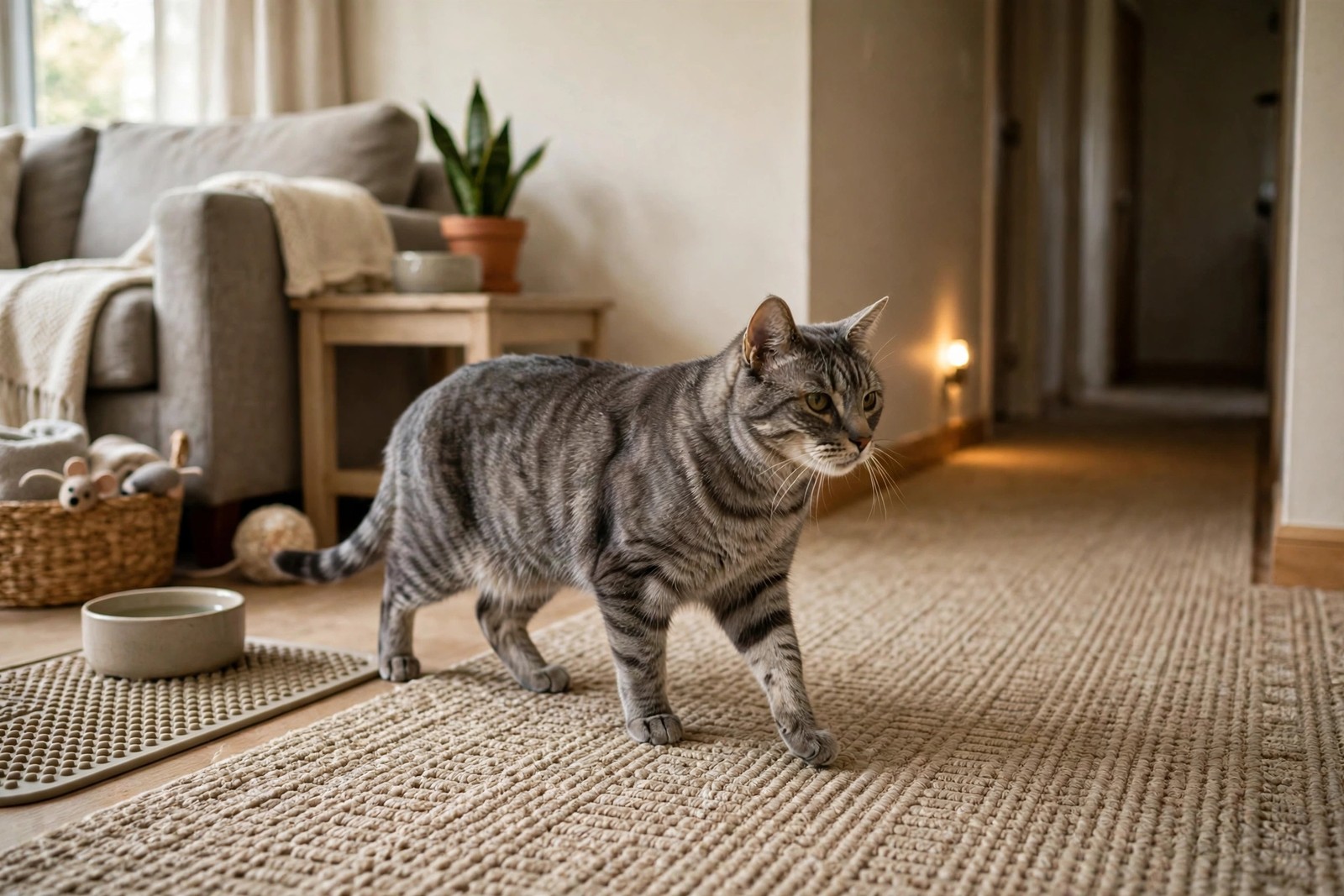
A cat who is losing her sight does not need a redesigned home. She needs the home she already knows, kept ruthlessly consistent, with a few deliberate aids added where her memory map is weakest. Cats memorize routes remarkably well, and most navigate familiar rooms confidently within days, provided nothing moves underneath them.
Freeze the Layout First
Treat the current position of her food bowls, water, litter box, bed, and scratching post as permanent. Move none of them, even a short distance, because she finds each one by counting turns and following scent rather than by looking. Keep walkways between those essentials completely clear: shoes, bags, charging cables, and children's toys left in a corridor become obstacles she walks straight into. Push chairs back in after meals, close cupboard and toilet doors she does not expect to be open, and ask visitors to do the same. If furniture genuinely has to change, change one piece, then walk her new route with her several times, letting her rub her cheeks along the edges so her own scent marks rebuild the map.
Add Touch, Sound, and Light Cues
Where eyesight fades, whiskers, paws, ears, and nose take over, so give those senses something reliable to read.
- Lay a runner or textured mat along her route to the litter box and a different-feeling mat under her food bowls, so her paws tell her where she is
- Leave her scent marks alone: stagger deep cleaning so bedding, posts, and favourite corners are never all washed on the same day, stripping every marker at once
- Fit low plug-in night lights along hallways and near the litter box, since many cats with failing sight still have some vision that dim, even light helps
- Talk before you touch her, every time, and let her sniff your hand first; a hand arriving silently from above is the thing that startles blind cats most
- Keep a radio or television playing at a low, steady volume in her main room, because a constant sound source works as a landmark she can steer by
Make the Risky Places Safe
Block the stairs with a gate at first, then reintroduce them slowly, one supervised climb at a time, with a textured mat marking the top and bottom so she can feel the change coming. Cover sharp furniture corners at her head height with soft padding, keep windows she could fall from closed or screened, and fit a collar bell only if she tolerates it: some cats find the constant noise stressful, and her own hearing matters more than your tracking. Keep her indoors, or use an enclosed outdoor space, because a cat who cannot see traffic, dogs, or drops cannot judge them either.
Daily Life and When to Call the Vet
Play still matters: choose toys that crinkle, chime, or carry a scent, and drag them along the floor rather than tossing them silently through the air. Feed at the same times, call her name before meals so she can follow your voice, and pick her up only when you must, since being lifted removes the floor her whole map depends on. Book a vet visit promptly if the sight loss came on suddenly, if one eye looks cloudy, red, or enlarged, or if she is bumping into things in a room she knows well after an adjustment period, because the vet needs to check the cause and her blood pressure rather than assuming it is simply age. KinsLe's Family Sharing keeps the fixed layout, the stair rule, and the speak-before-touching rule in front of everyone who lives with or visits her, which is what makes the whole system hold together on an ordinary busy day.