
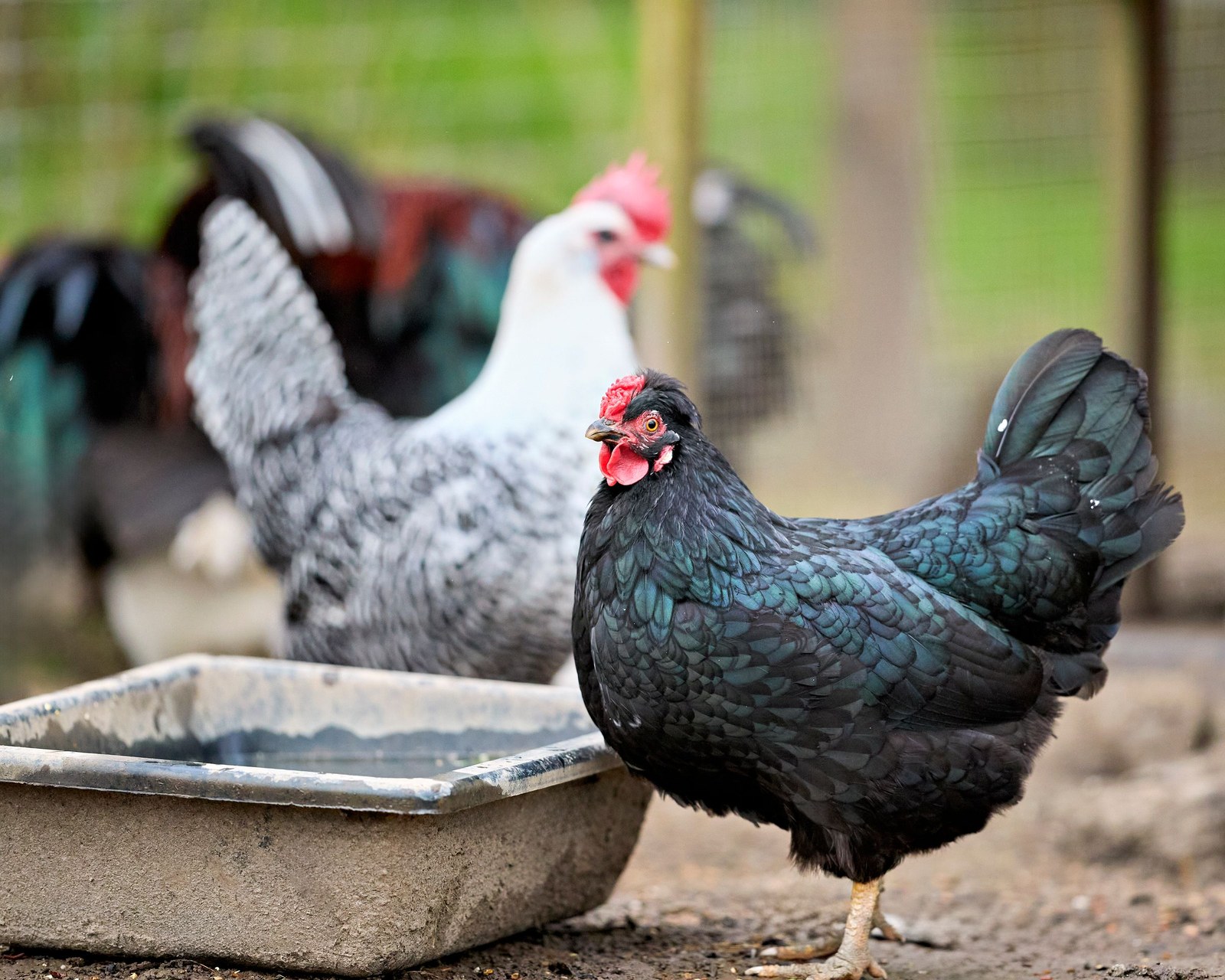
To make sure chickens and goats get enough water in winter, check every waterer at least twice a day, break or remove ice promptly, and use a heated waterer, heated base, or a spare-waterer swap system so animals are never left with solid ice. Animals drink less when water is icy cold, so the goal is not just open water, but water they will actually drink freely in freezing weather.
Why Winter Water Is Easy to Get Wrong
Dehydration sneaks up in winter. Chickens need water every day to keep laying and digest feed, and goats need it to keep the rumen working — a goat that stops drinking often stops eating properly soon after. Snow is not a substitute for liquid water for either species, and eating snow costs them energy they need for warmth.
Frozen water also creates a labor trap: the morning check gets done, but by early afternoon a thin skin of ice has sealed the surface again, and smaller or lower-ranking birds and goats may not break it. Twice-daily checks are a minimum; in severe cold, a midday third check is worthwhile.
Practical Systems That Work
Choose the system that fits your power and layout:
- Heated waterers and bases: purpose-built poultry waterer heaters and heated goat buckets keep water open — use only equipment rated for the job, follow the manufacturer's instructions, and keep cords protected from chewing and moisture.
- The two-waterer swap: keep a spare indoors, carry out the thawed one at each check, and bring the frozen one inside to thaw. Simple, safe, and ideal off-grid.
- Black rubber tubs: flexible tubs let you pop ice out without cracking, unlike brittle plastic in deep cold.
- Insulation tricks: placing a waterer out of the wind, in weak winter sun, or partly sheltered slows re-freezing between checks.
Never use antifreeze or salt to keep animal water open, and be careful with heat lamps anywhere near water, bedding, or electrical cords — fire risk in barns and coops is serious. If you install heated equipment, check it weekly for damaged cords or connections.
Float a clean ball or similar object in larger goat troughs can slow ice formation in light freezes by keeping the surface moving, but it is not a replacement for checking in a hard freeze.
Watch Intake, Not Just Ice
On each visit, look beyond the ice. Are the chickens crowding the waterer when you refill, suggesting they were thirsty? Is the goat trough level barely dropping, which could mean the water is too cold, fouled, or the animals are unwell? Clean slime and droppings out — animals avoid dirty water even when it is liquid.
Provide water near feed and shelter so animals do not have to cross an icy, windswept yard for every drink, and keep paths cleared so you can carry buckets safely without spilling half on the way.
Extra energy from good feed helps animals cope with cold, but it cannot compensate for missing water. If a chicken or goat seems lethargic, sunken-eyed, or off feed in cold weather, treat it seriously and contact your veterinarian.
Scheduling Winter Checks With KinsLe
Winter chores are where good intentions slip — the evening check forgotten after dark is the one that matters. KinsLe Care Teams let you set twice-daily winter water checks as assigned tasks with timestamped completions, so you can confirm the chickens were checked at the morning round and the goats again before nightfall, whoever was on duty.
Assign the swap, the ice break, and the refill as clear tasks, and the record gives you peace of mind on the coldest nights. Morning ice-breaking, the midday refill in severe cold, and the after-dark final check are each assigned through the Care Teams schedule on KinsLe, where a timestamped completion settles whether the flock and herd were actually watered.