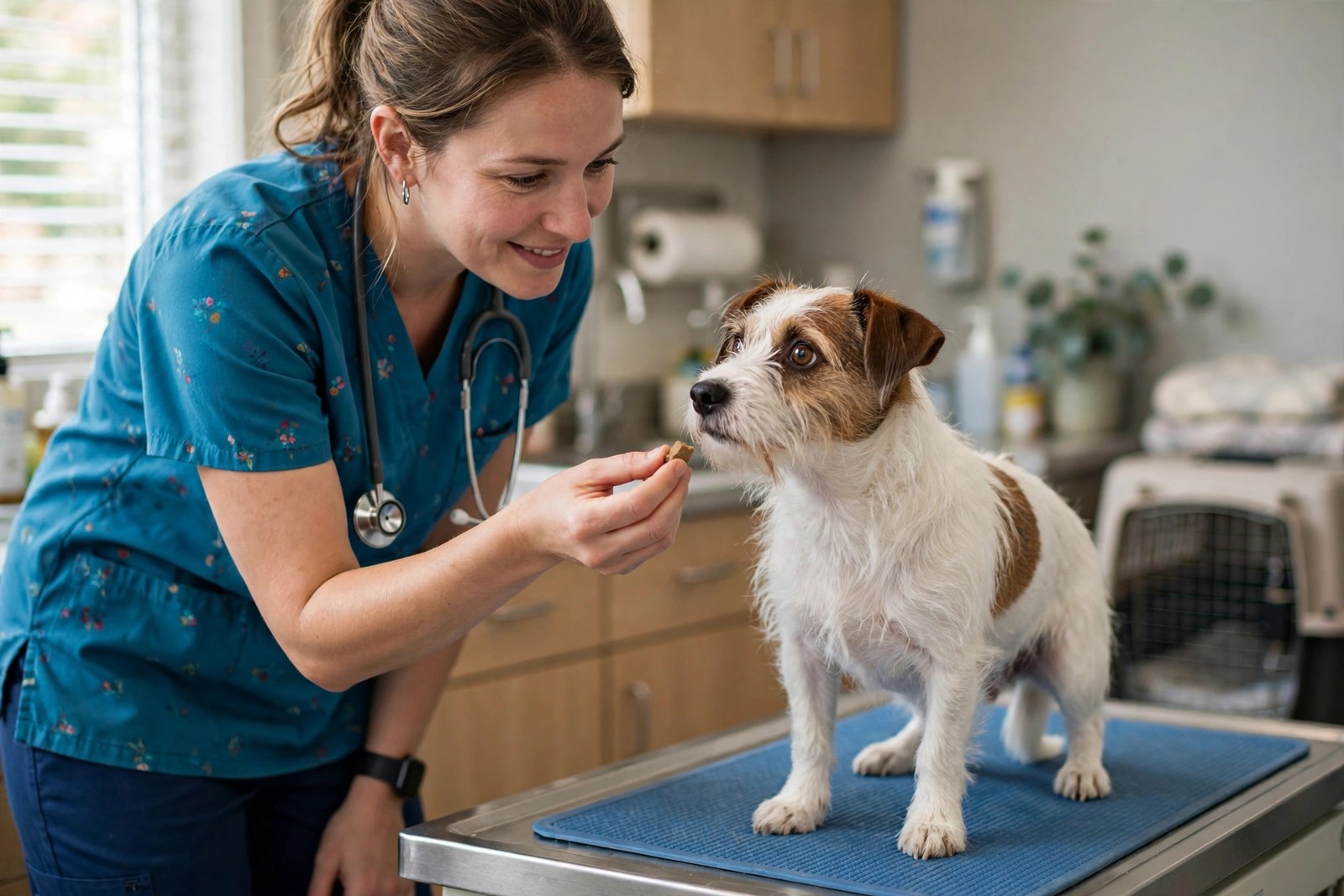
A nervous dog is usually predicting, not misbehaving
By the time a dog is trembling in the waiting room, the fear has usually been building through the whole sequence: the lead appearing at an unusual time, the car ride that only ever ends at one place, the smell of the practice, the slippery table. Each step predicts the next, so the most effective work happens before appointment day — breaking the chain by making some of those steps lead nowhere frightening, and rehearsing the strange parts of an exam where the dog feels safe.
Happy visits: teach the building a new meaning
Ask your practice whether you can pop in briefly when no treatment is due. Walk in, let the dog be weighed, accept a treat and some fuss from the nurse, and leave. Two minutes, nothing happens, out again. Repeated occasionally, these visits dilute the association: the practice becomes a place where mostly nothing occurs and food sometimes appears, rather than a place where every arrival ends in restraint and needles. Many practices actively welcome this for nervous patients, because a calmer dog is safer and easier to examine.
Do the same for the car if journeys are part of the dread — short rides that end at a walk or at home, so the car stops being a reliable omen of the vet.
Rehearse the exam at home, in pieces
An examination is a series of unusual touches: ears lifted and looked into, lips raised, paws picked up and held, a hand resting on the chest, standing still on a raised, smooth surface. Practise each one separately at home for seconds at a time, paired with something the dog loves, and stop before he wants you to. A dog who has had his ears handled happily a hundred times on the sofa meets the vet's otoscope with a fraction of the alarm. Practising a muzzle the same gradual way is also a kindness for dogs who may one day need one in pain — a familiar muzzle is equipment; a first-time muzzle in a crisis is a second emergency.
Shape the day itself around calm
Book with honesty: tell the practice when you phone that your dog is nervous, and ask about quieter appointment times, waiting in the car until called, or entering through a side door. Feed a lighter meal beforehand if your dog is prone to car sickness, allow unhurried sniffing outside before going in, and bring the treats or toy that work best for him. Stay boring yourself — slow movements, level voice, no repeated anxious reassurance — because dogs read their owner's tension as confirmation that something is indeed wrong.
If your dog's fear is severe — panic, aggression at the practice, or distress that starts the night before — raise it with the vet as a problem in its own right. There are further options a vet can discuss for genuinely fearful patients, and a dog who cannot be examined safely is a welfare issue, not a training failure.
Whatever you learn about what settles him — a particular nurse, waiting outside, a favourite treat — it only helps if the person who takes him next time knows it too. In KinsLe, Family Sharing keeps your dog's profile and care notes visible to the family who help with him, so his nervous-dog plan is followed by whoever drives him to the practice.