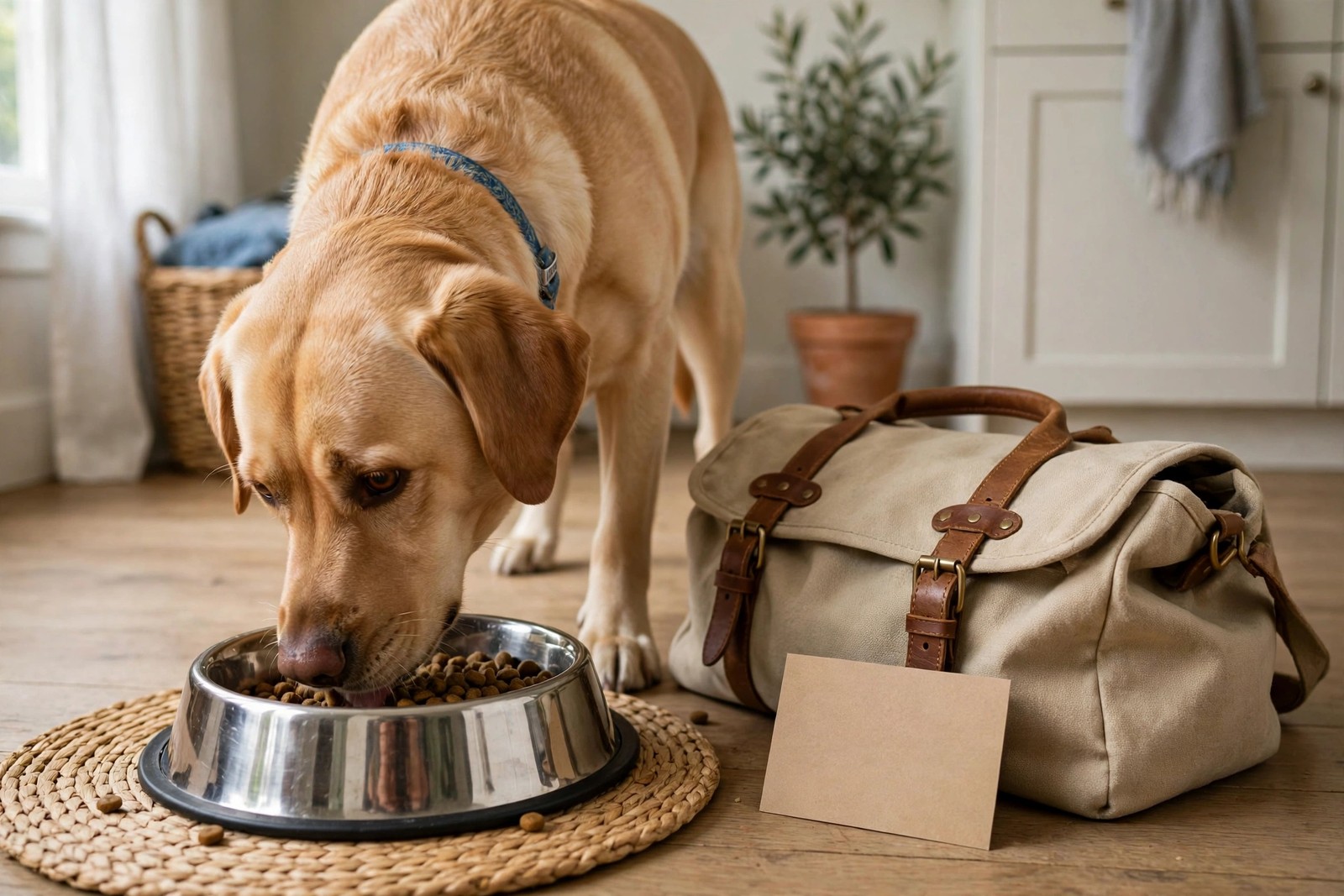
A dog who stays with different relatives faces a quiet nutritional risk. Each household loves the dog, each household feeds slightly differently, and the combined effect across a month can mean three portion sizes, two extra treat cultures, and no clear record of what the dog actually ate. The answer is to remove interpretation from the system. You decide the diet once, package it clearly, and let each host simply follow the package.
Pre-Portion the Food Before the Dog Leaves
Measure the dog's food at home and seal one bag per day of the stay. Write the date on each bag and mark how the contents split across meals, for example half in the morning bag section and half in the evening section. A host who opens today's bag cannot overfeed without visibly breaking the system, and a host who runs short knows to call you rather than to improvise with their own dog's food.
Pack a small reserve bag for travel delays and label it clearly as emergency food. Include the dog's usual treats in a counted quantity as well, because treat generosity varies between households more than meal discipline does.
Write a Card That Answers Questions Before They Arise
The instruction card travels in the food bag and covers six points: the food name, the amount per meal, the feeding times, the daily treat allowance, any foods that must never be offered, and your phone number alongside the vet's number. Add practical notes that hosts genuinely need. State whether the dog eats fast and needs a quiet corner, whether other pets in that house must eat separately, and whether medication hides in a particular meal if your vet has prescribed any.
Keep the card short enough to read in one glance. A dense page of warnings gets skimmed, and a skimmed card fails at the exact moment it matters.
Align the Rules Across Households
Agree the shared rules with each host before the first stay, not during a handover at the door. The dog eats at the same times in every house, receives treats only from the packed supply, and gets no table food anywhere. Consistency across homes matters more than any single household's house style, because the dog experiences one continuous diet rather than a series of separate holidays.
New hosts deserve a short walkthrough on the first visit. Show them where the dog eats, how the bowl gets washed, and how much water the dog typically drinks. That ten-minute tour prevents the misunderstandings that a card alone cannot cover.
Ask for a Simple Daily Report
Request one short message per day covering appetite, stools, water intake, and anything unusual such as a refused meal or a stolen snack. The report takes a host under a minute and gives you an unbroken record across homes. Patterns become visible in that record. A dog who eats poorly at one house may dislike the feeding spot there, and a dog who gains across a month of stays may be collecting unrecorded extras from a generous host.
Review the record after each stay and adjust the packaging rather than blaming a person. If treats run out early at one house, reduce the daily count in writing and explain why. If a host found the evening time awkward, shift the stated time for every house so the routine stays uniform.
Shared visibility keeps the rotation honest without awkward policing, and KinsLe Care Teams supports that by showing each host the same feeding duties for the dog with completions recorded in one shared place.