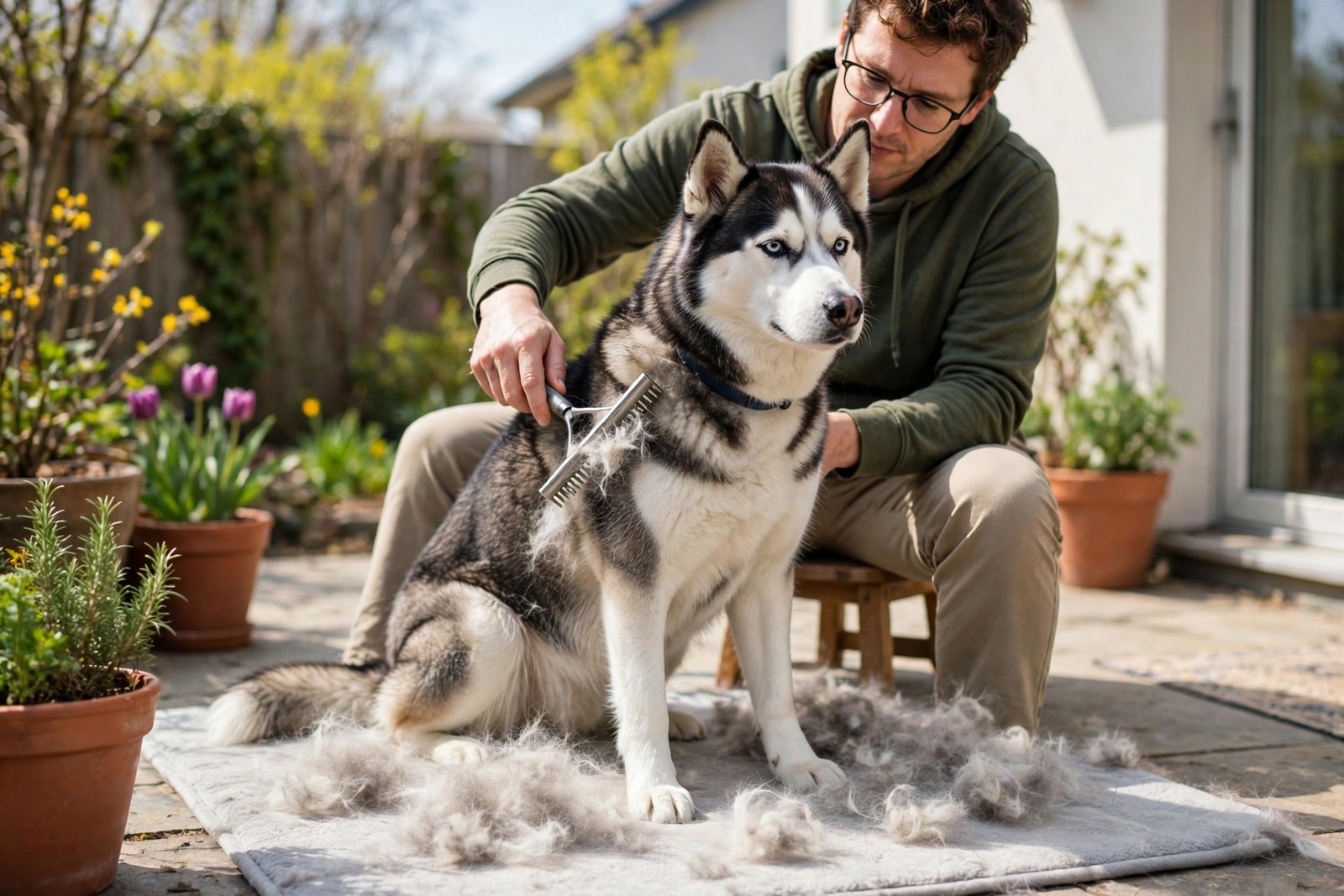
A spring coat blow is not ordinary shedding with the volume raised. A double-coated dog releases a winter's undercoat across a few intense weeks, and the loose hair packs into felted layers if it is not lifted out in order. In a house where someone is sensitive to dog hair and the carpets are pale, the goal is to remove that undercoat at the dog, outdoors, on a schedule, rather than collecting it from every surface indoors for a month.
Deshed in Layers, Section by Section
Set the dog on a washable surface outside and divide the coat into sections: neck and shoulders, ribs, back, hindquarters, tail and trousers. With an undercoat rake, work one section in the direction of growth with short strokes, clearing the rake often, since a clogged tool skates over packed hair instead of reaching it. Follow with a slicker brush that lifts the loosened hair clear, then draw a fine comb through the section down to the skin. When the comb glides, that section is done; when it snags, repeat the rake and slicker passes rather than hauling harder. Work symmetrically so one side is never left packed while the other is clear, and stop for water and a shake break between sides. Hair that comes away in the garden is hair that never reaches a carpet, which is why the location matters as much as the tools.
Protect the Double Coat Itself
Resist the clipper shortcut that appears every spring. A double coat insulates against cold and also shields skin from heat and sun, and cutting it short disrupts that system. Regrowth after a shave-down often arrives patchy and altered in texture, with guard hairs returning slowly and undercoat returning fast, which produces a coat that mats more readily than the original. Trimming is a different matter: tidy the feathers, feet and hygiene areas as needed, and ask a groomer or your veterinarian before any coat is clipped for a medical reason. Between full sessions, a bath with a thorough dry helps release undercoat that is already loose, after which another outdoor layering session removes a surprising amount. Never force a rake through a felted mat against the skin; tease mats apart gently or have a groomer remove them, since tugging painful spots teaches the dog to dread the whole routine.
Run the Allergy Household Around the Coat
During peak weeks, brush daily in short sessions outdoors and treat your grooming clothes as contaminated afterwards: change before sitting on upholstered furniture, and keep the dog out of the sensitive person's bedroom for the duration of the blow. Washable throws over light carpets and over the dog's favourite chair catch the fallout where it lands, and a hot wash cycle for those throws twice a week keeps them from becoming hair reservoirs themselves. Vacuum traffic lanes and the dog's resting spots on a frequent, short cycle rather than one weekly marathon, emptying the machine outside so collected hair does not puff back into the room. None of this treats anyone's allergies, and a household member whose symptoms worsen should talk to their own doctor; these habits simply reduce how much loose coat circulates indoors while the shed runs its course.
Share the Rota So Sessions Never Slip
Daily sessions fail when they belong to everybody in general. Split the week: one person owns weekday brushing, another covers weekends, someone else runs throw washes and vacuuming. Care Teams inside KinsLe suits that split exactly, with each grooming or laundry duty carrying its own owner and a completion timestamp, so a missed day shows up before the carpets do.