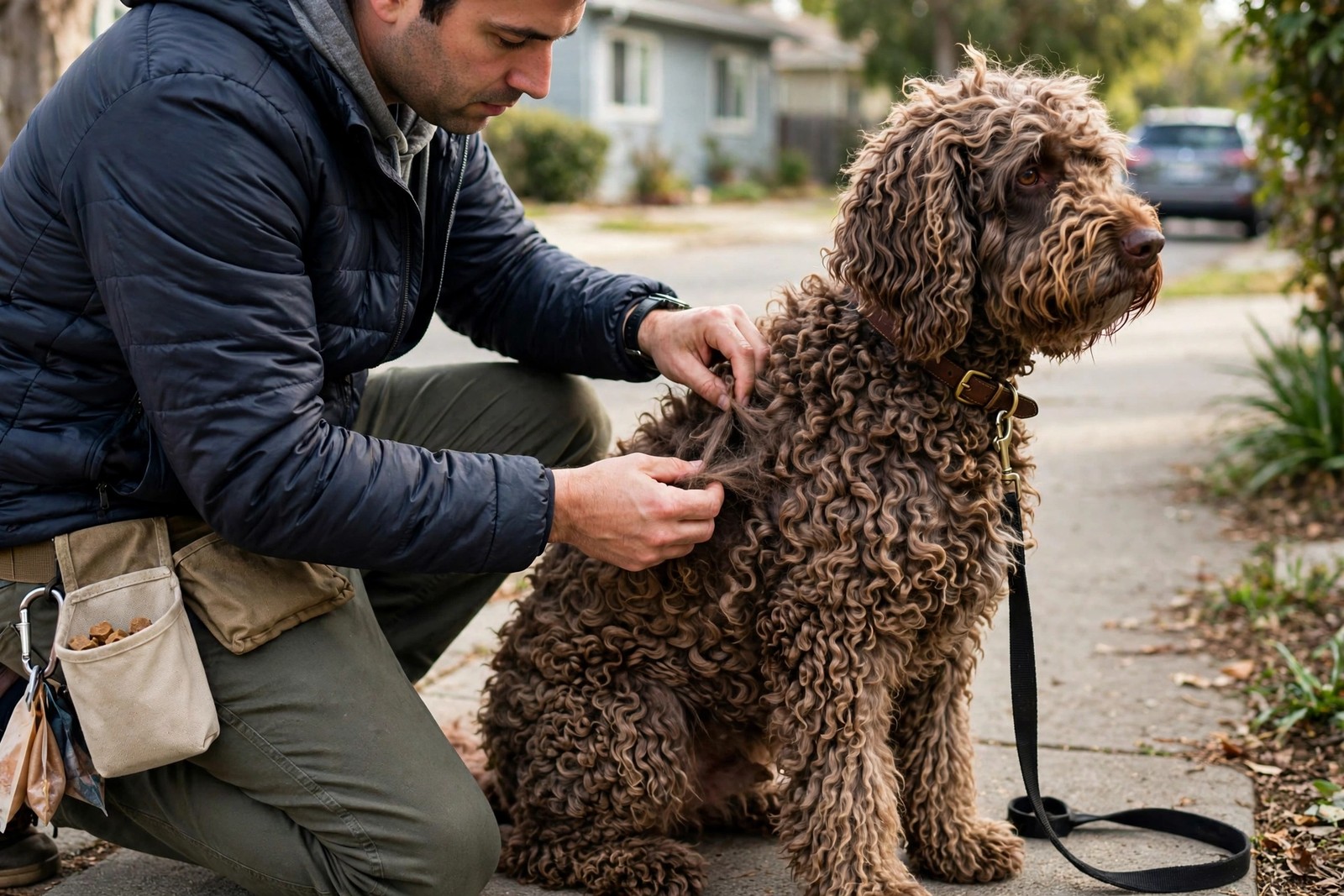
Felting in a Lagotto begins at the base, not the surface: the woolly coat looks brushed while the layer against the skin quietly compacts into mats. Part the coat and work in small sections right down to the skin with fingers and a comb, separating forming mats by hand before they tighten. Do not keep every tangle at all costs: many experienced owners clip the coat down once or twice a year and let it regrow, which resets felting completely. After washing, let the curls dry naturally without brushing out the ringlets, and check ears, armpits, and collar areas weekly where friction felts fastest. A simple rhythm of weekly hands-on checks keeps the coat rustic and comfortable rather than sculpted.
What Actually Matters Here
With this breed, your fingers are the real tool. Slide them through to the skin in the friction zones — behind the ears, under the collar, in the armpits, at the tops of the legs — and feel for the dense, spongy patches that signal felt starting. Work those patches apart strand by strand while they are still loose; once a mat has hardened, clipping it out is kinder than an hour of pulling. Keep sessions calm and fairly short, stopping for a treat and a break, so a lifetime of weekly coat work stays something the dog accepts easily.
Steps That Make the Difference
Work the coat in sections, in this order:
- Part the coat and comb one small area at a time, right to the skin
- Separate any forming mat with your fingers before using the comb
- Give ears, armpits and the collar line a weekly friction check
- Let washed curls dry naturally, without brushing out the ringlets
- Clip the coat down once or twice a year if felting has got ahead of you
Judge the coat by what the comb finds at the base, not by how tidy the surface looks in the mirror. A Lagotto can look beautifully rustic while felt builds unseen underneath, which is why the hands-on check matters more than the hairstyle.
Keeping It Going
Anchor the weekly check to something that already happens — a Sunday groom, the evening settle — so it survives busy weeks. Note which zones felted fastest this month; that pattern tells you where next month's session should start. A household rota for those weekly checks can run through KinsLe's Care Teams, where each person sees their assigned session in KinsLe and the completed check is marked with a timestamp.