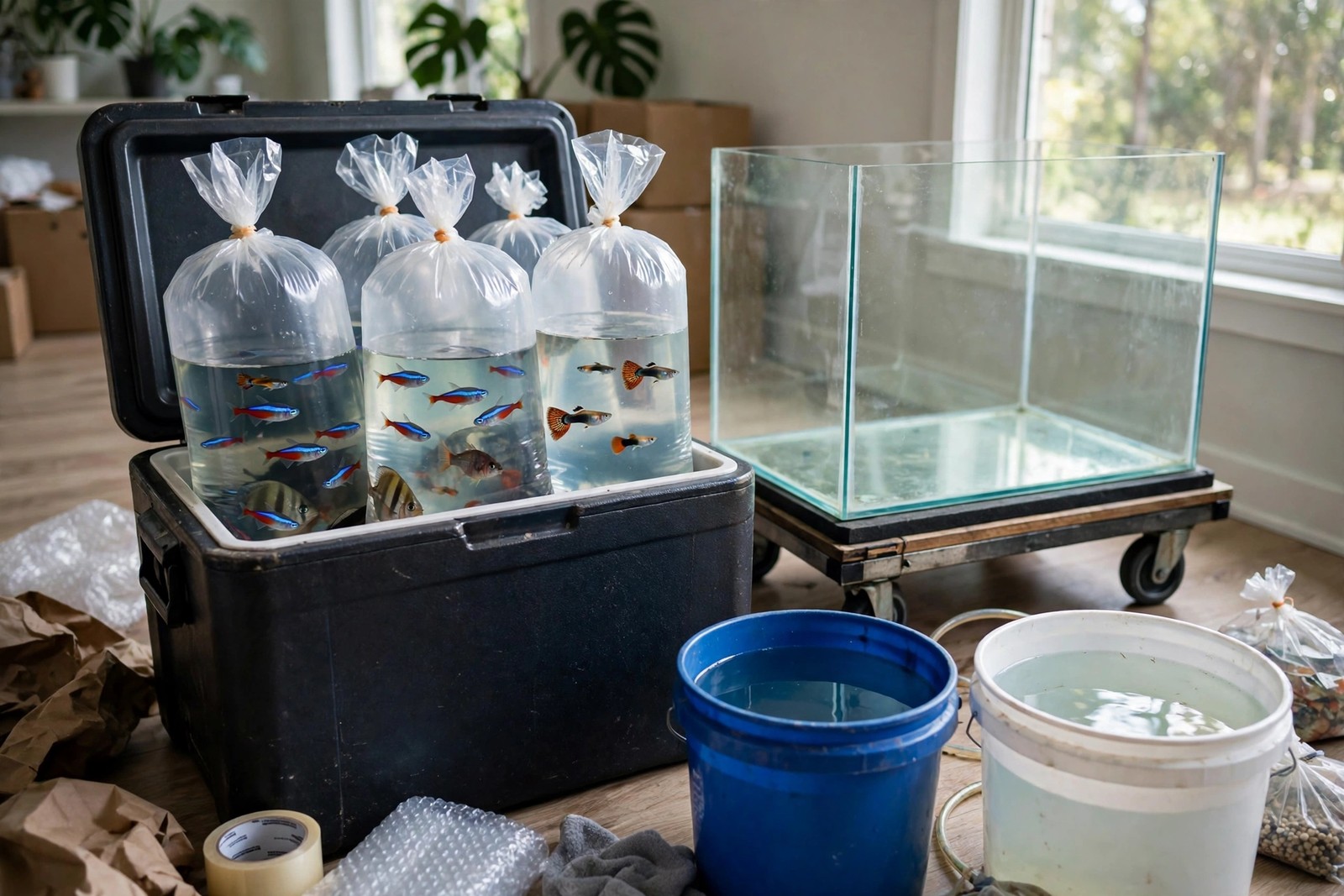
A fish tank move succeeds on sequence, not strength. The glass, the water, the fish, and the filter bacteria each travel differently, and the owners who lose fish usually lost them to warm bags waiting in a hallway, dried-out filter media, or a tank refilled in a rush at midnight. Build the whole move around one rule: the tank is the last thing you take apart and the first thing you put back together.
The Days Before
Stop feeding about a day before moving so fish produce less waste in transit. Clean the glass and do a partial water change two or three days out, not on moving morning, so the water the fish travel in is clean and stable. Photograph your pipework, light timers, and aquascape before you touch anything, label cables, and line up bags, elastic bands, a rigid box or cooler, buckets with lids, dechlorinator, and towels at the old home.
Decide the tank's exact position at the new home in advance and check the floor and stand can be levelled there. A tank cannot be nudged once it is full.
Moving Day: Fish, Media, Glass
Catch fish calmly with lights low and bag them in strong fish bags with roughly one-third tank water and two-thirds air, one larger fish per bag and small groups for tiny schooling species. Double-bag, seal, and pack bags upright in a dark insulated box so temperature holds and fish stay calm. Delicate or spiny fish travel better in lidded rigid tubs.
Keep filter media, and ideally the top layer of substrate, submerged in buckets of tank water for the entire journey. That bacteria colony is your cycle; let it dry or rinse it in tap water and the new setup faces ammonia spikes. Save as much tank water as your buckets reasonably allow, especially for sensitive species.
Empty the tank completely before lifting it. Never carry a tank with water, gravel, or rock still in it: the shifting weight stresses seams and can crack a base panel. Move the tank on a flat board with two people, protect the corners, and transport plants in damp bags and hardscape in padded boxes.
Rebuild Before the Furniture
At the new home, level the stand first, then set the tank, substrate, hardscape, plants, and equipment. Refill with saved water, top up with dechlorinated water matched close to the original temperature, and get the filter and heater running. Float the sealed bags to equalise temperature, then open them and add small amounts of tank water over twenty to thirty minutes before netting fish in and discarding bag water.
Keep lights off for the rest of the day, feed nothing until the next day and then lightly, and expect shy species to hide. That is normal after a move.
Watch the Water for a Week
Test ammonia and nitrite daily for at least several days and do a prompt partial change if either rises, because even careful moves disturb the cycle. Check heater temperature morning and evening, confirm filter flow, and count fish at feeding time so a hidden loss does not foul the water unnoticed.
Good help matters more than extra hands: one helper who follows the order matters more than three who improvise. KinsLe Care Pass lets you hand those helpers your photographed setup, bag order, and testing routine as temporary access for moving day, so the rebuild follows your plan even while you are signing for keys.