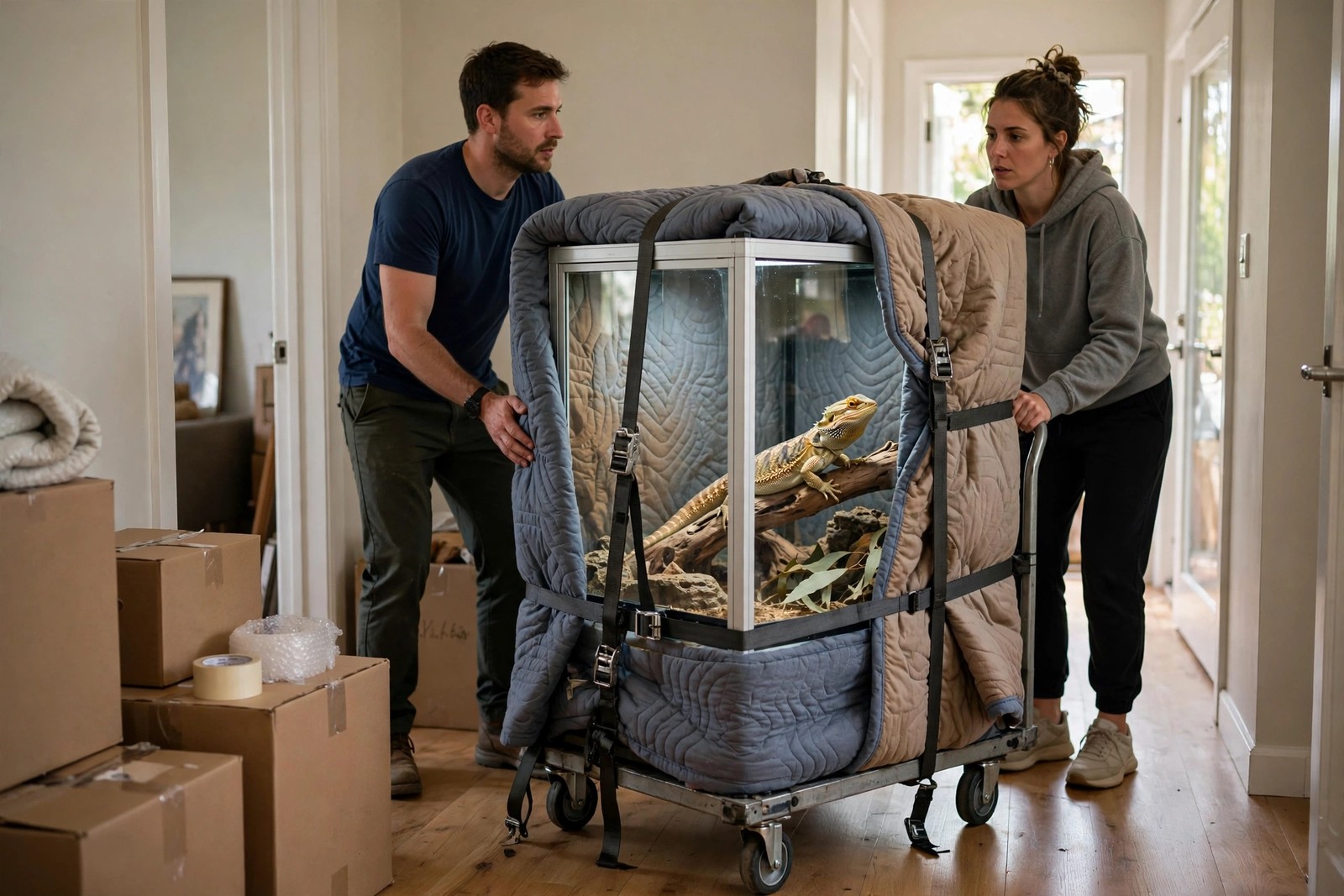
A large vivarium is two moves, not one: an animal that needs warmth, darkness, and security, and a heavy glass box that needs to travel completely empty to survive. Owners crack enclosures and injure animals by combining the two — lifting a vivarium with substrate, branches, and a frightened lizard still inside. Separate them, and both parts become straightforward.
Strip the Enclosure Down to Glass
Photograph the full setup first: thermostat probe positions, light fittings, cable routes, and how decor was arranged, because rebuilding from a photo is faster and safer than rebuilding from memory. Remove animals last in your packing order, after their travel tub is ready, so they spend the least time waiting.
Take out water bowls, branches, hides, plants, and background panels, and bag loose substrate for disposal or reuse according to its condition. Disconnect heaters, lights, thermostats, and misting equipment, label each cable, and pack probes and thermostats in a padded box rather than the glass enclosure. Clean dry glass travels better than glass still wet and slippery from misting.
Move the Animal Separately and Warmly
Place the animal in a secure, ventilated tub lined with paper towel, or a cloth bag inside a tub for snakes as your species requires, with no loose water dish to spill and chill them. Keep the tub dark, level, and at a steady room-to-warm temperature in the car cabin, never in a cold trunk or beside a heater vent. For winter or long moves, a wrapped heat pack outside the tub wall can hold warmth; check it at stops so the tub never overheats.
Amphibians need damp, not wet, conditions in transit and protection from drying air. Handle every animal as little as possible, keep species in separate tubs, and travel the animals in the last load so their time in transit is shortest.
Shift the Empty Vivarium Safely
Empty glass is still heavy and surprisingly fragile at the corners. Tape doors shut, pad corners and edges, lift from the base with two or more people, and keep the enclosure flat and supported rather than carried by its frame or lid. In the vehicle, wedge it so it cannot slide, and never stack boxes on top of it. Check door runners, vents, and silicone seams for damage before you rebuild.
Rebuild Heat First, Animal Last
At the new home, position the vivarium away from radiators, draughty doors, and direct sun that can overheat glass. Rebuild substrate, decor, and water, reconnect heating and lighting exactly as photographed, and run the whole system before the animal goes back. Verify the warm end, cool end, and humidity with the thermometer and hygrometer in place, confirm the thermostat cuts the heater as it should, and check timers.
Only then return the animal, offer water, and leave it undisturbed to explore. Most reptiles skip a meal after a move; offer food on the normal schedule rather than repeatedly presenting it, and watch feeding, shedding, and droppings over the following week for a return to the usual pattern.
If someone is rebuilding ahead of the animal's arrival, written temperatures beat a verbal summary every time. KinsLe Care Pass hands that helper your heat gradient, light cycle, and misting routine as temporary, time-limited access, so the vivarium is already running at the right numbers when the travel tub opens.