
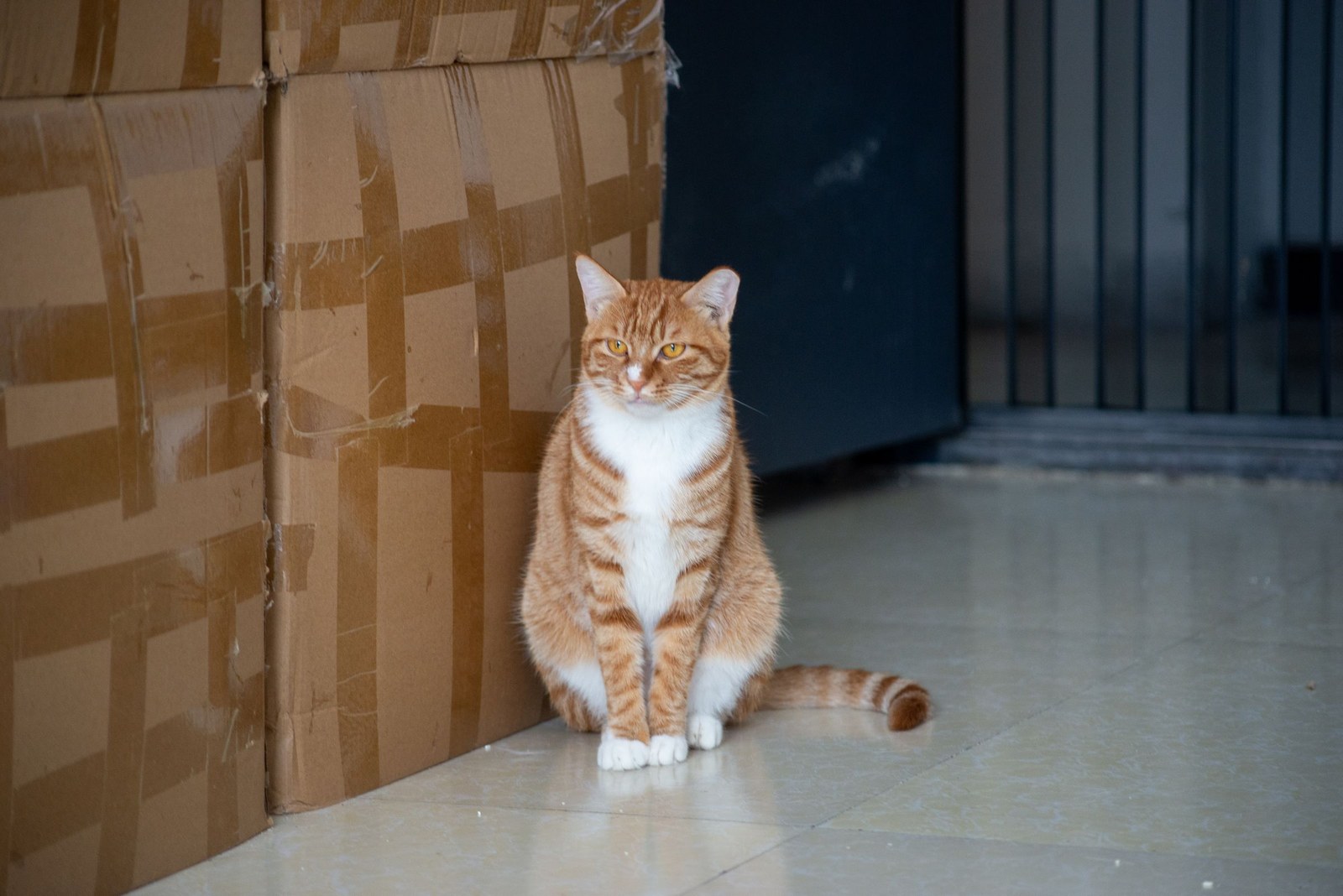
For an indoor cat, the safest move is to take her out of the commotion altogether: settle her in a single quiet room of her own, with litter box, food and water inside it, and tape a clear sign to the door. More indoor cats are lost through one propped-open front door on moving day than in almost any other situation.
Why moving day is so risky
Moving day inverts everything your cat relies on. Furniture disappears, strangers carry boxes through open doors, familiar hiding places vanish, and the noise never stops. A frightened cat's instinct is to bolt for the first dark gap — and on moving day, every gap leads outside.
Indoor cats are especially vulnerable if they escape. They have no mental map of the neighbourhood, no established outdoor routes home, and often freeze or hide silently very close to the house rather than coming when called.
The safe-room method, step by step
The day before the move, choose one room — a bathroom or spare bedroom works well — and set it up completely: litter box, food, water, bedding that smells of home, a scratching post, and a hiding box. Move your cat in before the movers arrive, close the door, and tape a large, unmistakable sign to it: "CAT INSIDE — DO NOT OPEN."
Then protect that instruction. Tell every mover, helper, and family member personally. On a busy day, a sign alone gets ignored; a sign plus a verbal warning usually holds. If doors must be opened constantly and helpers are unreliable, boarding your cat for the day, or having her stay with a trusted friend, is not a luxury — it is the safer choice.
The journey and the arrival
Travel with the safe room packed last and unpacked first. At the new home, reverse the process: one room ready before she arrives, with her familiar bedding, litter box, and food already in place. Let her settle there while the rest of the house is chaos, and open doors to new rooms one at a time over the following days.
Before the movers leave the old house, check the safe room and count your cat. Then do a final sweep of every cupboard, wardrobe, and appliance gap at both ends — cats have travelled in sofa bases and hidden in empty houses.
If the worst happens anyway
Act immediately, in the first hours. Search the house thoroughly, then the immediate surroundings, calling softly and listening for a faint reply — indoor cats usually hide within a few houses. Leave her bedding and something that smells of you outside, alert neighbours, and post in local groups with a clear photo.
This is where preparation pays off. Her Lost Pet Alert System sits free in her profile, ready before the first van arrives, so setting up her profile before moving day means that safety net is in place before you ever need it. Before a single box is packed, set up her profile on KinsLe so that, if the safe-room door is opened and she vanishes during the move, her Lost Pet Alert System alert is pinned to KinsLe's map, ready for anyone who spots her to reach you with a direct message through her profile.