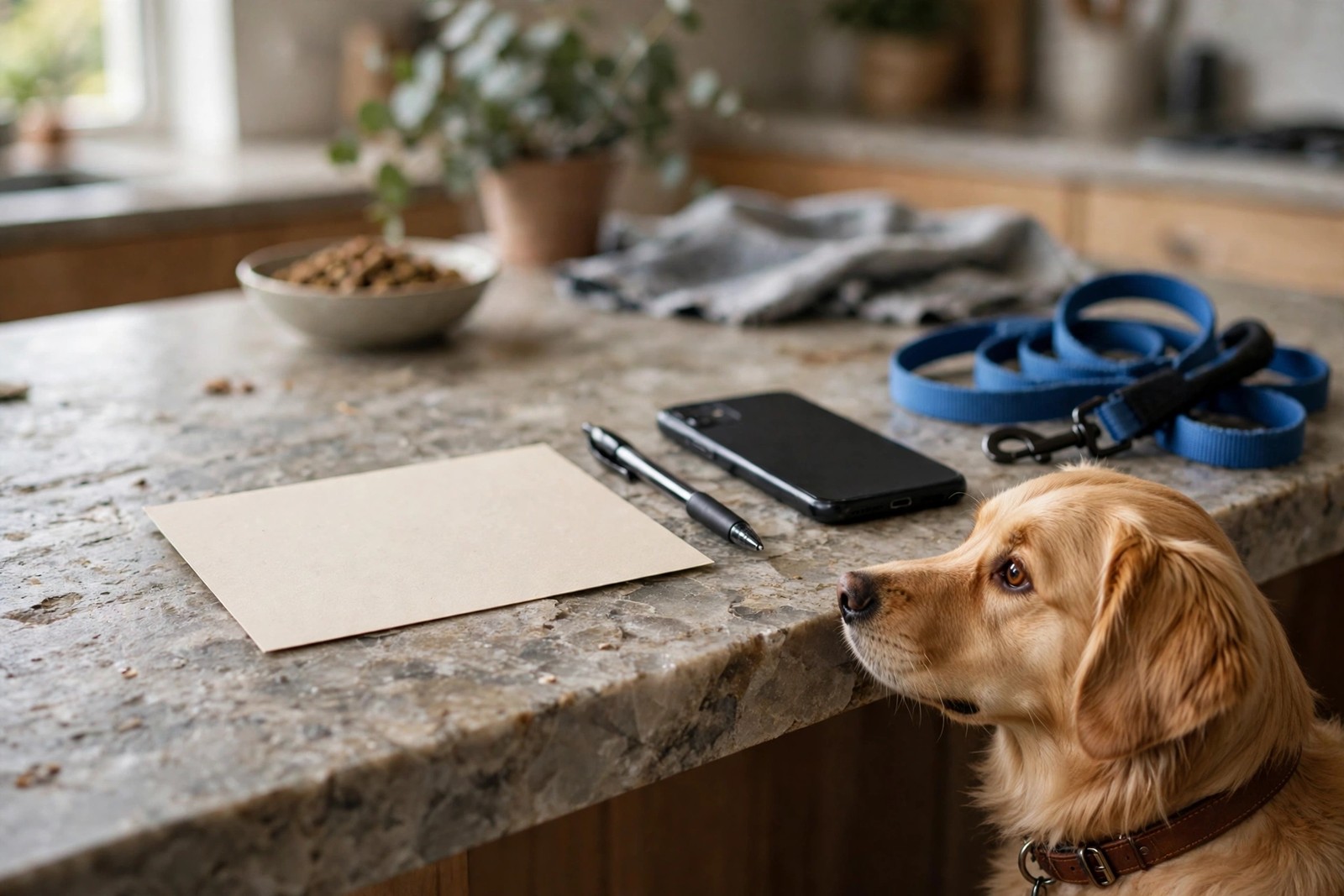
An emergency contact card is read by a shaken person, possibly at midnight, possibly with your dog bleeding beside them. It is not a care sheet and it is not a summary of everything you know — it is the small set of facts that unlock help fast, written large enough to use under pressure and placed where panic will look for it.
The People Block: Reachable, and Empowered
Top of the card, your name and mobile — and write beside it what happens if you do not answer, because in a real emergency you may be on a plane. The second contact should be someone local enough to act and explicitly empowered: a line stating that this person may authorise emergency treatment and spending on your behalf saves a vet surgery from treating with one hand tied while they chase an unreachable owner. Add a third name if you have one — the neighbour with a spare key, the family member who knows the dog — but stop there; a card with six names gets read as no names.
The Vet Block: Regular Practice and the Night Door
List your regular vet with the practice name, full address, and phone number, because a sitter giving directions to a driver or describing a location needs the address, not just a name to search. Beneath it, the out-of-hours provision: many practices route night calls to a separate emergency clinic at a different site, and that second address and number belong on the card in their own right, labelled clearly as the number to use at night and on weekends. If your dog is mid-treatment or under a specialist, one line naming that clinic earns its space too. Do not assume the sitter will know any of this exists — owners routinely discover their own practice's night arrangement only when they need it, so confirm it while writing the card, not during the crisis the card is for.
The Dog Block: Numbers, Medicines, Warnings
Now the dog herself, in the order a vet will ask: name, breed, age, weight, and microchip number in full — the number a found dog is reunited by and a treated dog is verified against. Then current medications with times, and allergies in a block of their own, visually set apart with a heading or a border; in an emergency this is the section that prevents a second emergency. If she has insurance, the insurer's name and policy number go here too. Close with two or three handling warnings a stranger cannot guess: panics at fireworks and will bolt, must be lifted rather than pulled by the collar, frightened of unfamiliar dogs and needs distance. Leave out the biography — favourite toys and feeding preferences live on the care sheet, and every line on this card competes with the line that might matter most.
Where the Card Lives
Make at least three copies. One laminated copy goes on the sitter's fridge or beside the food bin — where a person in their own kitchen actually looks — and a photograph of both sides goes into the sitter's phone before you leave, because phones survive when paper stays home. A third copy in your car and one in your own wallet cover the version of the emergency where you are the one incapacitated and someone must find your dog's details on you. Review the card at every vet change, phone change, new medication, and renewed policy, and date the corner so a stale copy identifies itself. The fastest way to build an accurate card is to distil it from a record that is already complete, and that is the role KinsLe's Pet Passport plays here — the card on the fridge and the full passport behind it carry the same contacts, numbers, and warnings, so the two can never quietly disagree.